The featured image was AI-generated from a photograph,
with the cat modeled after our family cat.
PR / Ad|This post contains affiliate links.
Read the English version|英語版はこちら
- Introduction|はじめに
- History & Cultural Heritage|歴史・文化財
- Temple Entrance|永観堂の入口
- Temple Halls & Wooden Corridors|諸堂と木造回廊
- Mikaeri Amida|みかえり阿弥陀
- Hōjō Pond & Benten Island|放生池と弁天島
- Tahōtō Pagoda & Kyoto View|多宝塔と京都の眺め
- Gardens and Quiet Details|庭園と境内の小さな風景
- Autumn Leaves & Illumination|紅葉とライトアップ
- Travel Resources|旅行に役立つ情報
- 🗺 Google Map
- 🗺 Explore More Kyoto Areas|京都のエリアから探す
Introduction|はじめに
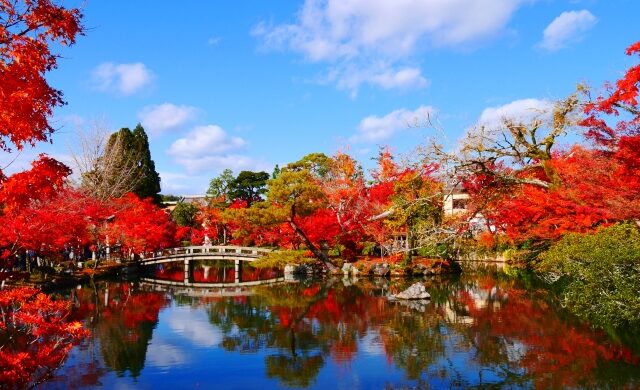
Eikandō is one of Kyoto’s most famous temples
for autumn leaves.
Its official name is Zenrin-ji,
and it is the head temple
of the Seizan Zenrin-ji branch
of Jōdo Buddhism.
永観堂は、
京都を代表する
紅葉の名所として知られる寺院です。
正式名称を禅林寺といい、
浄土宗西山禅林寺派の
総本山です。
The temple grounds spread
along the foot of the Higashiyama mountains.
Historic halls,
wooden corridors,
a peaceful pond,
and a pagoda
are surrounded by beautiful trees.
境内は、
東山のふもとの斜面に沿って
広がっています。
歴史ある諸堂や木造回廊、
静かな池や多宝塔が、
豊かな木々に囲まれています。
Eikandō is also home
to the unusual Mikaeri Amida,
a statue of Amida Buddha
looking back over its shoulder.
The Mikaeri Amida,
wooden corridors,
Hōjō Pond,
and beautiful autumn scenery
are among the temple’s
most important highlights.
永観堂には、
肩越しに後ろを振り返る
珍しい姿の
「みかえり阿弥陀」が
安置されています。
みかえり阿弥陀や木造回廊、
放生池、
美しい秋の風景は、
永観堂を代表する
大切な見どころです。
🟫 MINI MEMO
Eikandō is often called
“the temple of maple leaves.”
Although autumn is its most famous season,
fresh green leaves
create a peaceful atmosphere
from spring through summer.
永観堂は古くから、
「モミジの永観堂」として
親しまれてきました。
秋の紅葉が特に有名ですが、
春から夏にかけては、
瑞々しい青もみじに包まれた
穏やかな景色を楽しめます。
History & Cultural Heritage|歴史・文化財
The origins of Zenrin-ji
date back to 853.
Shinjō,
a Buddhist monk
and disciple of Kūkai,
established a place
for Buddhist practice here.
禅林寺の始まりは、
853年にさかのぼります。
空海の弟子である
真紹僧都が、
この地に仏教修行のための
道場を開きました。
In 863,
Emperor Seiwa granted the temple
the name “Zenrin-ji.”
The temple originally developed
as a center
of Shingon esoteric Buddhism.
863年には、
清和天皇から
「禅林寺」の寺号を賜りました。
創建当初は、
真言密教の道場として
発展しました。
The temple later developed
under the monk Yōkan,
who became its seventh head priest.
He devoted himself
to the practice of nenbutsu
and worked to help
people in need.
その後、
第7世住職となった
永観律師によって、
寺院は大きく発展しました。
永観律師は、
念仏の教えに深く帰依し、
困っている人々を助ける
救済活動にも力を尽くしました。
The popular name “Eikandō”
comes from Yōkan.
Over time,
the temple developed
into a center of Pure Land Buddhism.
Today,
it is the head temple
of the Seizan Zenrin-ji branch
of Jōdo Buddhism.
「永観堂」という通称は、
永観律師の名に
由来しています。
寺院は次第に
浄土教の道場へと変わり、
現在は浄土宗西山禅林寺派の
総本山となっています。
Eikandō preserves
many important Buddhist artworks
and cultural properties.
Among them,
the Mikaeri Amida statue
is designated
as an Important Cultural Property of Japan.
永観堂には、
貴重な仏教美術や文化財が
数多く伝えられています。
なかでも、
本尊のみかえり阿弥陀像は、
国の重要文化財に
指定されています。
Temple Entrance|永観堂の入口
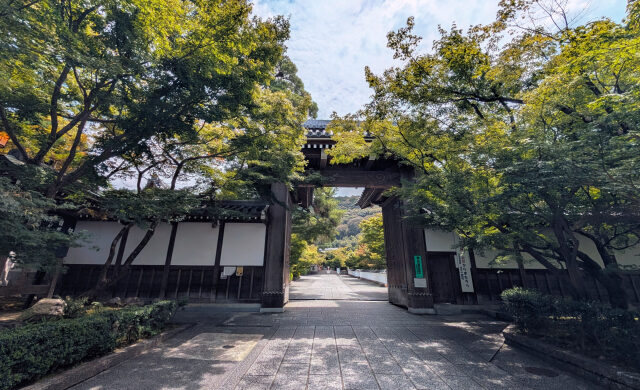
The main gate
marks the entrance
to Eikandō.
Surrounded by tall trees,
the gate opens onto
a quiet stone-paved path
leading into the temple grounds.
総門は、
永観堂の境内へと続く
入口に建つ門です。
高い木々に囲まれた門をくぐると、
境内へと続く
静かな石畳の道が
まっすぐに延びています。
Unlike the brilliant autumn scenery
seen deeper inside the grounds,
the entrance has
a calm and dignified atmosphere.
Walking through the gate
feels like leaving
the busy city behind.
境内の奥に広がる
華やかな紅葉風景とは異なり、
入口には落ち着いた
厳かな雰囲気があります。
門をくぐると、
街のにぎわいから離れ、
静かな寺院の世界へ
入っていくように感じられます。
The scenery around the gate
changes with the seasons.
Fresh green leaves
surround the path
from spring through summer,
while red and yellow foliage
brightens the entrance in autumn.
門の周辺も、
季節によって
異なる表情を見せます。
春から夏には
青もみじが参道を包み、
秋には赤や黄色の葉が
入口を鮮やかに彩ります。
🟫 PHOTO TIP
Stand a short distance
in front of the gate
and include the stone path
beyond the entrance.
The gate,
trees,
and straight path
create a natural sense of depth.
門の少し手前から、
門の奥へ続く石畳を
一緒に写してみましょう。
門と木々、
まっすぐ延びる参道が入り、
境内の奥行きを
表現しやすくなります。
Temple Halls & Wooden Corridors|諸堂と木造回廊
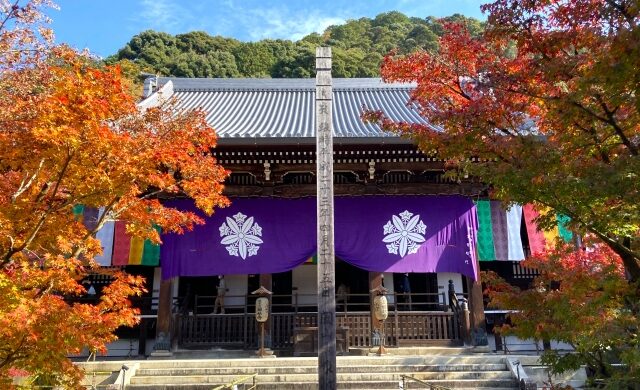
Eikandō’s temple halls
stand at different heights
along the slope
of the Higashiyama mountains.
Rather than being arranged
on a single flat area,
the buildings follow
the natural shape of the land.
永観堂の諸堂は、
東山の斜面に沿って、
それぞれ異なる高さに
建てられています。
平らな場所に
建物が並んでいるのではなく、
土地の自然な高低差を生かして
配置されています。
Among the principal buildings
are the Shakadō,
Mieidō,
Amidadō,
and Kaisandō halls.
Each building
has a different religious role,
but together they form
one peaceful temple complex.
境内には、
釈迦堂や御影堂、
阿弥陀堂、
開山堂などの諸堂があります。
それぞれ異なる役割を持ちながら、
ひとつの静かな寺院空間を
つくり上げています。
The Mieidō is one of
the largest buildings
in the temple grounds.
Its wide roof,
wooden veranda,
and dignified façade
create an impressive view
among the surrounding trees.
御影堂は、
永観堂の境内でも
特に大きな建物のひとつです。
大きく広がる屋根や
木造の縁側、
堂々とした正面の姿が、
周囲の木々と調和しています。
Wooden Corridors|諸堂を結ぶ回廊
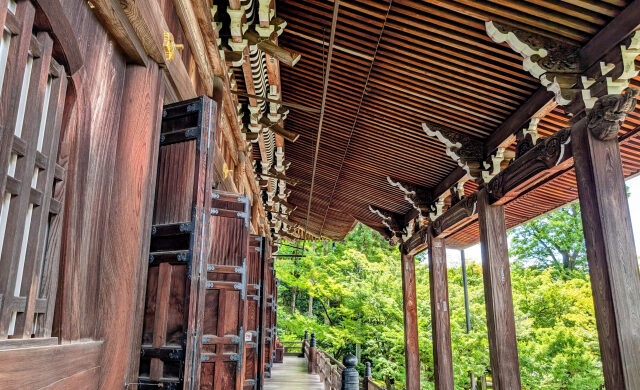
The temple halls
are connected by
long wooden corridors.
Walking through them,
visitors can move
from one building to another
while enjoying views
of the surrounding trees and gardens.
諸堂の間は、
長い木造回廊で
結ばれています。
回廊を歩きながら、
周囲の木々や庭園を眺め、
それぞれのお堂を
巡ることができます。
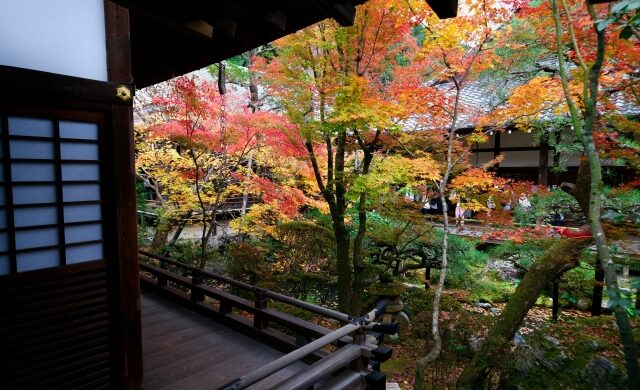
Wooden pillars,
traditional windows,
and softly polished floors
create a calm atmosphere.
The scenery framed
by the windows and pillars
often looks like
a living picture.
木の柱や格子窓、
静かな光を映す床が、
落ち着いた雰囲気を
つくっています。
窓や柱に囲まれた景色は、
一枚の絵のように
見えることがあります。
The view changes
as visitors move
through the corridors.
Fresh green leaves brighten
the temple in spring and summer,
while autumn colors
fill the windows
with shades of red and gold.
回廊を進むにつれて、
窓の外に見える景色も
少しずつ変わります。
春から夏には
青もみじの緑が広がり、
秋には赤や金色の葉が、
窓の向こうを
鮮やかに彩ります。
🟫 PHOTO TIP
Look for views
framed by wooden pillars
or traditional windows.
Including the dark wooden interior
and the bright garden outside
creates a beautiful contrast.
木の柱や格子窓を
額縁のように使って、
外の景色を撮影してみましょう。
暗く落ち着いた回廊と、
明るい庭園を一緒に写すと、
美しい明暗の対比が生まれます。
Stairs Along the Hillside|斜面に沿う階段
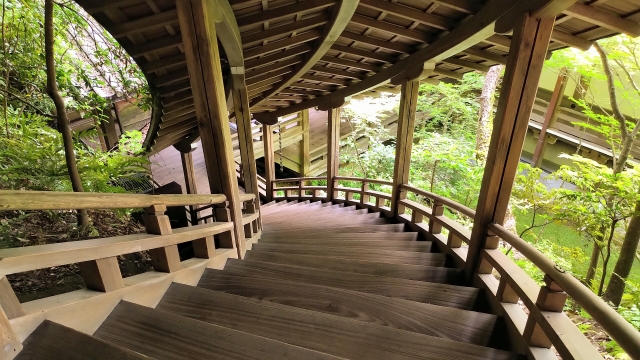
Because the temple was built
along a mountain slope,
some of its corridors
include long wooden stairways.
The covered stairs
rise and turn
between the trees,
connecting buildings
at different heights.
永観堂は
山の斜面に建てられているため、
回廊の一部には
長い木造階段があります。
屋根のある階段は、
木々の間を曲がりながら延び、
異なる高さに建つ諸堂を
つないでいます。
The combination
of wooden architecture
and the natural hillside
is one of the distinctive features
of Eikandō.
Visitors can feel
how closely the temple buildings
are connected
with the surrounding landscape.
木造建築と
自然の斜面が一体となった風景は、
永観堂ならではの
特徴のひとつです。
諸堂が周囲の自然と
深く結びついていることを、
歩きながら感じられます。
🟫 REAL INFO
Eikandō has
wooden stairs,
stone steps,
and sloping paths.
Please wear comfortable shoes
and walk carefully,
especially when the ground is wet.
永観堂の境内には、
木造階段や石段、
坂道があります。
歩きやすい靴を選び、
雨の日や地面が濡れているときは、
足元に注意して
ゆっくり歩きましょう。
Mikaeri Amida|みかえり阿弥陀
Eikandō’s principal image
is a statue of Amida Buddha
known as the Mikaeri Amida.
Unlike most Amida statues,
which face directly forward,
this statue turns its face
over its left shoulder.
永観堂の本尊は、
「みかえり阿弥陀」と呼ばれる
阿弥陀如来像です。
多くの阿弥陀如来像が
正面を向いているのに対し、
この像は顔を左後方へ向けた
珍しい姿をしています。
According to temple tradition,
Yōkan was once walking
around the Amida statue
while chanting the nenbutsu.
The statue stepped down
from its platform
and began to walk
in front of him.
寺に伝わる話によると、
永観律師が阿弥陀如来像の周りを歩き、
念仏を唱えていたとき、
阿弥陀如来が壇から下り、
永観律師の前を
歩き始めたとされています。
When Yōkan stopped
in surprise,
Amida looked back
over his shoulder
and said,
“Yōkan, you are slow.”
驚いた永観律師が
立ち止まると、
阿弥陀如来は肩越しに振り返り、
「永観、おそし」
と声をかけたと
伝えられています。
The statue is often understood
as an expression
of Amida Buddha’s compassion—
looking back
and waiting for those
who may have fallen behind.
後ろを振り返る姿は、
遅れている人を待ち、
すべての人を導こうとする
阿弥陀如来の慈悲を
表しているとも考えられています。
The Mikaeri Amida
is designated
as an Important Cultural Property of Japan
and is enshrined
in the Amidadō Hall.
みかえり阿弥陀像は、
国の重要文化財に指定され、
阿弥陀堂に
安置されています。
🟫 MINI MEMO
“Mikaeri” means
“looking back.”
The statue’s gentle expression
and unusual posture
have made it
one of Eikandō’s
most beloved treasures.
「みかえり」とは、
後ろを振り返ることを
意味します。
やさしい表情と
珍しい姿をした阿弥陀如来像は、
永観堂を代表する存在として
多くの人に親しまれています。
🟫 REAL INFO
Photography of cultural properties
inside the temple halls
is not permitted.
Please follow the signs
and view the Mikaeri Amida
quietly and respectfully.
堂内にある文化財は、
写真撮影が禁止されています。
現地の案内に従い、
みかえり阿弥陀を
静かに参拝しましょう。
Hōjō Pond & Benten Island|放生池と弁天島
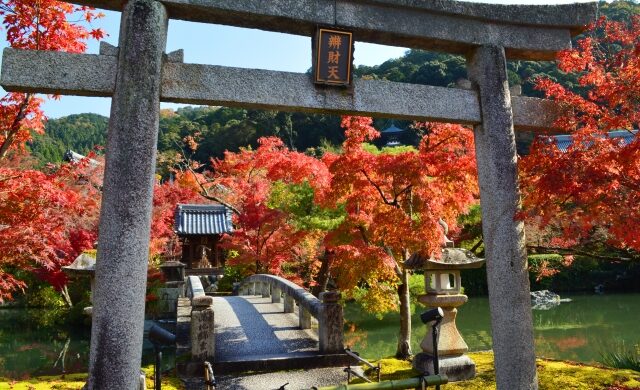
Hōjō Pond lies
near the center
of the temple grounds.
Surrounded by trees,
the pond creates
one of Eikandō’s
most peaceful landscapes.
放生池は、
永観堂の境内中央付近に
広がる池です。
周囲を木々に囲まれ、
永観堂を代表する
穏やかな風景を
つくり出しています。
A small island
stands in the pond.
Visitors can see
a stone torii gate,
a gently curved bridge,
and a small shrine
dedicated to Benzaiten.
池の中には
小さな島があります。
石造りの鳥居や
緩やかな曲線を描く橋、
弁財天を祀る小さな社を
見ることができます。
The bridge leading to Benten Island
is known as Kin’un Bridge.
Together with the stone torii gate,
pond,
trees,
and Benzaiten shrine,
it creates one of the temple’s
most picturesque views.
弁天島へと続く橋は、
錦雲橋と呼ばれています。
石造りの鳥居や放生池、
周囲の木々、
弁天社とともに、
永観堂らしい美しい景色を
つくっています。
The appearance of the pond
changes with the seasons.
Fresh green leaves
are reflected on the water
from spring through summer,
while autumn turns
the surrounding trees
brilliant shades of red and orange.
放生池の景色は、
季節によって
大きく変わります。
春から夏には
青もみじが水面に映り、
秋には周囲の木々が、
赤やオレンジ色に
鮮やかに染まります。
🟫 PHOTO TIP
On a calm day,
the bridge,
trees,
and autumn leaves
may be reflected
on the surface of the pond.
Try including
both the real scenery
and its reflection
in the same frame.
風のない日には、
橋や木々、紅葉が
池の水面に映ることがあります。
実際の風景と水面の映り込みを
一緒に写すと、
放生池の美しさを
より印象的に表現できます。
Tahōtō Pagoda & Kyoto View|多宝塔と京都の眺め
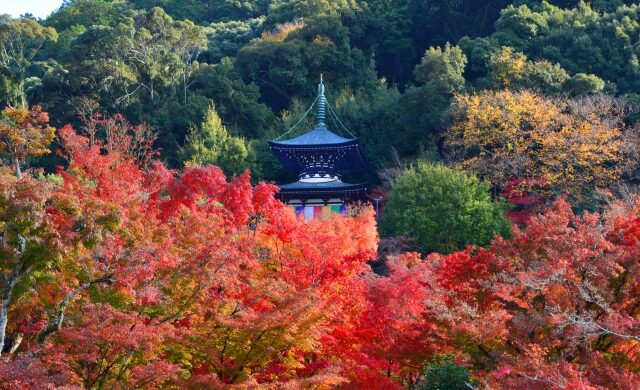
The Tahōtō Pagoda
stands on a hillside
above the temple grounds.
Surrounded by trees,
it is one of Eikandō’s
most recognizable landmarks.
多宝塔は、
境内を見下ろす
山の斜面に建っています。
周囲を木々に囲まれた姿は、
永観堂を象徴する風景の
ひとつです。
Visitors reach the pagoda
by following
a path with stone steps
and sloping sections.
As the path climbs,
views of the temple grounds
begin to open
between the trees.
多宝塔へは、
石段や坂道のある道を
上って向かいます。
高い場所へ進むにつれて、
木々の間から
境内の景色が
少しずつ見えてきます。
From the higher part
of the temple grounds,
visitors may enjoy
wide views across Kyoto.
The contrast between
the quiet mountain temple
and the city beyond
is especially memorable.
境内の高い場所からは、
京都の街を見渡せることがあります。
静かな山寺と、
その向こうに広がる街並みの
対比も印象的です。
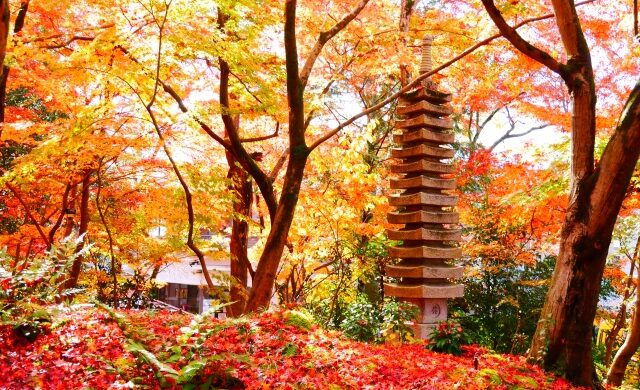
In autumn,
the pagoda appears
above layers of colorful leaves,
creating one of Eikandō’s
most celebrated seasonal views.
秋になると、
幾重にも重なる紅葉の上に
多宝塔が姿を見せます。
この風景は、
永観堂を代表する
秋の景観として
親しまれています。
🟫 REAL INFO
The path to the pagoda
includes many steps.
Access to some areas
may be restricted
depending on ceremonies,
weather,
or other conditions.
Please check the signs
on the day of your visit.
多宝塔へ向かう道には、
多くの階段があります。
法要や天候、
当日の状況によっては、
一部の区域への立ち入りが
制限される場合があります。
訪問当日の案内を
ご確認ください。
Gardens and Quiet Details|庭園と境内の小さな風景
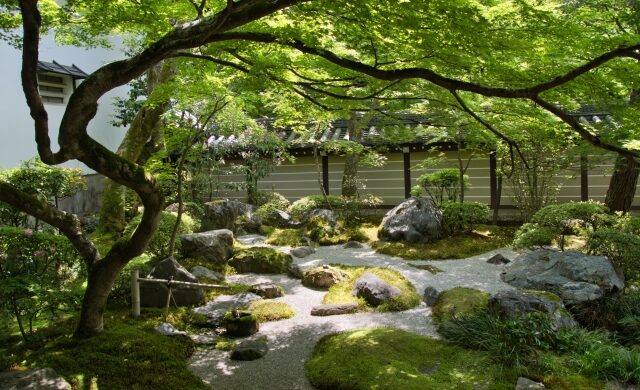
Eikandō is famous
for its autumn colors,
but its gardens
are beautiful throughout the year.
Rocks,
moss,
carefully maintained trees,
and white gravel
create quiet scenes
around the temple halls.
永観堂は
紅葉で有名ですが、
庭園では一年を通して
美しい景色を楽しめます。
石や苔、
丁寧に手入れされた木々、
白砂が、
諸堂の周りに
静かな風景をつくっています。
In spring and summer,
fresh green maple leaves
filter the sunlight
and cast gentle shadows
across the gardens.
The green scenery
offers a calm contrast
to the brilliant colors of autumn.
春から夏には、
瑞々しい青もみじが
やわらかな光を通し、
庭園に穏やかな影を落とします。
緑に包まれた風景は、
鮮やかな秋とは異なる
落ち着いた美しさがあります。
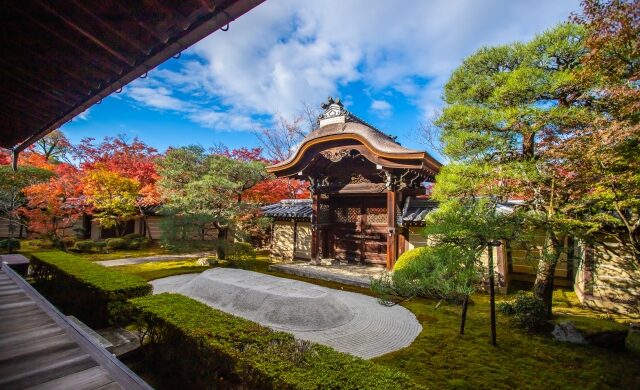
Small gates,
traditional roofs,
stone arrangements,
and carefully pruned pine trees
can be found
throughout the grounds.
Take time to notice
the quiet details
between the temple’s
larger attractions.
境内には、
小さな門や伝統的な屋根、
石組み、
丁寧に整えられた松などが
点在しています。
大きな見どころだけでなく、
お堂からお堂へ移動する途中の
小さな風景にも
目を向けてみてください。
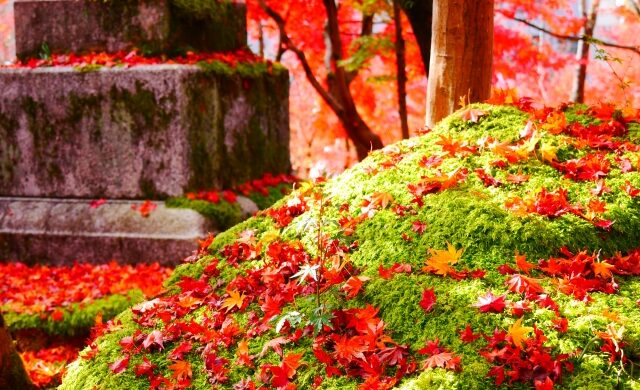
Historic stone structures
stand quietly
among the trees.
In autumn,
fallen maple leaves
cover the moss and ground,
adding color
even beneath visitors’ feet.
歴史を感じさせる石造物が、
木々の間に
静かに佇んでいます。
秋には、
散ったもみじが苔や地面を覆い、
足元にも美しい彩りが
広がります。
Autumn Leaves & Illumination|紅葉とライトアップ
Eikandō has long been known
as one of Kyoto’s
most celebrated places
for autumn leaves.
Maple trees surround
the halls,
corridors,
pond,
and hillside paths.
永観堂は古くから、
京都を代表する
紅葉の名所として
親しまれてきました。
もみじの木々が、
諸堂や回廊、
放生池、
山の斜面に続く道を
包み込んでいます。
The autumn scenery
is not limited
to the branches overhead.
Red and orange leaves
fall across
green moss,
stone paths,
and quiet corners
of the temple grounds.
秋の美しさは、
頭上の木々だけではありません。
赤やオレンジ色の葉が、
緑の苔や石畳、
境内の静かな場所に降り積もり、
足元まで鮮やかに彩ります。
The area around Hōjō Pond
is especially beautiful.
Colorful trees,
the curved bridge,
and reflections on the water
create one of Eikandō’s
most famous views.
特に美しいのが、
放生池の周辺です。
色づいた木々や
緩やかな曲線を描く橋、
水面の映り込みが重なり、
永観堂を代表する
秋の風景が広がります。
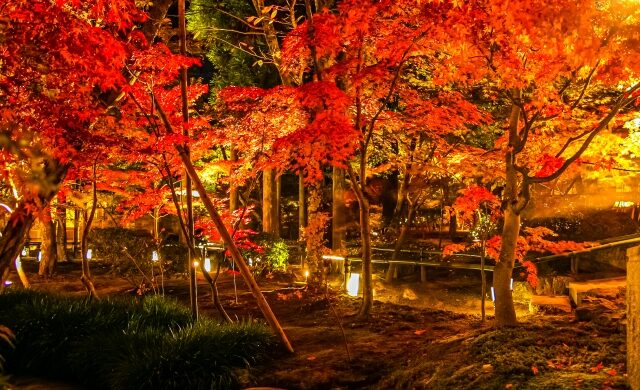
Special evening illuminations
may be held
during the autumn season.
After sunset,
the illuminated trees
create a very different atmosphere
from the daytime scenery.
秋の紅葉シーズンには、
夜間のライトアップが
行われることがあります。
日が沈むと、
光に照らされた木々が、
昼間とは大きく異なる
幻想的な雰囲気をつくります。
Event dates,
opening hours,
admission fees,
and viewing areas
may change each year.
Please check
the latest official information
before visiting.
開催日や拝観時間、
料金、
見学できる範囲は、
年によって変わることがあります。
訪問前に、
必ず公式サイトで
最新情報をご確認ください。
🟫 REAL INFO
Visitors remove their shoes
when entering the temple halls,
so bringing a shoe bag
is recommended.
Photography of cultural properties
inside the halls is prohibited.
Tripods and monopods
may not be used
within the temple grounds.
諸堂を拝観するときは
靴を脱ぐため、
靴袋を持参すると便利です。
堂内にある文化財は
撮影できません。
また、
境内では三脚や一脚を
使用できません。
Travel Resources|旅行に役立つ情報
旅行をもっと快適に楽しめるように、便利なサービスを集めました。
航空券やホテル、Wi-Fiの準備に、ぜひお役立てください。🐾
※This section contains affiliate links.|このセクションにはアフィリエイト広告が含まれています。
✈️ Domestic Flights|国内航空券
国内主要航空会社の航空券を比較・検索できます。
お得な航空券を見つけて、旅の計画に役立ててください。

🏨 Hotels|ホテル予約
京都をはじめ、日本全国のホテル・旅館を検索・予約できます。
お気に入りのお宿を見つけて、心に残る旅を楽しんでください。

📶 Pocket Wi-Fi|Wi-Fiレンタル
旅行中も快適にインターネットを利用できるWi-Fiレンタルサービスです。
旅先でも安心して過ごせるよう、ぜひ役立ててください。

🟫 CAT MEMO 🐾

“So many colorful leaves…
Which one should I tap first?”
「きれいな葉っぱがいっぱいにゃ。
どれから、ちょいちょいしようかにゃ。」
🗺 Google Map
Eikandō is known
for its brilliant autumn leaves.
Yet its wooden corridors,
quiet pond,
and Mikaeri Amida
offer beauty in every season. 🌿
永観堂は、
鮮やかな紅葉で知られています。
けれど、
木造回廊や静かな池、
みかえり阿弥陀には、
季節を超えて心に残る
美しさがあります。🌿
Thank you for visiting Eikandō.
May your walk
bring you a peaceful moment. 🐾
永観堂を訪れてくださり、
ありがとうございました。
この散策が、
穏やかなひとときに
なりますように。🐾
🗺 Explore More Kyoto Areas|京都のエリアから探す
Kyoto is divided into several unique areas, each offering different attractions and experiences.
京都にはエリアごとに異なる魅力があります。
気になるエリアから観光スポットを探してみてください。