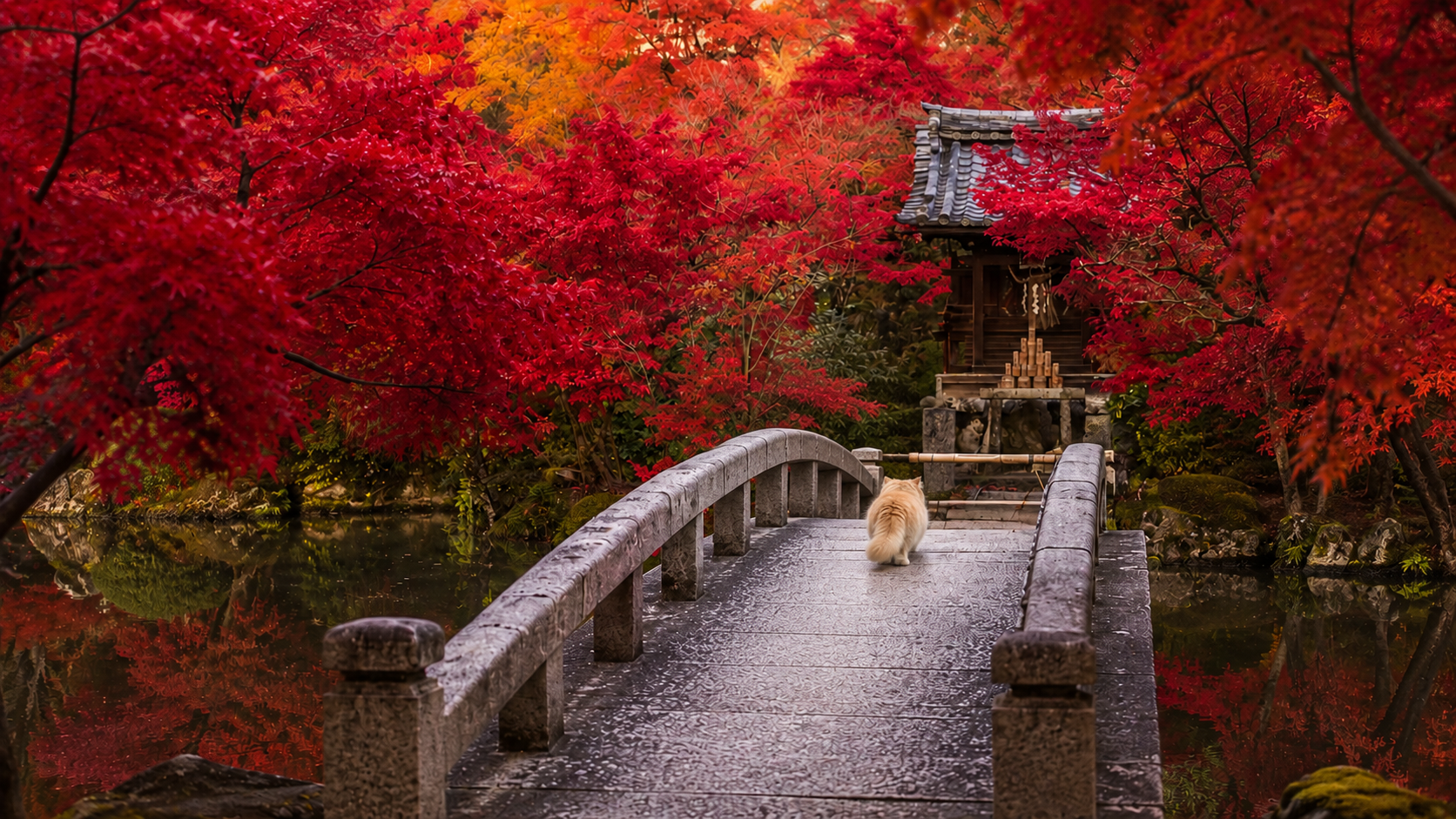
The featured image was AI-generated from a photograph,
with the cat modeled after our family cat.
PR / Ad|This post contains affiliate links.
Read the English + Japanese version|英語+日本語版はこちら
- Introduction|はじめに
- History & Cultural Heritage|歴史・文化財
- Temple Entrance|永観堂の入口
- Temple Halls & Wooden Corridors|諸堂と木造回廊
- Mikaeri Amida|みかえり阿弥陀
- Hōjō Pond & Benten Island|放生池と弁天島
- Tahōtō Pagoda & Kyoto View|多宝塔と京都の眺め
- Gardens and Quiet Details|庭園と境内の小さな風景
- Autumn Leaves & Illumination|紅葉とライトアップ
- 🗺 Google Map
- 🗺 Explore More Kyoto Areas
Introduction|はじめに
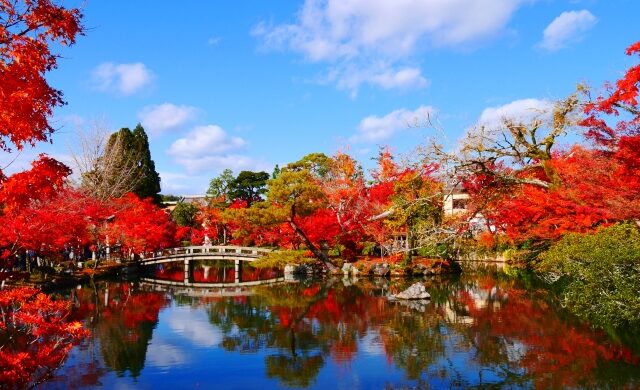
Eikandō is one of Kyoto’s most famous temples
for autumn leaves.
Its official name is Zenrin-ji,
and it is the head temple
of the Seizan Zenrin-ji branch
of Jōdo Buddhism.
The temple grounds spread
along the foot of the Higashiyama mountains.
Historic halls,
wooden corridors,
a peaceful pond,
and a pagoda
are surrounded by beautiful trees.
Eikandō is also home
to the unusual Mikaeri Amida,
a statue of Amida Buddha
looking back over its shoulder.
The Mikaeri Amida,
wooden corridors,
Hōjō Pond,
and beautiful autumn scenery
are among the temple’s
most important highlights.
🟫 MINI MEMO
Eikandō is often called
“the temple of maple leaves.”
Although autumn is its most famous season,
fresh green leaves
create a peaceful atmosphere
from spring through summer.
History & Cultural Heritage|歴史・文化財
The origins of Zenrin-ji
date back to 853.
Shinjō,
a Buddhist monk
and disciple of Kūkai,
established a place
for Buddhist practice here.
In 863,
Emperor Seiwa granted the temple
the name “Zenrin-ji.”
The temple originally developed
as a center
of Shingon esoteric Buddhism.
The temple later developed
under the monk Yōkan,
who became its seventh head priest.
He devoted himself
to the practice of nenbutsu
and worked to help
people in need.
The popular name “Eikandō”
comes from Yōkan.
Over time,
the temple developed
into a center of Pure Land Buddhism.
Today,
it is the head temple
of the Seizan Zenrin-ji branch
of Jōdo Buddhism.
Eikandō preserves
many important Buddhist artworks
and cultural properties.
Among them,
the Mikaeri Amida statue
is designated
as an Important Cultural Property of Japan.
Temple Entrance|永観堂の入口
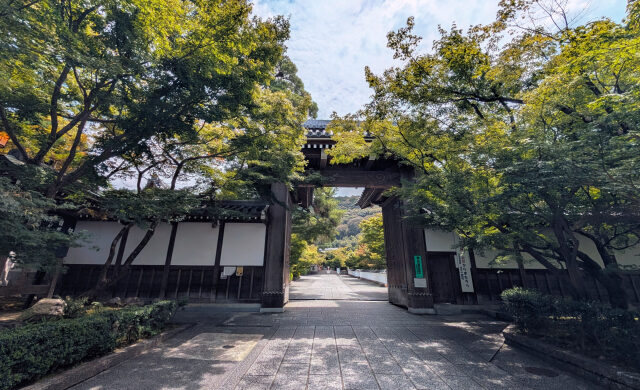
The main gate
marks the entrance
to Eikandō.
Surrounded by tall trees,
the gate opens onto
a quiet stone-paved path
leading into the temple grounds.
Unlike the brilliant autumn scenery
seen deeper inside the grounds,
the entrance has
a calm and dignified atmosphere.
Walking through the gate
feels like leaving
the busy city behind.
The scenery around the gate
changes with the seasons.
Fresh green leaves
surround the path
from spring through summer,
while red and yellow foliage
brightens the entrance in autumn.
🟫 PHOTO TIP
Stand a short distance
in front of the gate
and include the stone path
beyond the entrance.
The gate,
trees,
and straight path
create a natural sense of depth.
Temple Halls & Wooden Corridors|諸堂と木造回廊
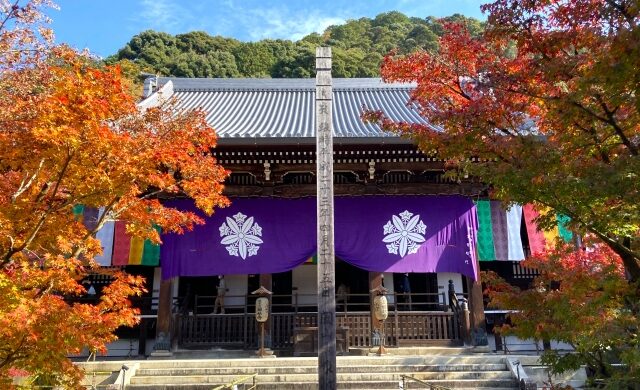
Eikandō’s temple halls
stand at different heights
along the slope
of the Higashiyama mountains.
Rather than being arranged
on a single flat area,
the buildings follow
the natural shape of the land.
Among the principal buildings
are the Shakadō,
Mieidō,
Amidadō,
and Kaisandō halls.
Each building
has a different religious role,
but together they form
one peaceful temple complex.
The Mieidō is one of
the largest buildings
in the temple grounds.
Its wide roof,
wooden veranda,
and dignified façade
create an impressive view
among the surrounding trees.
Wooden Corridors|諸堂を結ぶ回廊
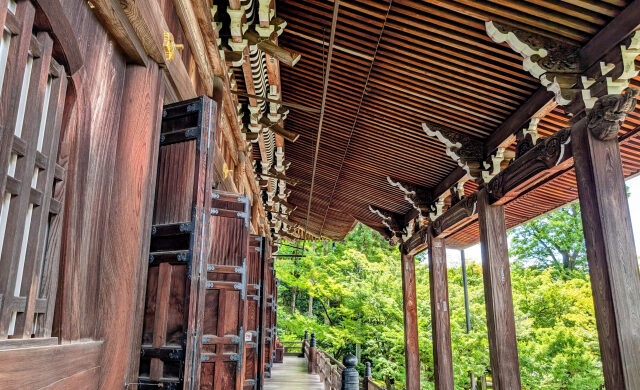
The temple halls
are connected by
long wooden corridors.
Walking through them,
visitors can move
from one building to another
while enjoying views
of the surrounding trees and gardens.
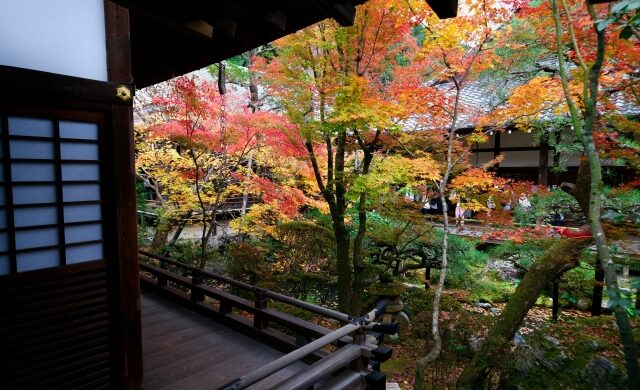
Wooden pillars,
traditional windows,
and softly polished floors
create a calm atmosphere.
The scenery framed
by the windows and pillars
often looks like
a living picture.
The view changes
as visitors move
through the corridors.
Fresh green leaves brighten
the temple in spring and summer,
while autumn colors
fill the windows
with shades of red and gold.
🟫 PHOTO TIP
Look for views
framed by wooden pillars
or traditional windows.
Including the dark wooden interior
and the bright garden outside
creates a beautiful contrast.
Stairs Along the Hillside|斜面に沿う階段
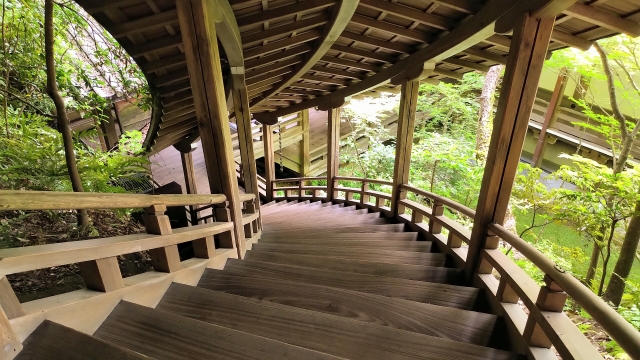
Because the temple was built
along a mountain slope,
some of its corridors
include long wooden stairways.
The covered stairs
rise and turn
between the trees,
connecting buildings
at different heights.
The combination
of wooden architecture
and the natural hillside
is one of the distinctive features
of Eikandō.
Visitors can feel
how closely the temple buildings
are connected
with the surrounding landscape.
🟫 REAL INFO
Eikandō has
wooden stairs,
stone steps,
and sloping paths.
Please wear comfortable shoes
and walk carefully,
especially when the ground is wet.
Mikaeri Amida|みかえり阿弥陀
Eikandō’s principal image
is a statue of Amida Buddha
known as the Mikaeri Amida.
Unlike most Amida statues,
which face directly forward,
this statue turns its face
over its left shoulder.
According to temple tradition,
Yōkan was once walking
around the Amida statue
while chanting the nenbutsu.
The statue stepped down
from its platform
and began to walk
in front of him.
When Yōkan stopped
in surprise,
Amida looked back
over his shoulder
and said,
“Yōkan, you are slow.”
The statue is often understood
as an expression
of Amida Buddha’s compassion—
looking back
and waiting for those
who may have fallen behind.
The Mikaeri Amida
is designated
as an Important Cultural Property of Japan
and is enshrined
in the Amidadō Hall.
🟫 MINI MEMO
“Mikaeri” means
“looking back.”
The statue’s gentle expression
and unusual posture
have made it
one of Eikandō’s
most beloved treasures.
🟫 REAL INFO
Photography of cultural properties
inside the temple halls
is not permitted.
Please follow the signs
and view the Mikaeri Amida
quietly and respectfully.
Hōjō Pond & Benten Island|放生池と弁天島
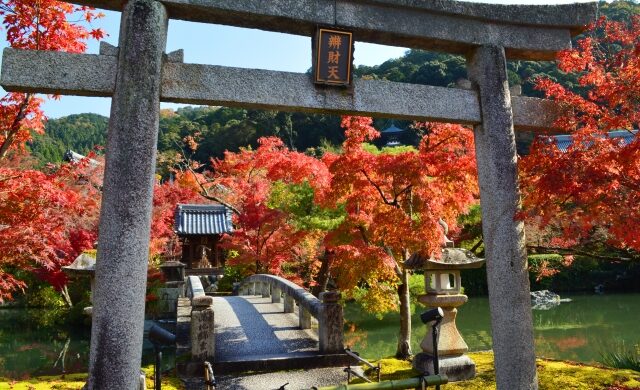
Hōjō Pond lies
near the center
of the temple grounds.
Surrounded by trees,
the pond creates
one of Eikandō’s
most peaceful landscapes.
A small island
stands in the pond.
Visitors can see
a stone torii gate,
a gently curved bridge,
and a small shrine
dedicated to Benzaiten.
The bridge leading to Benten Island
is known as Kin’un Bridge.
Together with the stone torii gate,
pond,
trees,
and Benzaiten shrine,
it creates one of the temple’s
most picturesque views.
The appearance of the pond
changes with the seasons.
Fresh green leaves
are reflected on the water
from spring through summer,
while autumn turns
the surrounding trees
brilliant shades of red and orange.
🟫 PHOTO TIP
On a calm day,
the bridge,
trees,
and autumn leaves
may be reflected
on the surface of the pond.
Try including
both the real scenery
and its reflection
in the same frame.
Tahōtō Pagoda & Kyoto View|多宝塔と京都の眺め
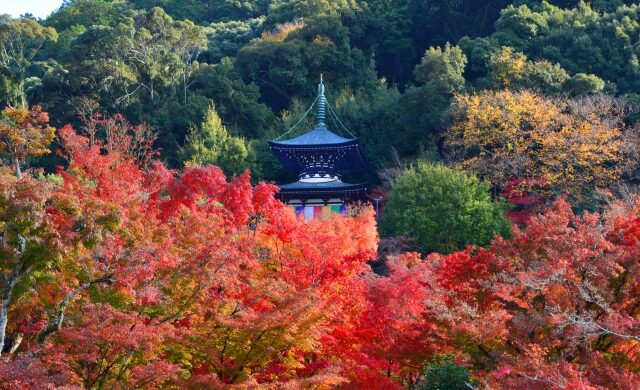
The Tahōtō Pagoda
stands on a hillside
above the temple grounds.
Surrounded by trees,
it is one of Eikandō’s
most recognizable landmarks.
Visitors reach the pagoda
by following
a path with stone steps
and sloping sections.
As the path climbs,
views of the temple grounds
begin to open
between the trees.
From the higher part
of the temple grounds,
visitors may enjoy
wide views across Kyoto.
The contrast between
the quiet mountain temple
and the city beyond
is especially memorable.
In autumn,
the pagoda appears
above layers of colorful leaves,
creating one of Eikandō’s
most celebrated seasonal views.
🟫 REAL INFO
The path to the pagoda
includes many steps.
Access to some areas
may be restricted
depending on ceremonies,
weather,
or other conditions.
Please check the signs
on the day of your visit.
Gardens and Quiet Details|庭園と境内の小さな風景
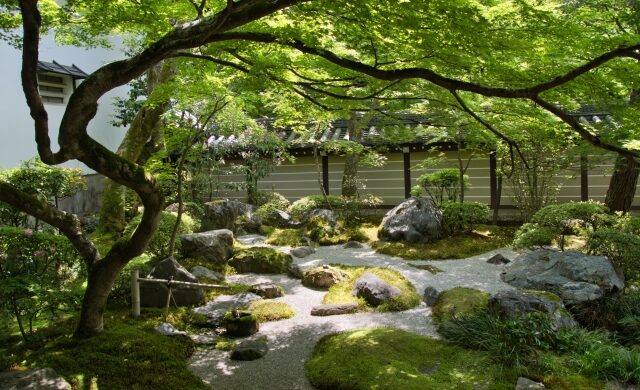
Eikandō is famous
for its autumn colors,
but its gardens
are beautiful throughout the year.
Rocks,
moss,
carefully maintained trees,
and white gravel
create quiet scenes
around the temple halls.
In spring and summer,
fresh green maple leaves
filter the sunlight
and cast gentle shadows
across the gardens.
The green scenery
offers a calm contrast
to the brilliant colors of autumn.
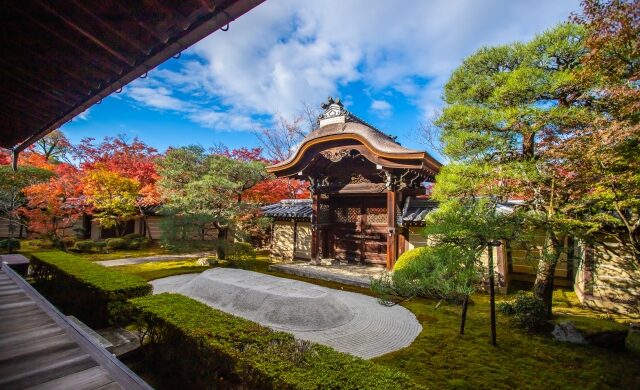
Small gates,
traditional roofs,
stone arrangements,
and carefully pruned pine trees
can be found
throughout the grounds.
Take time to notice
the quiet details
between the temple’s
larger attractions.
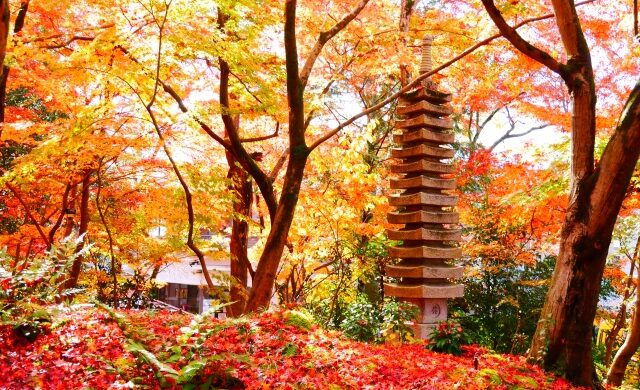
Historic stone structures
stand quietly
among the trees.
In autumn,
fallen maple leaves
cover the moss and ground,
adding color
even beneath visitors’ feet.
Autumn Leaves & Illumination|紅葉とライトアップ
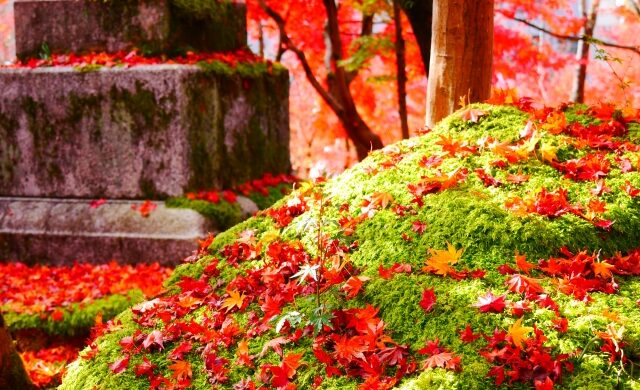
Eikandō has long been known
as one of Kyoto’s
most celebrated places
for autumn leaves.
Maple trees surround
the halls,
corridors,
pond,
and hillside paths.
The autumn scenery
is not limited
to the branches overhead.
Red and orange leaves
fall across
green moss,
stone paths,
and quiet corners
of the temple grounds.
The area around Hōjō Pond
is especially beautiful.
Colorful trees,
the curved bridge,
and reflections on the water
create one of Eikandō’s
most famous views.
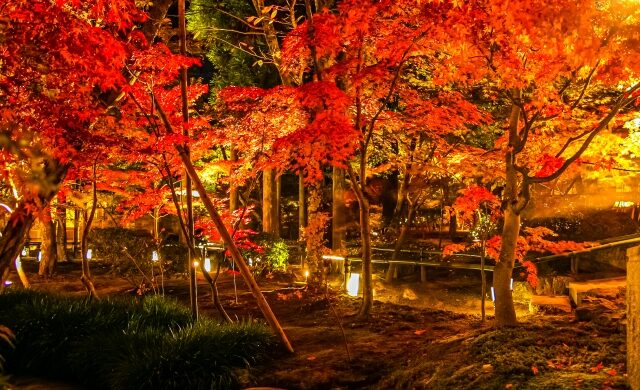
Special evening illuminations
may be held
during the autumn season.
After sunset,
the illuminated trees
create a very different atmosphere
from the daytime scenery.
Event dates,
opening hours,
admission fees,
and viewing areas
may change each year.
Please check
the latest official information
before visiting.
🟫 REAL INFO
Visitors remove their shoes
when entering the temple halls,
so bringing a shoe bag
is recommended.
Photography of cultural properties
inside the halls is prohibited.
Tripods and monopods
may not be used
within the temple grounds.
🟫 CAT MEMO 🐾
“So many colorful leaves…
Which one should I tap first ?”
🗺 Google Map
Eikandō is known
for its brilliant autumn leaves.
Yet its wooden corridors,
quiet pond,
and Mikaeri Amida
offer beauty in every season. 🌿
Thank you for visiting Eikandō.
May your walk
bring you a peaceful moment. 🐾
🗺 Explore More Kyoto Areas
Kyoto is divided into several unique areas, each offering different attractions and experiences.