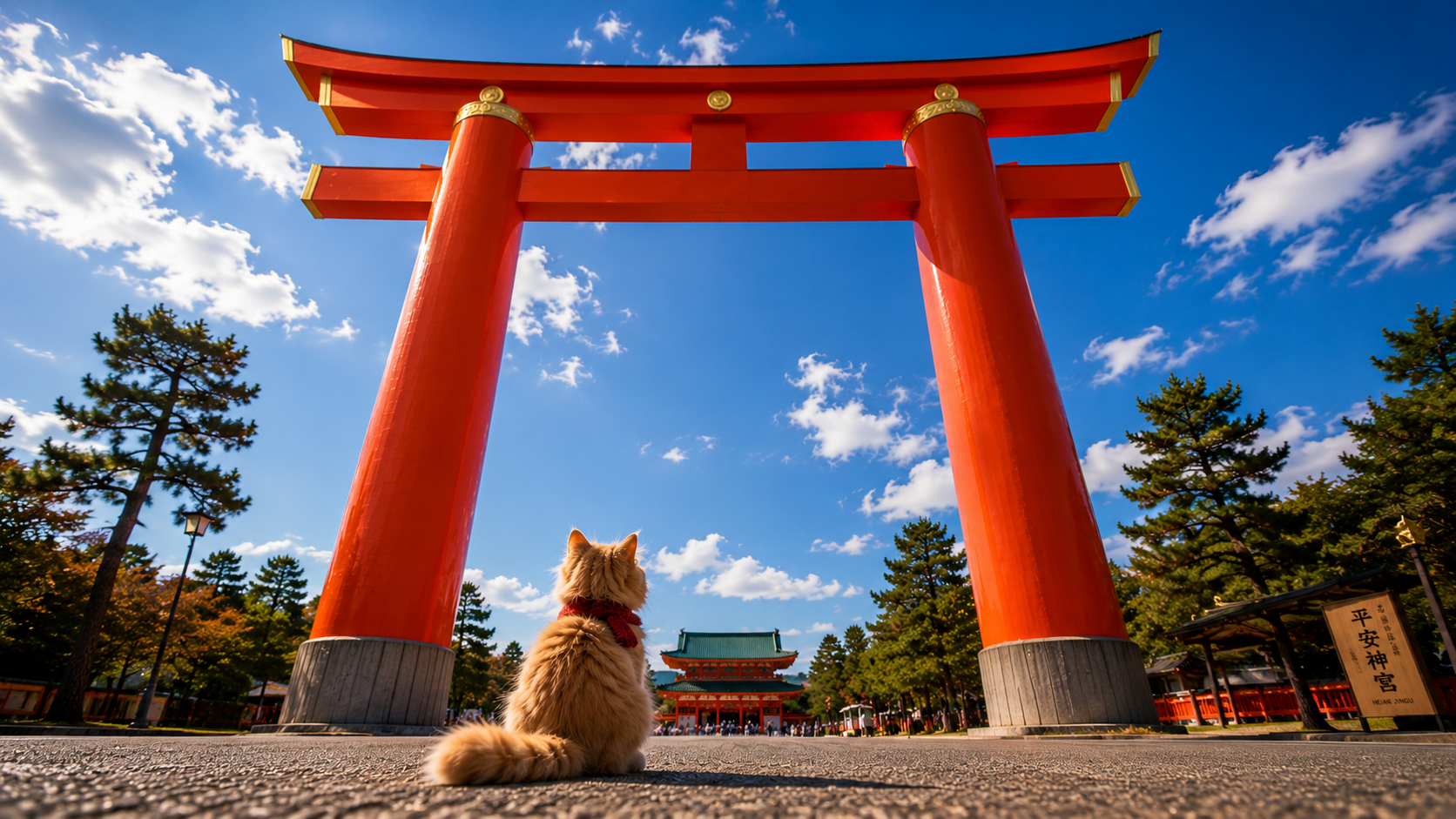
The featured image was AI-generated from a photograph,
with the cat modeled after our family cat.
PR / Ad|This post contains affiliate links.
Read the English + Japanese version|英語+日本語版はこちら
Introduction|はじめに
Heian Shrine
is one of Kyoto’s
most impressive shrines,
known for its giant torii gate,
bright vermilion buildings,
and beautiful Japanese gardens.
Although it looks much older,
the shrine was established in 1895
to commemorate
the 1,100th anniversary
of the founding of Heian-kyo,
the ancient capital of Kyoto.
Today,
many visitors come here
to enjoy its elegant architecture,
seasonal flowers,
and peaceful atmosphere.
🟫 MINI MEMO
Unlike many famous shrines in Kyoto,
Heian Shrine is relatively modern.
Its buildings were carefully designed
to recreate
the elegant architecture
of the ancient Imperial Palace.
History|歴史
Heian Shrine
was established in 1895
during a time
when Kyoto was rebuilding its identity
after Japan’s capital
moved to Tokyo.
The shrine
is dedicated to Emperor Kanmu,
who moved the capital
to Heian-kyo in 794.
In 1940,
Emperor Komei,
the last emperor
to reside in Kyoto,
was also enshrined here.
Today,
Heian Shrine
remains a symbol
of Kyoto’s long history
and cultural heritage.
Great Torii Gate|大鳥居
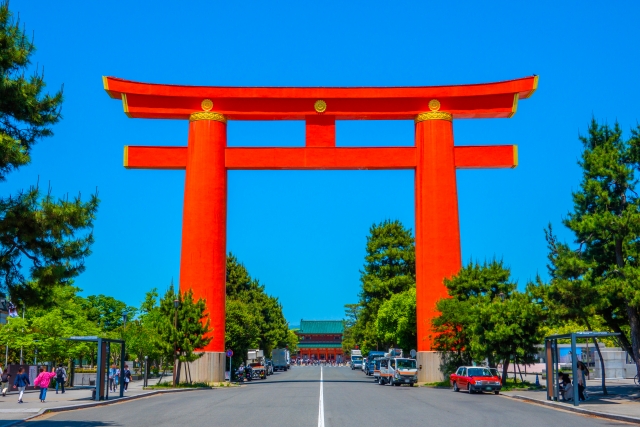
The giant vermilion torii gate
stands along Jingu-michi Street
and welcomes visitors
to Heian Shrine.
Rising about 24 meters high,
it is one of the largest torii gates
in Japan.
Its impressive size
has made it
one of Kyoto’s
well-known landmarks.
🟫 PHOTO TIP
Try photographing the gate
from farther down Jingu-michi Street.
The wide view
beautifully captures
the entire torii.
Otenmon Gate|応天門
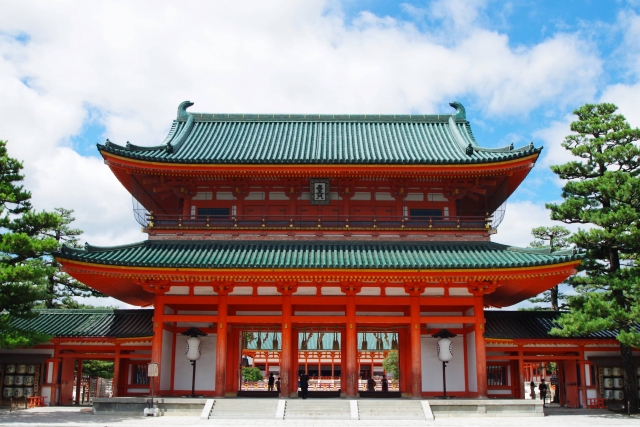
Otenmon Gate
is the magnificent entrance
to the shrine grounds.
Its bright vermilion pillars
and green roof tiles
recreate the appearance
of an ancient palace gate.
Passing through the gate,
visitors are welcomed
by the spacious courtyard
and the grand Daigokuden.
Daigokuden|大極殿
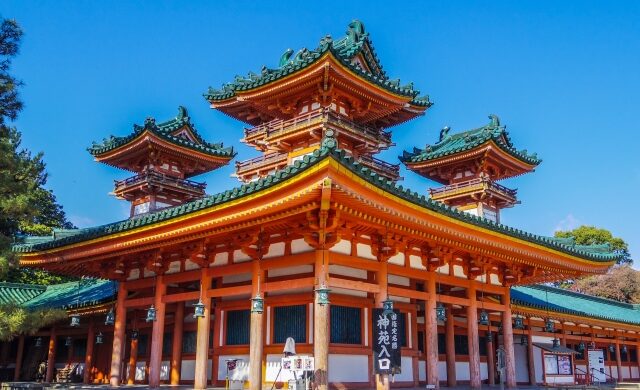
The Daigokuden
stands at the center
of the shrine grounds
and serves as
the main worship hall
for visitors.
It was modeled after
the main ceremonial hall
of the Chodoin,
the government complex
of ancient Heian-kyo.
Its brilliant vermilion pillars,
green roof tiles,
and golden roof ornaments
create one of the shrine’s
most impressive views.
Visitors gather here
to offer their prayers
and enjoy
the elegant architecture.
🟫 MINI MEMO
In front of Daigokuden
stand the Sakon Cherry Tree
and the Ukon Mandarin Orange Tree.
When facing Daigokuden,
the cherry tree is on the left
and the mandarin orange tree
is on the right.
This arrangement
recreates a traditional feature
of the ancient palace.
Shinen Garden|神苑
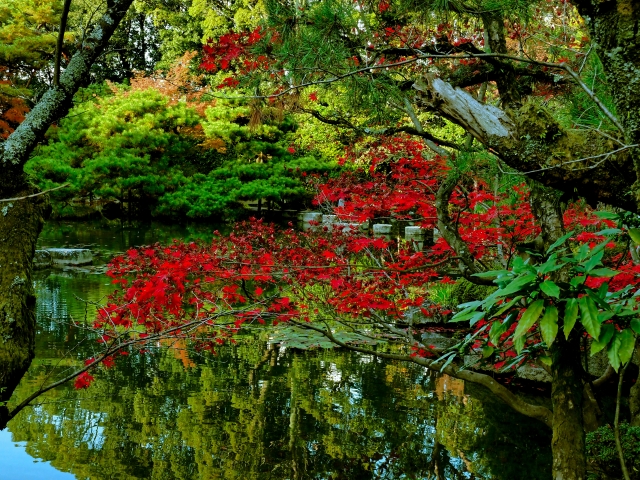
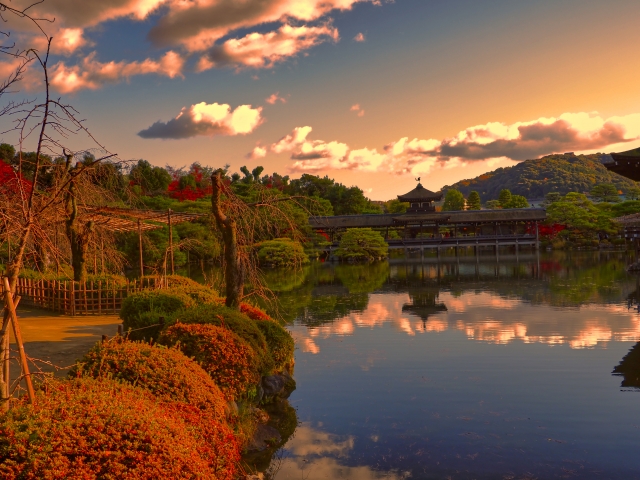
The Shinen Garden
surrounds the shrine buildings
and is one of Kyoto’s
most beautiful strolling gardens.
It is divided into
the South, West,
Central, and East Gardens.
Each area
offers different scenery
throughout the seasons.
Visitors can enjoy
cherry blossoms,
irises,
autumn leaves,
and peaceful ponds
during a relaxing walk.
🟫 MINI MEMO
The Shinen Garden
covers about
33,000 square meters.
It was designed
by the famous landscape gardener
Ogawa Jihei VII,
also known as Ueji.
Garyukyo Stepping Stones|臥龍橋
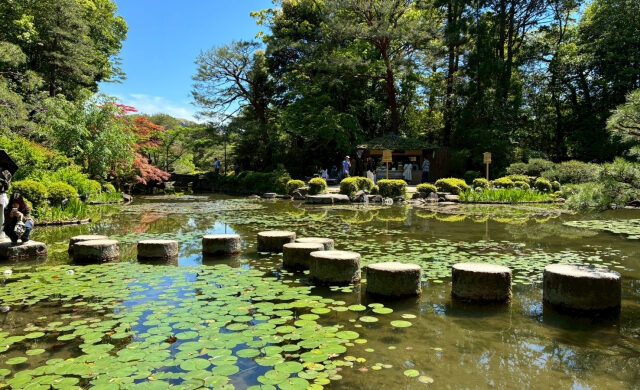
Garyukyo
is one of the highlights
of the Central Garden.
Large stones
form a distinctive path
across Soryu Pond.
Its name means
“Reclining Dragon Bridge,”
inspired by the shape
of a dragon resting
across the water.
Visitors can carefully
cross the stepping stones
while enjoying
views of the pond.
🟫 PHOTO TIP
Photograph Garyukyo
from either end
to capture
both the stepping stones
and their reflection
on the pond.
Seiho Pond & Shobikan|栖鳳池・尚美館
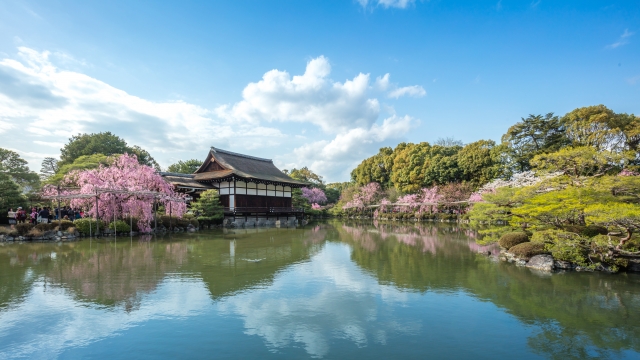
Seiho Pond
is the largest pond
in the Shinen Garden.
Small islands,
seasonal flowers,
and views of
the Higashiyama mountains
create a peaceful landscape.
Beside the pond
stands Shobikan,
an elegant reception hall
that adds beauty
to the garden.
Although
the building
is not normally open
to visitors,
its graceful appearance
is one of the highlights
of the East Garden.
🟫 MINI MEMO
Shobikan
is normally closed
to the public.
Visitors usually
enjoy its elegant exterior
from across the pond.
Taiheikaku Bridge|泰平閣(橋殿)
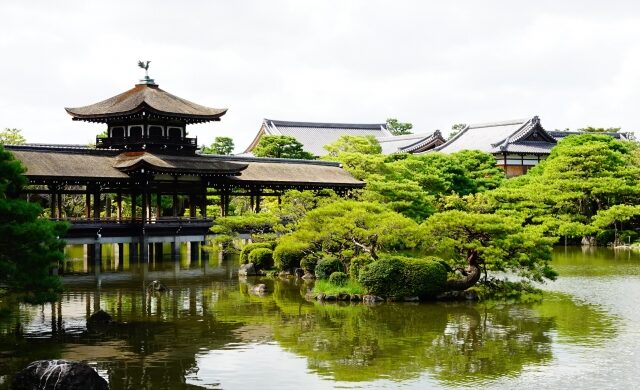
Taiheikaku
is an elegant covered bridge
stretching across
Seiho Pond.
The bridge
is also called
Hashidono,
meaning
“Bridge Hall.”
Visitors can sit quietly
inside the bridge
and enjoy
beautiful views
of the pond
and surrounding gardens.
🟫 PHOTO TIP
Photograph Taiheikaku
from across the pond
to capture
its graceful reflection
on the water.
Jidai Festival|時代祭
The Jidai Festival
is one of Kyoto’s
three greatest festivals,
together with
the Gion Festival
and the Aoi Festival.
Held every year
on October 22,
the festival celebrates
Kyoto’s long history
as Japan’s ancient capital.
About 2,000 participants
wear historical costumes
from different periods
of Japanese history.
The procession begins
at the Kyoto Imperial Palace
and ends
at Heian Shrine.
🟫 REAL INFO
The procession
normally takes place
on October 22.
Schedules may change
because of weather
or other circumstances,
so please check
the official website
before your visit.
Seasonal Beauty|四季の平安神宮
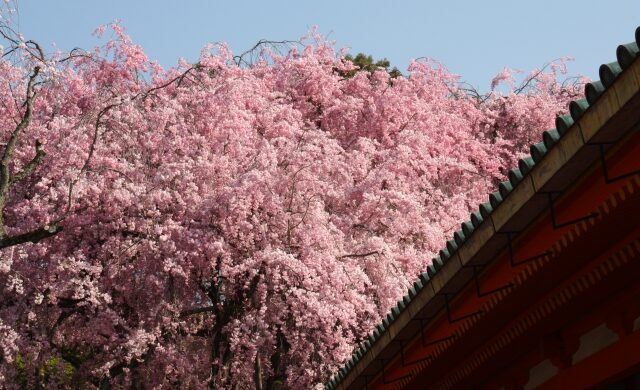
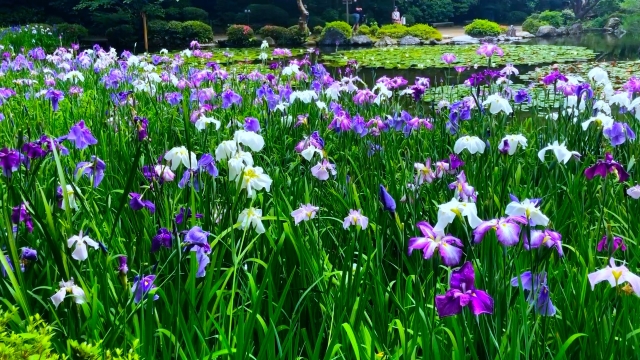
Heian Shrine
offers beautiful scenery
throughout the year.
Spring brings
weeping cherry blossoms.
Early summer
is famous
for colorful irises.
Fresh greenery,
autumn leaves,
and peaceful winter views
also attract many visitors.
Every season
offers
a different experience.
🟫 PHOTO TIP
Visit in the early morning
for softer light
and a quieter atmosphere
in the gardens.
🟫 CAT MEMO 🐾
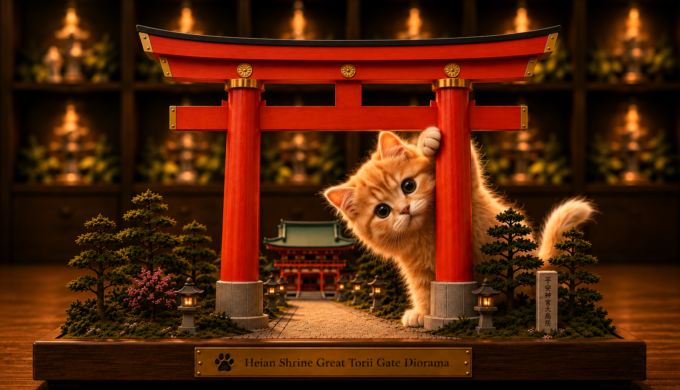
“We’re playing hide-and-seek…
Am I hiding well enough?”
🗺 Google Map
Heian Shrine
is much more than
its famous vermilion buildings.
Its grand gates,
peaceful gardens,
and elegant architecture
reflect the beauty
of Kyoto.
The giant torii gate
may first catch your eye.
But the quiet atmosphere
may stay with you
long after your visit. 🌿
Thank you
for visiting
Heian Shrine.
We hope
your visit
becomes
a wonderful memory
of Kyoto. 🐾
🗺 Explore More Kyoto Areas
Kyoto is divided into several unique areas, each offering different attractions and experiences.