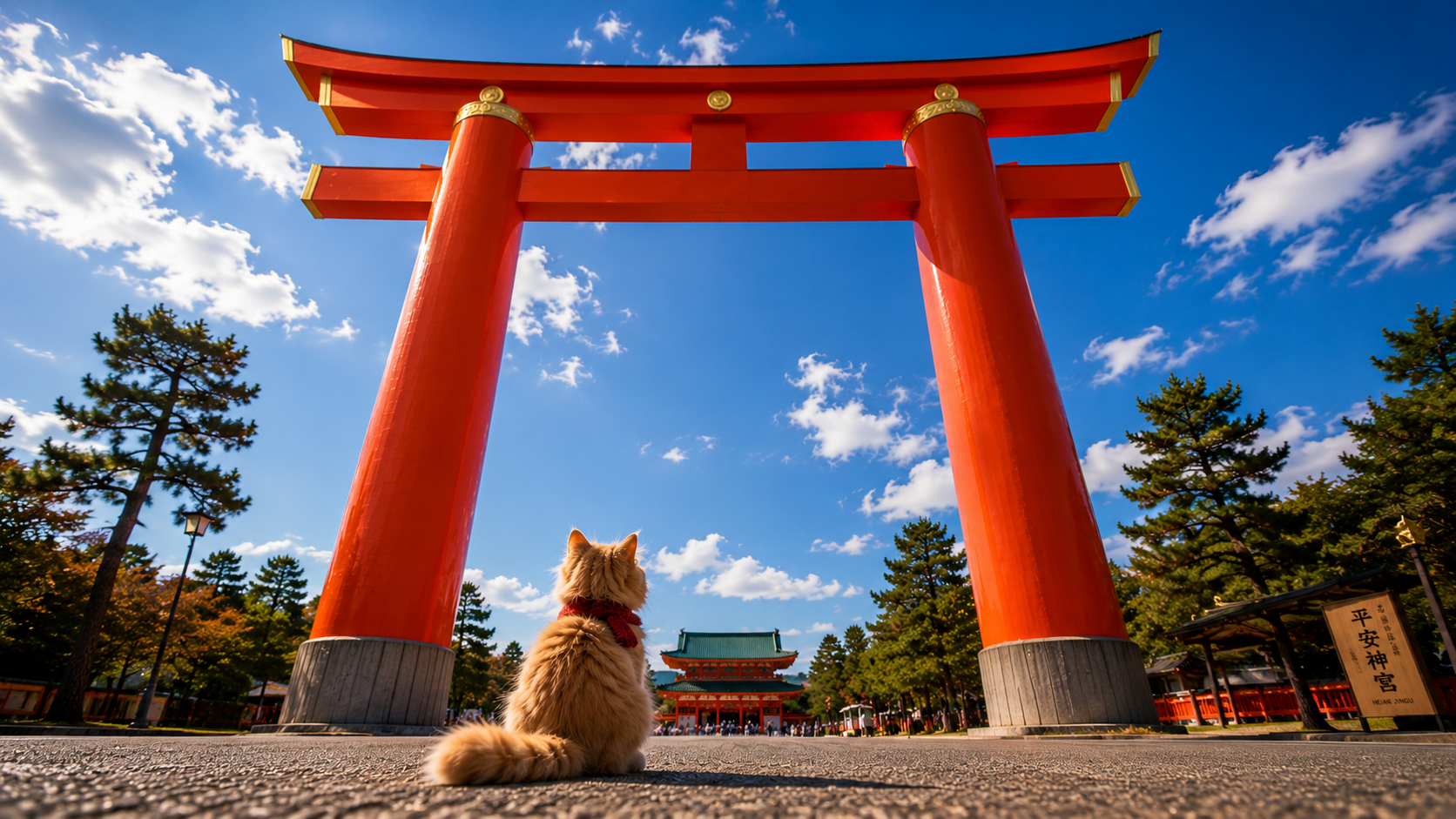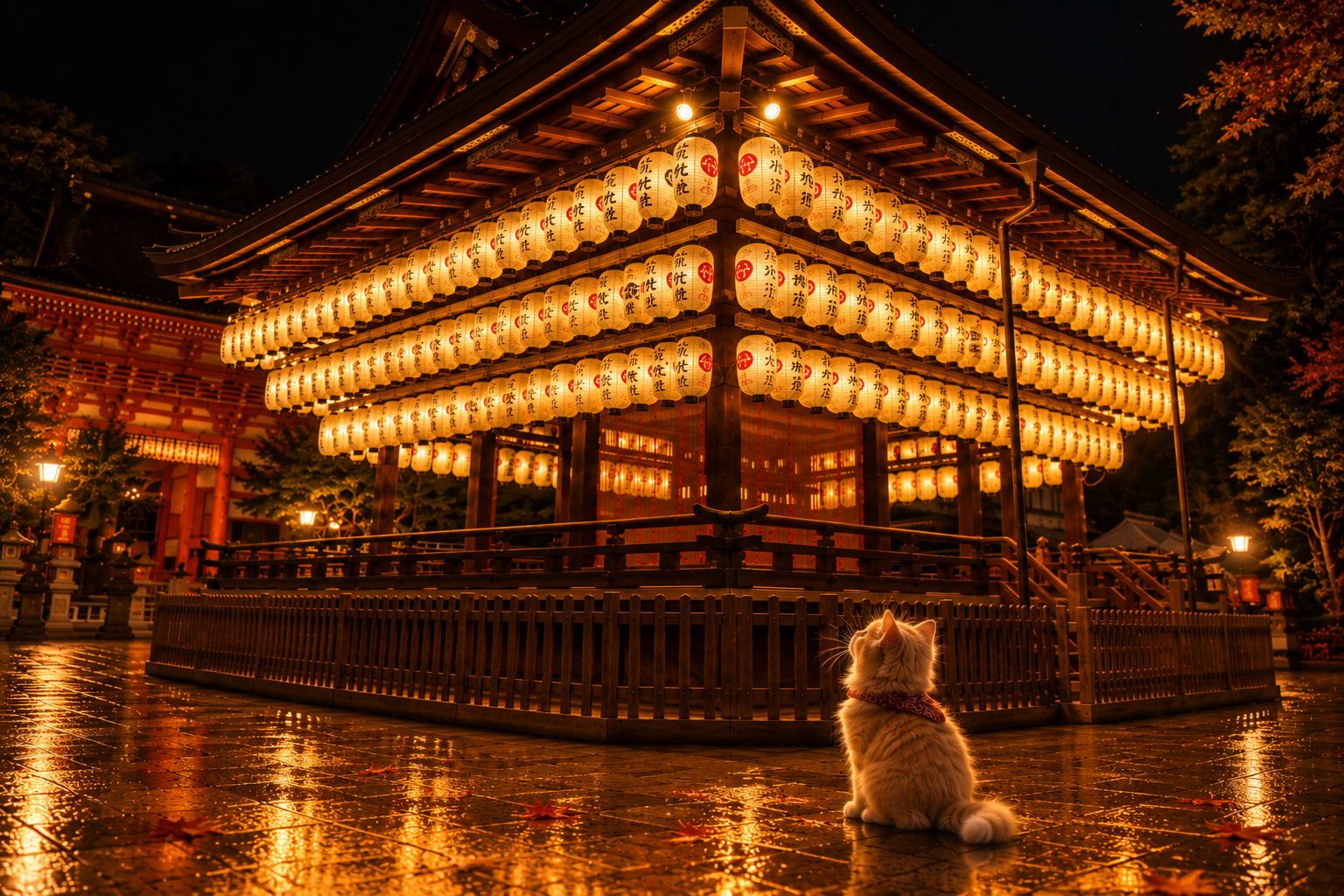
The featured image was AI-generated from a photograph,
with the cat modeled after our family cat.
PR / Ad|This post contains affiliate links.
Read the English + Japanese version|英語+日本語版はこちら
- Introduction|はじめに
- History|歴史
- West Gate|西楼門
- Stone Torii & South Gate|石鳥居・南楼門
- Stone Lanterns|参道の灯籠
- Beauty Water|美容水
- Main Hall (National Treasure)|国宝・本殿
- Dance Stage|舞殿
- Sacred Mikoshi|御神輿
- Popular Smaller Shrines|人気の摂社・末社
- More Smaller Shrines|そのほかの摂社・末社
- Gion Festival|祇園祭
- Okera Mairi|をけら詣り
- 🗺 Google Map
- 🗺 Explore More Kyoto Areas
Introduction|はじめに
Yasaka Shrine is one of Kyoto’s most famous shrines
and the spiritual heart of the Gion district.
Founded more than 1,300 years ago,
it has long been worshipped as a place
to pray for protection from illness,
good health,
and good fortune.
The shrine is also known as the home of the famous Gion Festival,
one of Japan’s three greatest festivals.
🟫 MINI MEMO
Yasaka Shrine was once called Gion Shrine.
Its current name was officially adopted in 1868.
History|歴史
Yasaka Shrine has protected Kyoto for centuries.
The shrine became especially important
during times when epidemics spread across Japan.
People prayed here
for peace,
good health,
and protection from disease.
Today,
the shrine continues to welcome visitors
throughout the year.
West Gate|西楼門
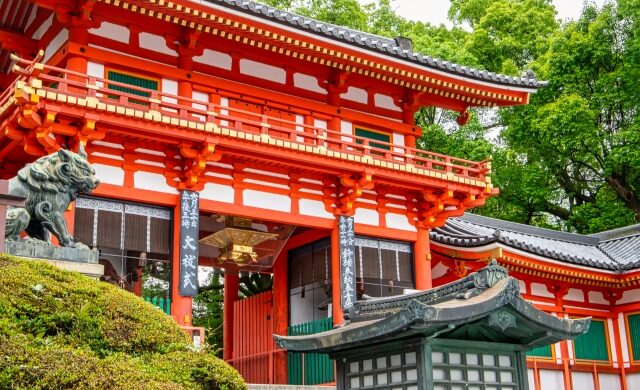
The bright vermilion West Gate faces Shijo Street
and is one of the most recognizable landmarks in Gion.
Many visitors first see this impressive gate
before entering the shrine.
After sunset,
the illuminated gate creates
a beautiful atmosphere.
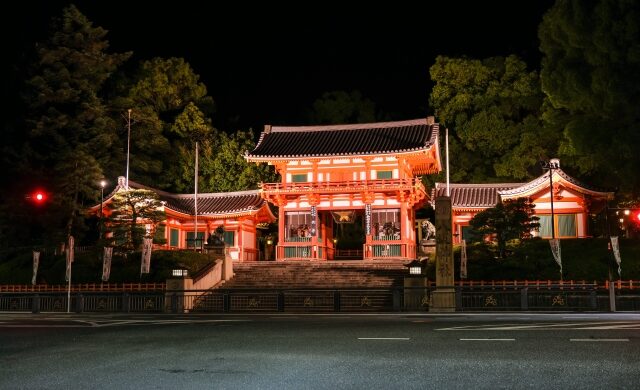
🟫 PHOTO TIP
Try photographing the gate
from across Shijo Street.
The wide view beautifully captures
the entire gate.
Stone Torii & South Gate|石鳥居・南楼門
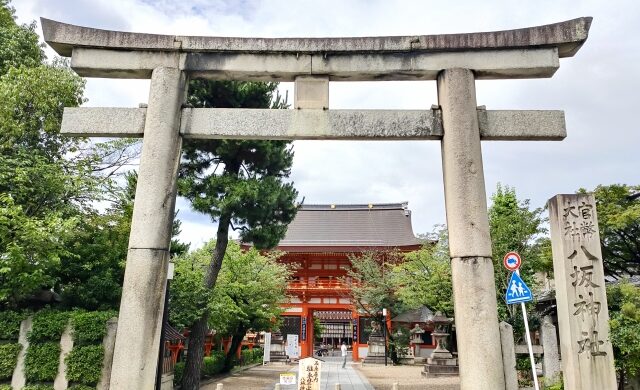
Passing through the large stone torii,
visitors enter the sacred grounds of Yasaka Shrine.
The nearby South Gate
has welcomed worshippers
for generations.
During the Gion Festival,
this area becomes one of Kyoto’s busiest places.
Stone Lanterns|参道の灯籠
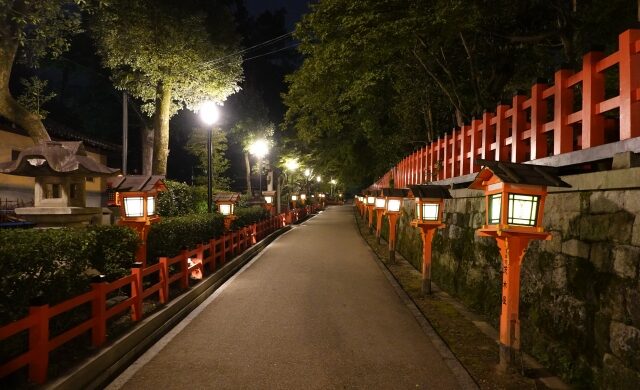
Rows of traditional stone lanterns
line the approach to Yasaka Shrine.
They create a peaceful atmosphere during the day
and become even more beautiful
when illuminated in the evening.
🟫 PHOTO TIP
Visit around sunset
to capture both the lanterns
and the vermilion shrine buildings
in warm evening light.
Beauty Water|美容水
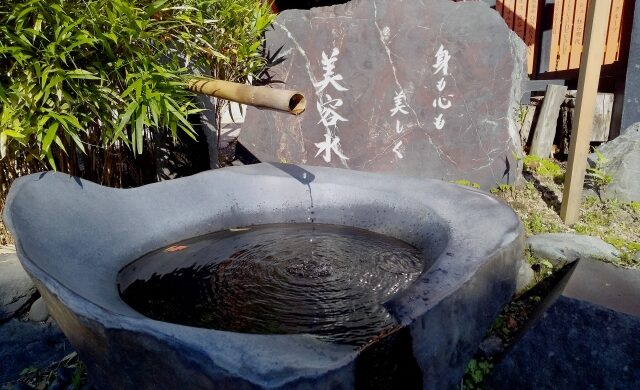
Beauty Water is one of the most popular attractions
at Yasaka Shrine.
Located beside Utsukushigozensha Shrine,
visitors gently apply a few drops of the sacred water
to their skin while praying
for beauty, health, and good fortune.
It has become a favorite spot,
especially among women visiting Kyoto.
🟫 MINI MEMO
Only a few drops are needed.
Visitors traditionally apply the water gently
to their face or hands
while making a quiet wish.
Main Hall (National Treasure)|国宝・本殿
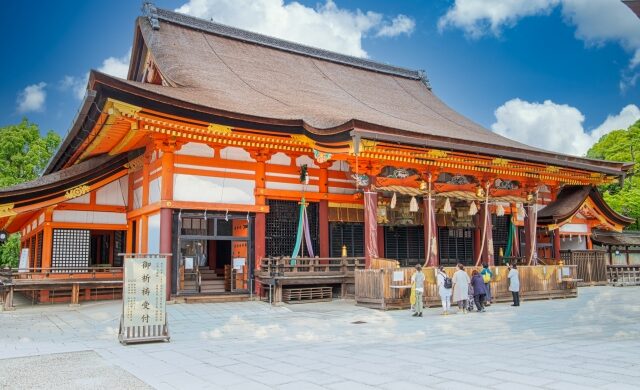
The Main Hall is the most important building
at Yasaka Shrine.
Built in the rare Gion-zukuri style,
the Main Hall and Worship Hall
are connected beneath one large roof.
Visitors come here
to pray for good health,
protection,
and happiness.
🟫 MINI MEMO
Gion-zukuri is a unique architectural style
that can rarely be seen elsewhere in Japan.
Dance Stage|舞殿
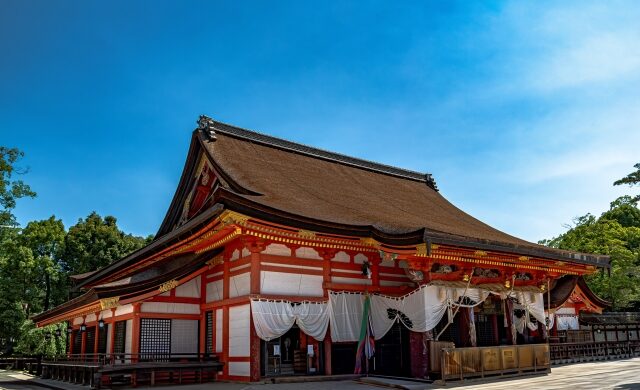
The Dance Stage stands
at the center of the shrine grounds.
Traditional performances,
religious ceremonies,
and festival events
are held here throughout the year.
Rows of lanterns
surround the stage,
creating one of Yasaka Shrine’s most beautiful scenes.
Sacred Mikoshi|御神輿
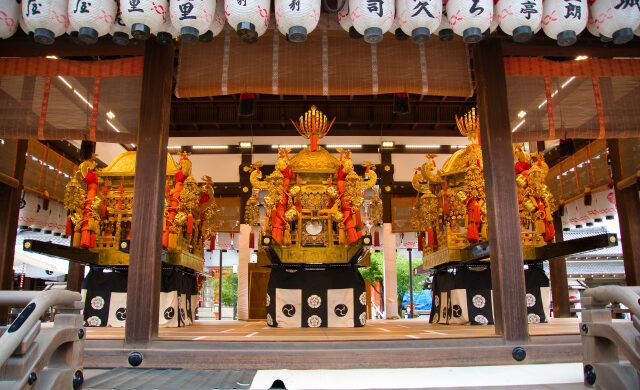
The sacred mikoshi are used during the famous Gion Festival.
They carry the deities through the streets of Kyoto,
bringing blessings and protection to the city.
The beautifully decorated mikoshi
are symbols of the festival’s rich traditions.
🟫 MINI MEMO
Yasaka Shrine has three main mikoshi.
Each one enshrines a different deity
and is carried during the Gion Festival.
Popular Smaller Shrines|人気の摂社・末社
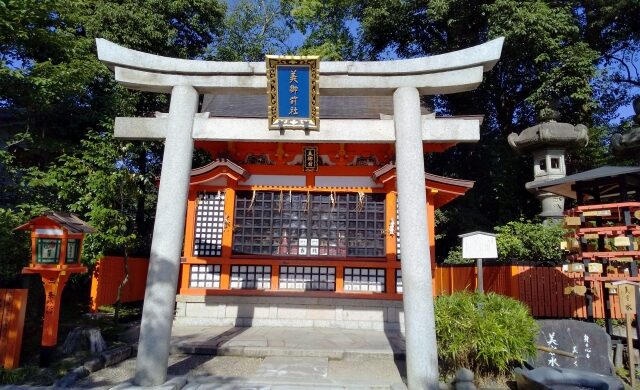
Utsukushigozensha Shrine|美御前社
Beauty is one of the most popular blessings at Yasaka Shrine.
Visitors gently apply the sacred beauty water
while praying for beauty and good health.
Utsukushigozensha is especially popular
among women visiting Kyoto.
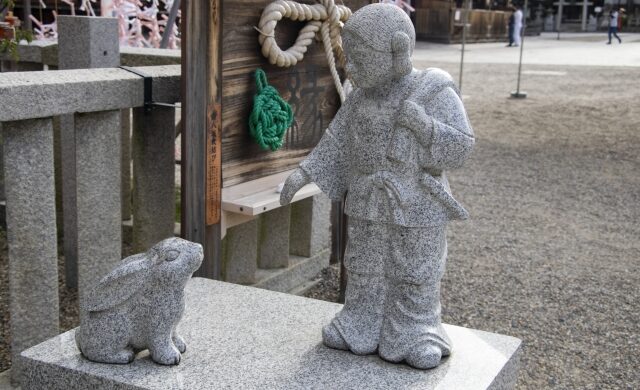
Daikoku-sama & the White Rabbit|大黒様と白兎
Daikoku-sama is worshipped
as a deity of prosperity,
good fortune,
and happy relationships.
Beside the statue,
the White Rabbit of Inaba
reminds visitors of one of Japan’s oldest legends.
Together,
they have become one of the shrine’s most beloved photo spots.
🟫 MINI MEMO
The White Rabbit of Inaba
appears in the Kojiki,
Japan’s oldest historical chronicle.
It is a story about kindness,
compassion,
and good fortune.
More Smaller Shrines|そのほかの摂社・末社
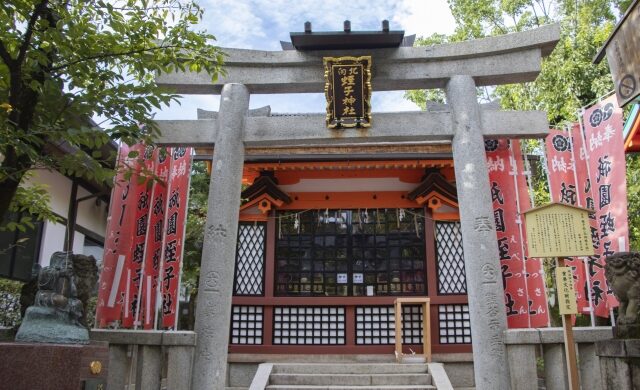
Kitamuki Ebisu Shrine|北向蛭子社
Kitamuki Ebisu Shrine is dedicated
to the god of prosperous business.
Many shop owners
and business people visit
to pray for success and prosperity.
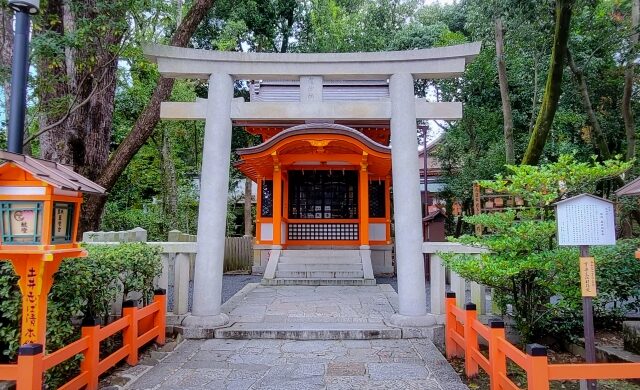
Ekijinja Shrine|疫神社
Ekijinja Shrine
is associated with protection from illness
and good health.
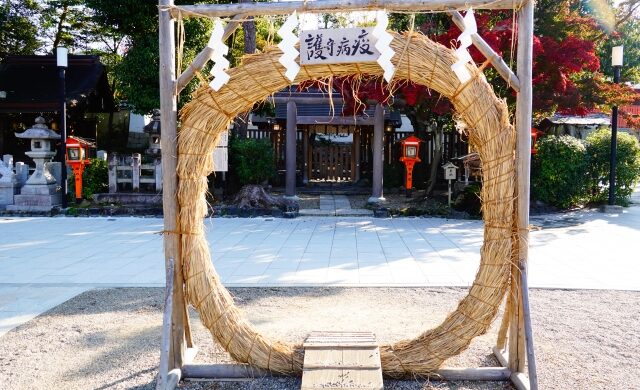
During the Summer Purification Festival,
visitors pass through a sacred grass ring
to pray for a healthy year.
🟫 REAL INFO
The Summer Purification Festival
is usually held on July 31.
Walking through the sacred grass ring
symbolizes leaving misfortune behind
and welcoming good health.
Gion Festival|祇園祭
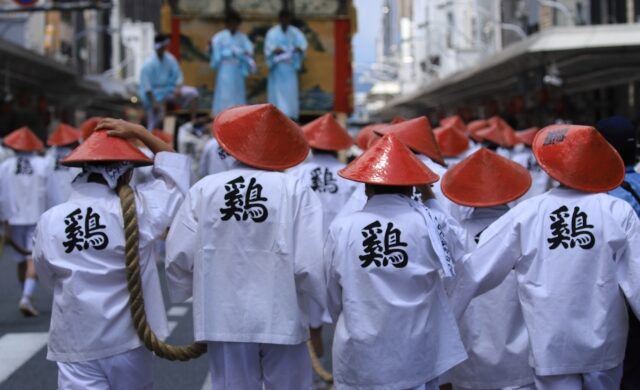
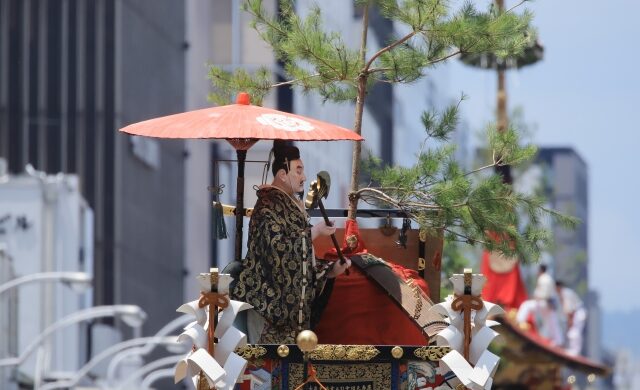
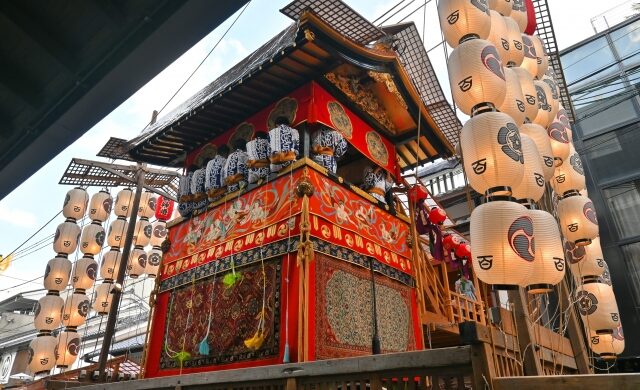
The Gion Festival is the most famous event
at Yasaka Shrine.
Held throughout July,
it is one of Japan’s three greatest festivals.
Magnificent floats,
sacred mikoshi,
and traditional music
fill the streets of Kyoto with excitement.
🟫 MINI MEMO
The Gion Festival
began more than 1,000 years ago
as a prayer to end an epidemic.
Today,
it is recognized
as one of Japan’s most important traditional festivals.
Okera Mairi|をけら詣り
Every New Year’s Eve,
Yasaka Shrine holds
the traditional Okera Mairi ceremony.
Visitors carry home
a sacred flame
while praying
for a healthy and peaceful new year.
🟫 CAT MEMO 🐾
“Did I turn it on, nya?”
🗺 Google Map
Yasaka Shrine is much more than
a famous sightseeing spot.
Its beautiful gates,
historic buildings,
traditional festivals,
and peaceful atmosphere
have watched over Kyoto for centuries.
The bright vermilion buildings
may first catch your attention.
But the quiet sound of prayers
and the peaceful atmosphere
may stay in your heart even longer. 🌿
Thank you for visiting Yasaka Shrine.
We hope your walk through Gion
brings you peace,
good fortune,
and wonderful memories of Kyoto. 🐾
🗺 Explore More Kyoto Areas
Kyoto is divided into several unique areas, each offering different attractions and experiences.