The featured image is an AI-generated illustration.
PR / Ad|This post contains affiliate links.
Read the English + Japanese version|英語+日本語版はこちら
Introduction|はじめに
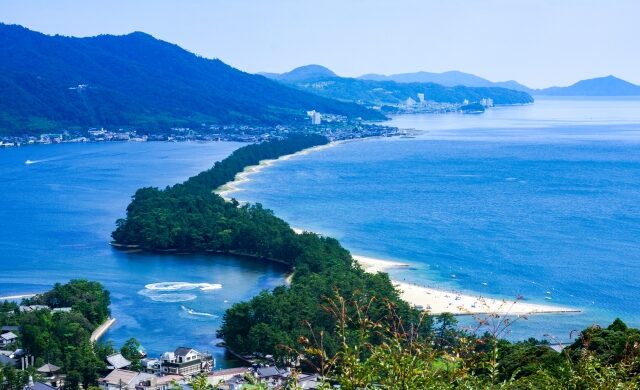
A narrow sandbar stretching across the sea.
Thousands of pine trees.
And a landscape said to resemble a dragon.
Amanohashidate, located in northern Kyoto,
is one of Japan’s Three Scenic Views.
Its pine-covered sandbar stretches about
3.6 kilometers across Miyazu Bay.
From the south,
it is called the Flying Dragon View.
From the north,
it becomes the Rising Dragon View.
But why does the same landscape resemble
two different dragons?

Hiryukan|空を飛ぶ龍
Start at Amanohashidate View Land on the
southern side.
From the viewpoint, the long sandbar
stretches between the blue waters
of Miyazu Bay.
This view is known as Hiryukan, or the
“Flying Dragon View.”
The shape of the sandbar is said to
resemble a dragon flying through the sky.
■ Photo Tip|Capture the Entire Sandbar in One Shot
Try including the entire sandbar and the
sea on both sides.
Shoryukan|空へ昇る龍
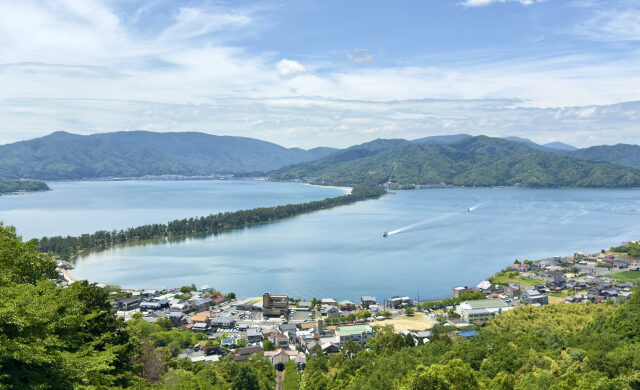
Now look at Amanohashidate from the
opposite direction.
Kasamatsu Park, on the northern side,
offers another famous view.
From here, the sandbar is said to resemble
a dragon rising toward the sky.
This view is called Shoryukan, or the
“Rising Dragon View.”
The sandbar itself has not changed.
Only the direction has.
Yet the dragon seems
to take on a different form.
■ Memo|The Legend Behind the Name Amanohashidate
According to an old legend, the god Izanagi
created a ladder connecting heaven and
earth. When the ladder fell, it became
Amanohashidate.
Matanozoki|逆さまに見ると?
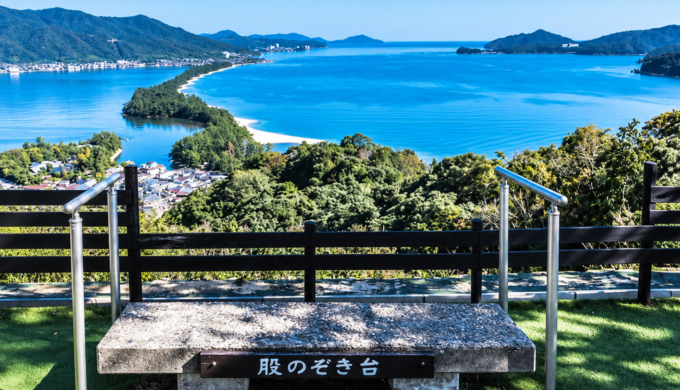
There is another unusual way to enjoy
Amanohashidate.
Turn your back to the scenery, bend
forward, and look between your legs.
This is called Matanozoki.
When viewed upside down, the sea and sky
appear to change places.
The sandbar seems to float
like a bridge in the heavens.
The landscape is the same.
But changing how you look at it creates an
entirely different impression.
■ Memo|The Birthplace of Matanozoki
Kasamatsu Park is known as the birthplace
of Matanozoki. You can enjoy this famous
viewing style at both Kasamatsu Park and
Amanohashidate View Land.

or a bridge floating across the sea.
But what will we discover
when we step into the landscape itself?
Walking Among the Pines|松並木の中へ
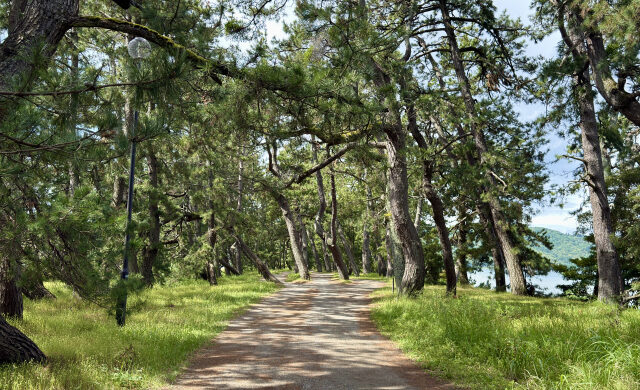
From the viewpoints, Amanohashidate looks
like one long line across the sea.
But beneath the pine trees, the scenery
feels completely different.
Pine trees line the path, and the sea
appears through the branches.
You can feel the breeze and hear the waves
nearby.
The landscape you admired from above
becomes a place you can walk through.
■ Memo|A Walk Across Amanohashidate
Walking across Amanohashidate takes about
50 minutes one way. By bicycle, it takes
about 20 minutes.
Kaisenkyo Bridge|90度回る不思議な橋
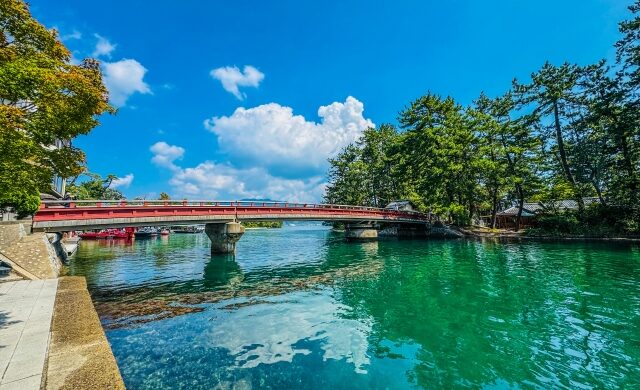
Near the southern entrance stands
Kaisenkyo, an unusual rotating bridge.
When boats need to pass, the bridge turns
90 degrees to open the waterway.
A bridge that moves instead of staying
still.
If you are lucky, you may see it rotating
during your visit.
■ Photo Tip|Capture the Rotating Bridge
If the bridge begins to rotate, photograph
it from a safe place where you can include
both the bridge and the passing boat.
Isoshimizu|海の中に湧く真水?
Among the pine trees stands a small shrine
known as Amanohashidate Shrine, or
Hashidate Myojin.
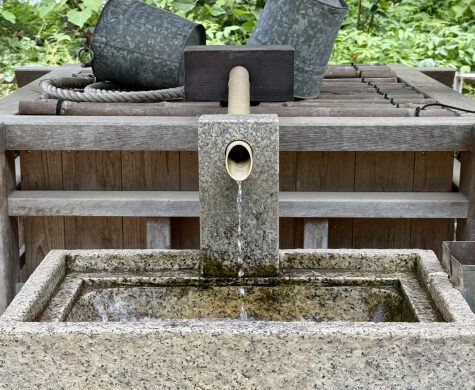
Nearby is a surprising freshwater spring
called Isoshimizu.
Although the spring is located on a narrow
sandbar surrounded by the sea, its water is
fresh rather than salty.
This remarkable spring was selected as one
of Japan’s 100 Famous Waters in 1985.
■ Memo|The Water of Isoshimizu Spring
Isoshimizu is used for purification at
Amanohashidate Shrine, but the water is not
suitable for drinking.

Chionji Temple|知恵を授けるお寺
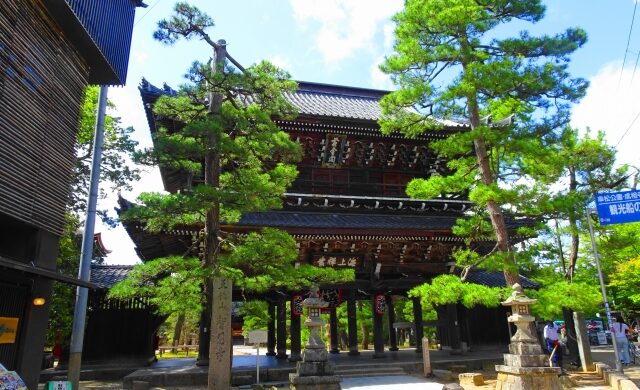
Near the southern entrance to
Amanohashidate stands Chionji Temple.
It is known as one of Japan’s Three Monju
temples and is dedicated to Monju Bosatsu,
the bodhisattva of wisdom.
Many visitors come to pray for wisdom and
success in examinations.
The temple’s impressive Sanmon Gate, also
called Ogonkaku, is another sight worth
seeing.
🟫 CAT MEMO 🐾
“Matanozoki is hard, meow!”
🗺 Google Map
Official Kyoto Tourism Guide|京都府観光連盟
Before your visit, please check the official website for the latest information.
From the south, a flying dragon.
From the north, a rising dragon.
And upside down, a bridge floating in the
heavens.
Amanohashidate changes its appearance
depending on where and how you look.
And beneath the pine trees, there are even
more small wonders waiting to be
discovered.
Perhaps looking at the same place from a
different perspective will make your
journey even more memorable.
Thank you
for visiting
Amanohashidate.
May your time here
bring you peace
and beautiful memories.
And may your journey
through Kyoto
be a wonderful one. 🐾
🗺 Explore More Kyoto Areas
Kyoto is divided into several unique areas,
each offering different attractions and experiences.