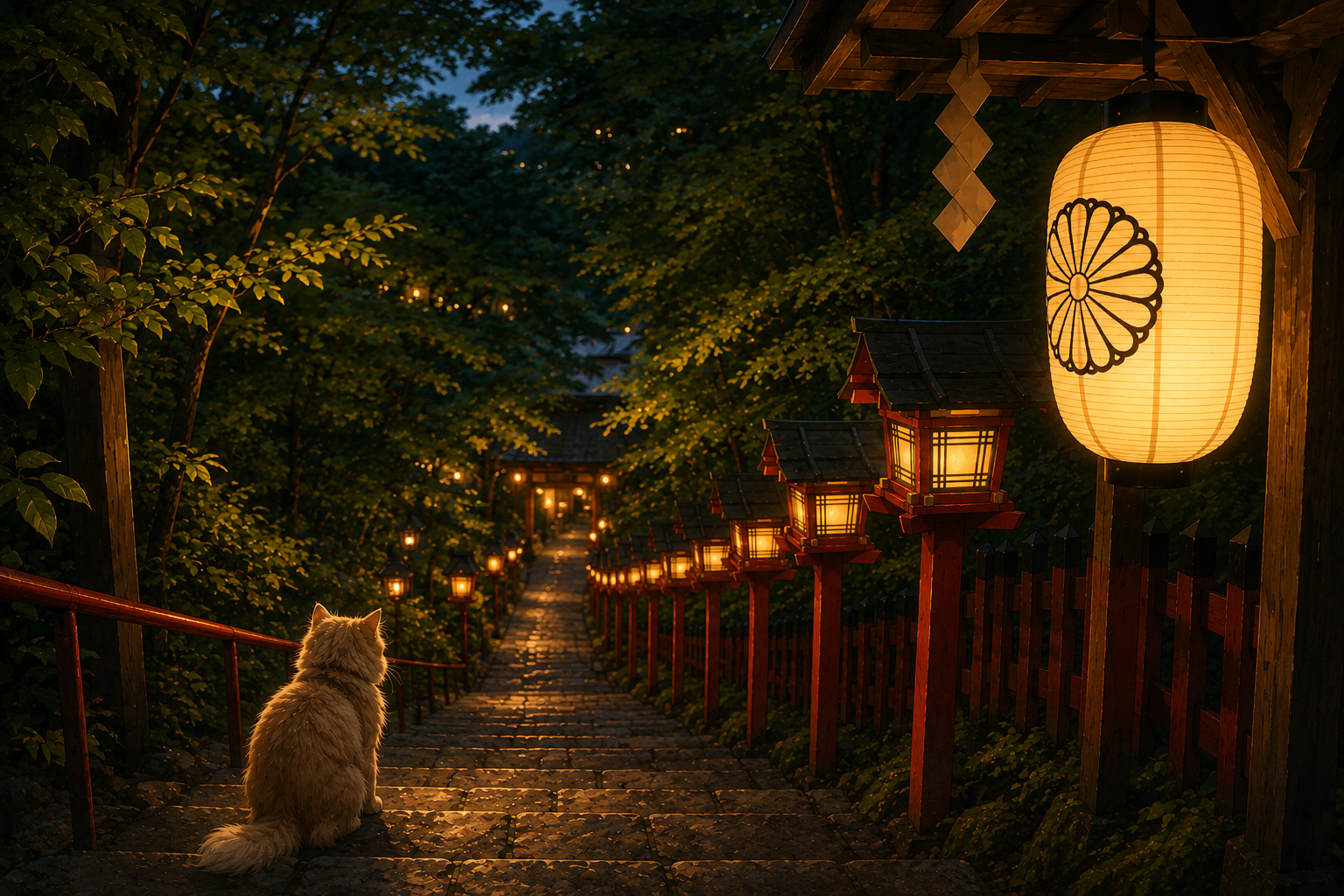
The featured image is an AI-generated illustration.
PR / Ad|This post contains affiliate links.
Read the English + Japanese version|英語+日本語版はこちら
Introduction|はじめに
Red lanterns along stone steps.
The gentle sound of flowing water.
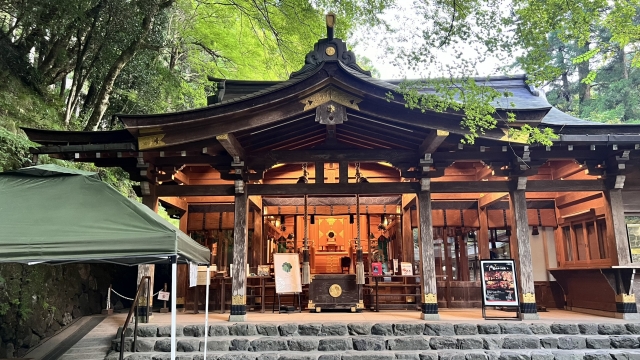
And a quiet shrine surrounded by mountains.
Kifune Shrine is an ancient shrine
in the mountains of northern Kyoto,
dedicated to a deity of water and rain.
But why has water been
so important to this shrine
for so many centuries?

Deity of Water|なぜ水の神様を祀るの?
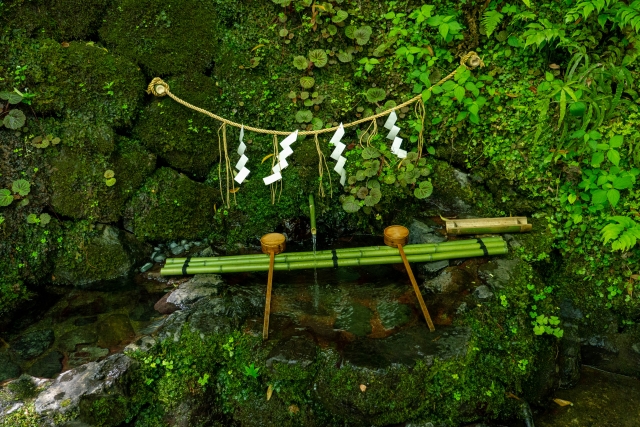
Kifune Shrine is dedicated to
Takaokami-no-Kami,
a deity associated with water and rain.
For centuries,
people have prayed here
for rain during droughts
and for rain to stop during floods.
Water was essential
for farming and daily life.
The shrine became an important place
for prayers connected with water.
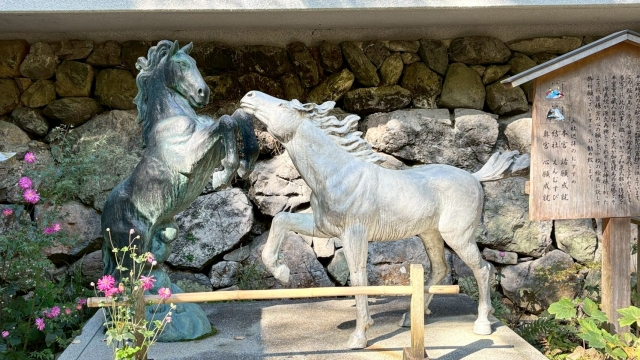
■ Memo|Offering Horses to Pray for Rain
According to tradition,
black horses were offered
when praying for rain,
while white horses were offered
when praying for clear weather.
This custom is also connected
with the history of ema,
the wooden prayer plaques
seen at Japanese shrines today.
The Legend of Okumiya|奥宮に残る船の伝説
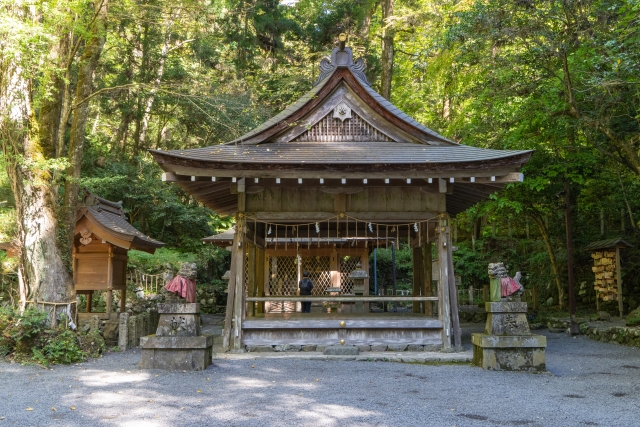
Deep in the mountains
stands Okumiya,
the site where Kifune Shrine
is traditionally believed
to have first been established.
An old legend tells of
Princess Tamayori,
who traveled upstream by boat
in search of a sacred place.
When she reached this area,
she is said to have enshrined
the deity of water.
A stone-covered mound
called Funagata-ishi
is traditionally associated
with the boat in this legend.
■ Memo|Okumiya Was Once the Main Shrine
Okumiya is considered
the shrine’s original sacred site.
The Main Shrine was later moved
to its present location.
the stories of water and the old shrine,
what can we discover
along the three-shrine pilgrimage?
Main Shrine|赤い灯籠と水占みくじ
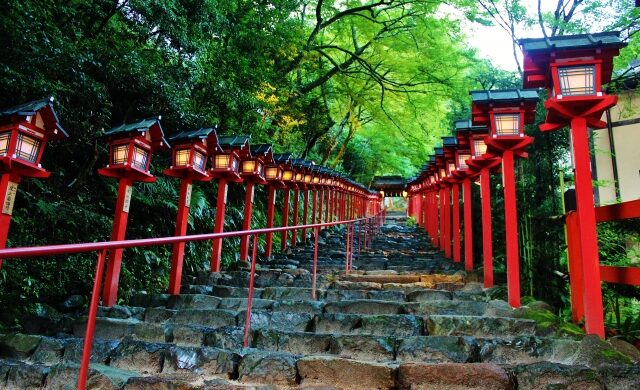
The Main Shrine is famous
for its stone staircase
lined with red lanterns.
Here, visitors can also try
a special kind of fortune-telling
called Mizuura Mikuji.
At first, the paper appears blank.
But when placed on water,
the fortune gradually appears.
■ Photo Tip|Stone Steps Lined with Lanterns
Try photographing the staircase
from below to capture
the rows of red lanterns.
Please avoid blocking the steps
or other visitors while taking photos.
Yui no Yashiro|和泉式部と縁結び
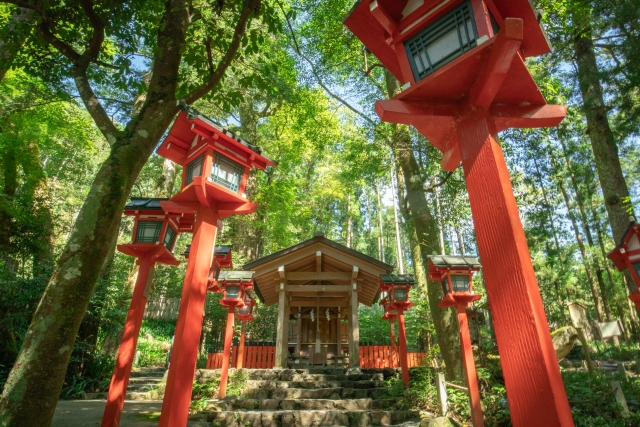
Between the Main Shrine
and Okumiya stands Yui no Yashiro,
a shrine known for matchmaking.
According to tradition,
the Heian-period poet
Izumi Shikibu visited this shrine
to pray for her relationship
with her husband.
Today, visitors pray here
for love, relationships
and meaningful connections.
Okumiya|森の奥に残る静けさ
Continuing deeper into the mountains,
visitors reach Okumiya,
surrounded by tall trees
and a peaceful forest.
This is the place connected
with the ancient boat legend
introduced earlier.
Knowing the story may make
this quiet forest shrine
feel even more special.

what seasonal beauty
awaits visitors in Kibune?
Summer Kawadoko|川の上で過ごす夏
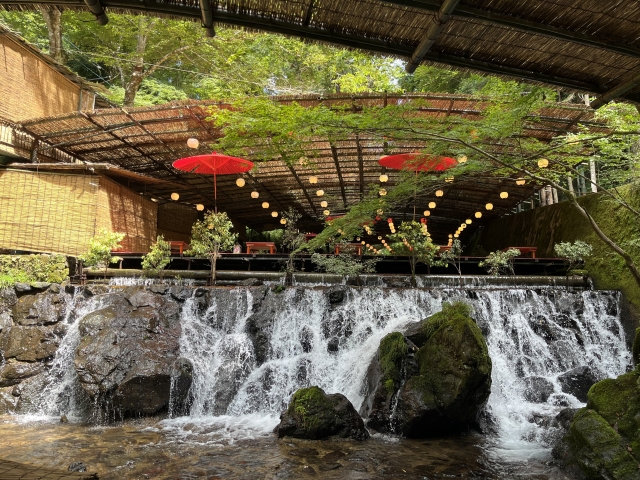
In summer, Kibune is known
for its traditional riverside dining
called Kawadoko.
Dining platforms are built
just above the flowing river,
allowing guests to enjoy meals
surrounded by cool mountain air.
The sound of the river
makes this a memorable
summer experience in Kyoto.
Autumn Illumination|夜に浮かぶ赤い灯籠
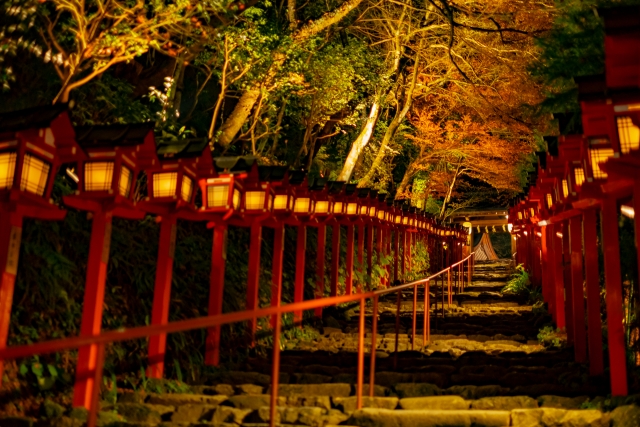
During special seasonal events,
Kifune Shrine may be illuminated
after sunset.
The glowing lanterns
and autumn leaves
create a beautiful atmosphere
different from the daytime.
■ Photo Tip|Twilight and Lantern Light
If illumination is held,
try photographing the lanterns
during the blue hour,
just after sunset.
The soft blue sky
can create a beautiful contrast
with the warm lantern light.

🟫 CAT MEMO 🐾
“What will it say, nya?
I can’t wait to see!”
🗺 Google Map
Official Website|貴船神社 公式ホームページ
Before your visit, please check the official website for the latest information.
Kifune Shrine has long been
a place of prayer
connected with water and nature.
From the ancient boat legend
to the three sacred shrines,
its stories remain
among the quiet mountains.
And beyond the shrine,
the flowing river
and changing seasons
offer even more to discover.
Perhaps knowing these stories
will make your walk through Kibune
a little more memorable.
Thank you
for visiting
Kifune Shrine.
May your time here
bring you peace
and beautiful memories.
And may your journey
through Kyoto
be a wonderful one. 🐾
🗺 Explore More Kyoto Areas
Kyoto is divided into several unique areas,
each offering different attractions and experiences.