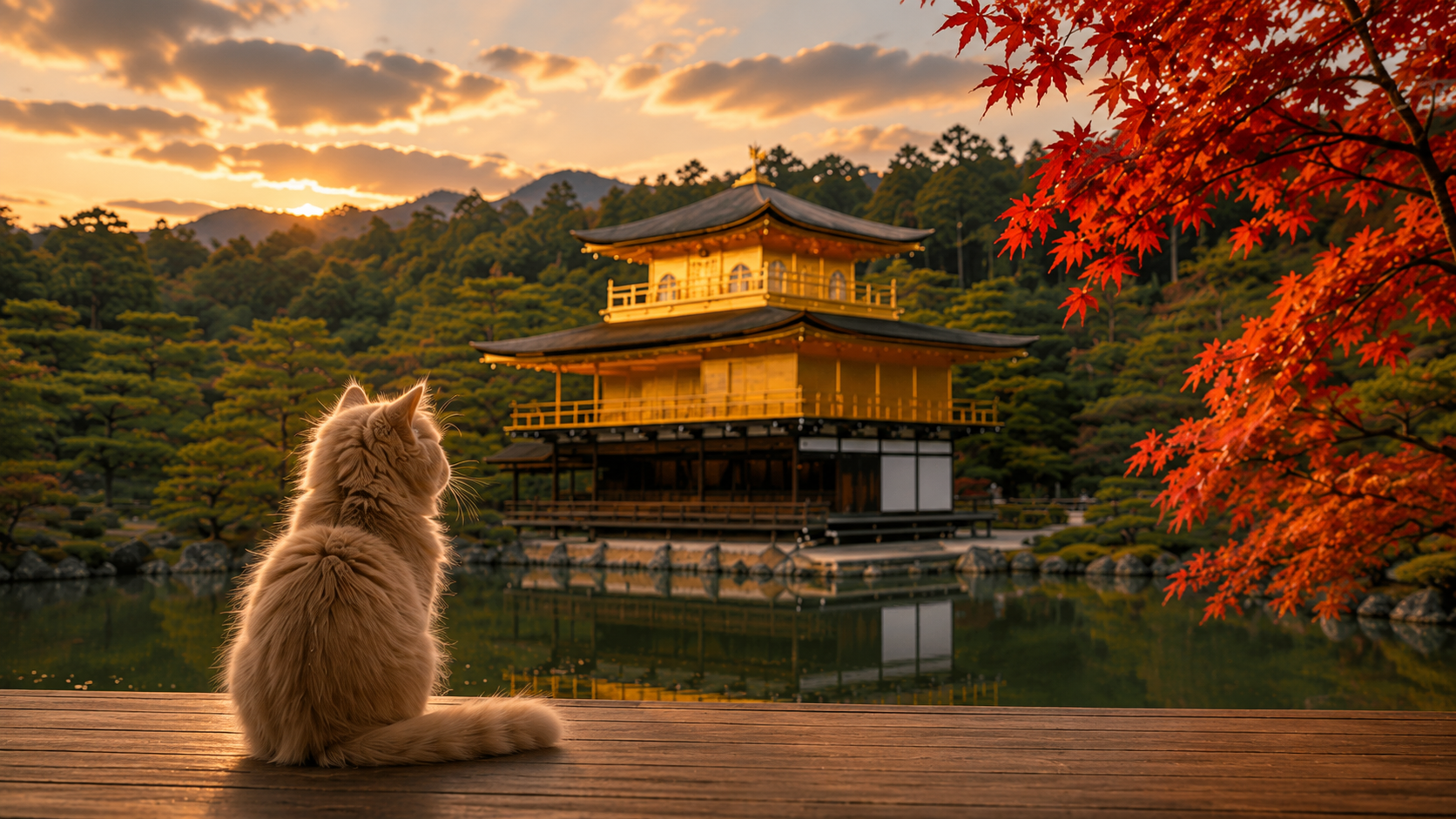
The featured image was AI-generated from a photograph,
with the cat modeled after our family cat.
PR / Ad|This post contains affiliate links.
Read the English + Japanese version|英語+日本語版はこちら
Introduction|はじめに
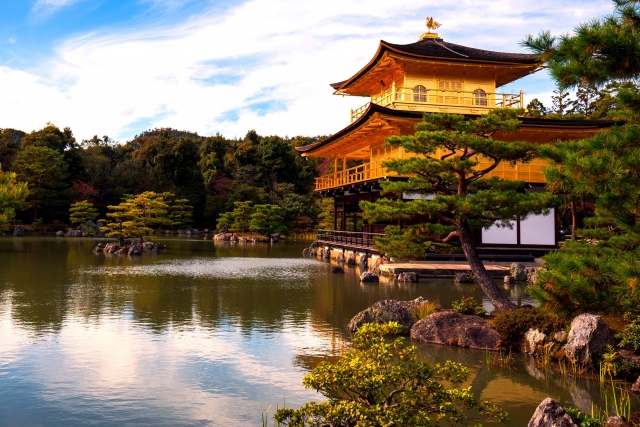
Kinkaku-ji is one of Kyoto’s most famous temples.
Its official name is Rokuon-ji,
a Zen temple belonging to the Rinzai school.
The temple is best known
for the Golden Pavilion,
which stands beside Kyōko-chi Pond.
Together with the pond,
islands,
stones,
and surrounding trees,
the pavilion creates
one of Kyoto’s most iconic views.
🟫 MINI MEMO
Rokuon-ji became part of the UNESCO World Heritage site
“Historic Monuments of Ancient Kyoto”
in 1994.
History|歴史
The history of Kinkaku-ji
is closely connected with
Ashikaga Yoshimitsu,
the third shogun of the Muromachi shogunate.
In 1397,
Yoshimitsu acquired an estate
that had belonged to the Saionji family
and began building his villa,
Kitayama-dono.
The villa became an important center
of politics,
international exchange,
and the culture now known as Kitayama Culture.
After Yoshimitsu’s death,
the villa was converted into a Zen temple
and named Rokuon-ji
after his posthumous Buddhist name.
🟫 MINI MEMO
The former Golden Pavilion
was destroyed by fire in 1950.
The pavilion seen today
was rebuilt in 1955.
Golden Pavilion|舎利殿・金閣
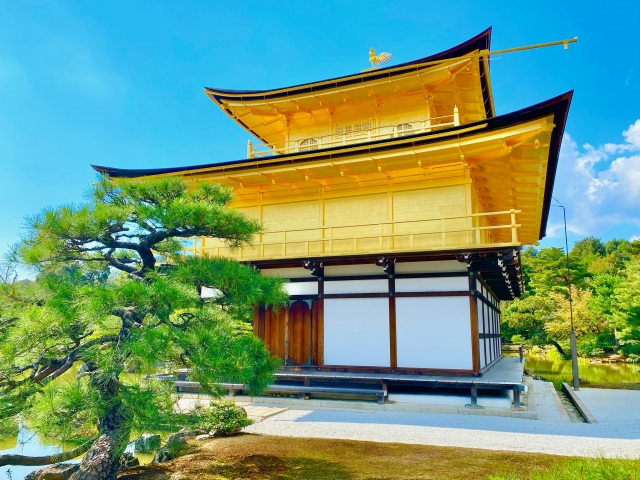
The Golden Pavilion is officially called Shariden.
Its three floors combine
different styles of Japanese architecture.
The first floor is designed
in the aristocratic residential style
of the Heian period.
The second floor reflects
the style of samurai residences,
while the third floor
is designed in the style of a Chinese Zen hall.
The second and third floors
are covered with gold leaf
applied over lacquer.
🟫 MINI MEMO
The roof is covered
with thin layers of sawara cypress wood
in a traditional style called kokera-buki.
Kyōko-chi Pond|鏡湖池
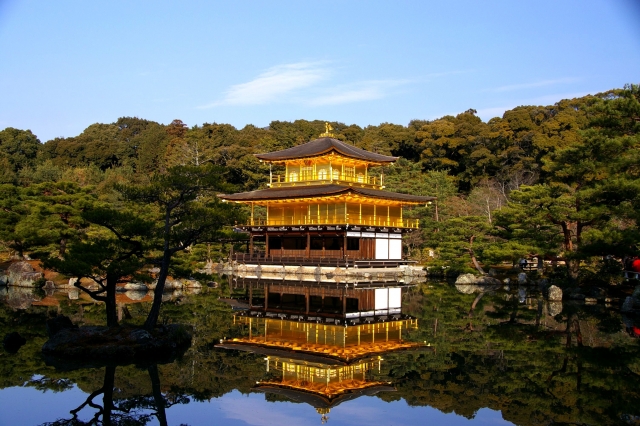
Kyōko-chi Pond lies
in front of the Golden Pavilion.
The pond is the center
of the temple garden
and contains several islands
and carefully arranged stones.
The Golden Pavilion,
its reflection,
and the surrounding garden
form one complete landscape.
🟫 PHOTO TIP
The main viewing area
across Kyōko-chi Pond
offers one of the best-known views
of the Golden Pavilion.
The appearance of the reflection
changes with the wind,
light,
and weather.
Golden Phoenix|鳳凰
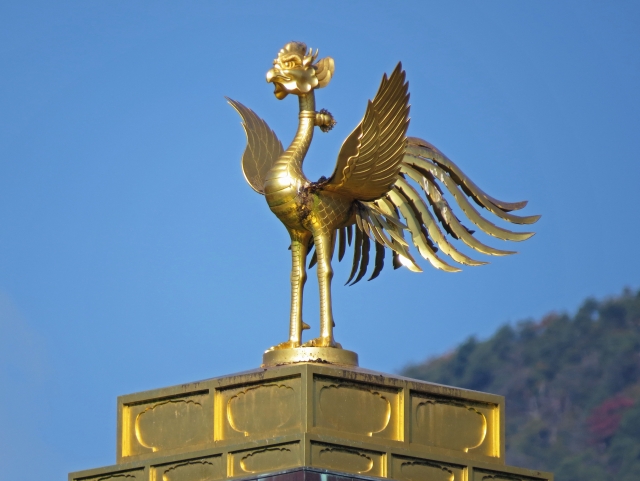
A golden phoenix
stands on the roof
of the Golden Pavilion.
In Chinese tradition,
the phoenix is considered
an auspicious bird.
It may look small
when viewed from across the pond,
so look carefully
at the top of the roof.
🟫 MINI MEMO
The phoenix from the former pavilion
had been removed before the 1950 fire
and escaped damage.
Rikushū-no-Matsu Pine Tree|陸舟の松
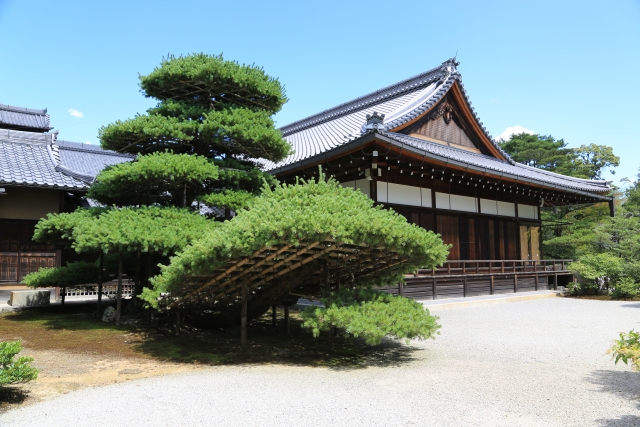
Rikushū-no-Matsu is a pine tree
carefully shaped
to resemble a sailing ship.
It is traditionally said
to have been planted
by Ashikaga Yoshimitsu.
Its bow points west,
in the direction associated
with the Buddhist Pure Land.
🟫 PHOTO TIP
The long horizontal branches
create the shape of a ship.
Try viewing the pine
from a short distance away
to see its full form.
Ryūmon Waterfall|龍門の滝
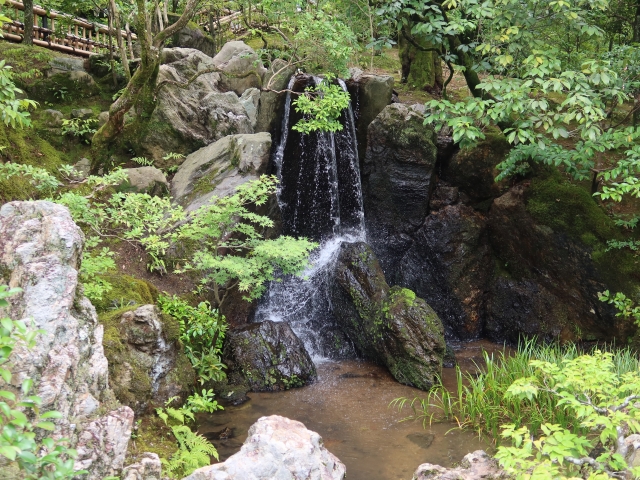
Ryūmon Waterfall is a small waterfall
about 2.3 meters high.
At the bottom of the waterfall
is a stone called Rigyo-seki,
or the Carp Stone.
It represents a carp
trying to climb the waterfall
and is connected with
the Chinese legend
of a carp becoming a dragon.
🟫 MINI MEMO
The Japanese expression tōryūmon,
meaning a gateway to success,
comes from this legend.
Anmintaku Pond & White Snake Mound|安民沢と白蛇の塚
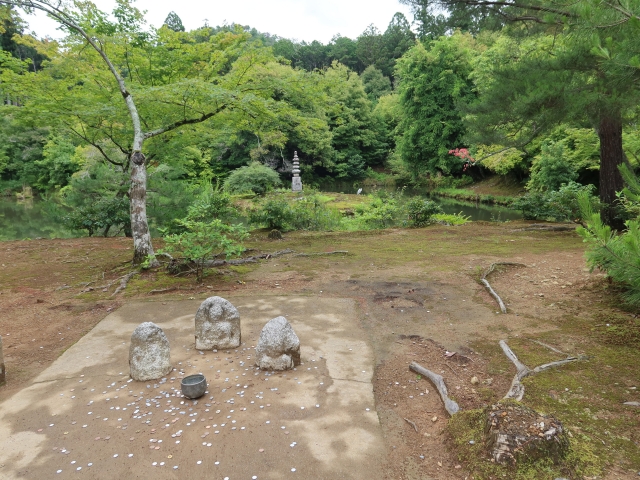
Anmintaku is a quiet pond
surrounded by trees
deeper in the temple grounds.
The pond was traditionally used
as a place to pray for rain
because it was said
not to dry up
even during long periods
without rainfall.
On the small island
stands a stone pagoda
known as the White Snake Mound.
🟫 MINI MEMO
The White Snake Mound
is traditionally connected
with the Saionji family,
who owned an estate here
before Ashikaga Yoshimitsu.
Sekka-tei Tea House|夕佳亭
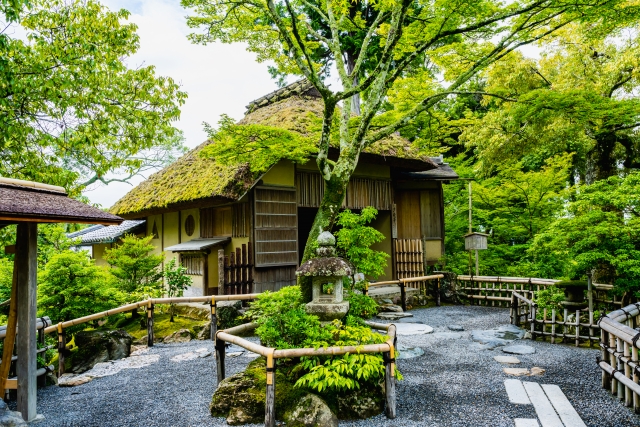
Sekka-tei is a small tea house
located on higher ground
in the garden.
It was created
in the Edo period
in a style associated
with the tea master Kanamori Sōwa.
The name Sekka-tei refers
to the beautiful view
of the Golden Pavilion
in the evening light.
🟫 MINI MEMO
The tea house is known
for its nandina-wood pillar
and its decorative shelves
made with bush clover wood.
Fudō-dō Hall|不動堂
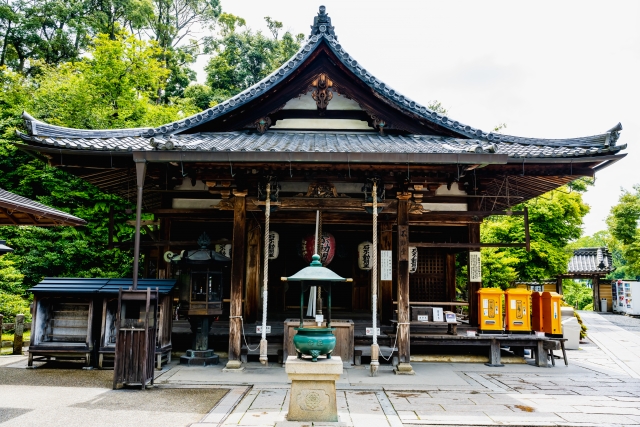
Fudō-dō is a Buddhist hall
dedicated to Fudō Myōō.
Its principal image
is a stone statue of Fudō Myōō
traditionally attributed
to Kūkai,
also known as Kōbō Daishi.
The statue is normally hidden
from public view.
🟫 MINI MEMO
Special ceremonies
when the hidden statue is shown
are held on February 3
and August 16.
🟫 REAL INFO
Kinkaku-ji is usually open
from 9:00 a.m. to 5:00 p.m.
Opening hours and admission details
may change,
so please check the official website
before visiting.
🟫 CAT MEMO 🐾

“S-so bright, nya…!”🐾
🗺 Google Map
The Golden Pavilion
may catch your eyes first.
But the pond,
garden paths,
tea house,
and quiet temple halls
are also important parts
of Kinkaku-ji.
Take your time
and enjoy the changing scenery
as you walk through the garden.
Thank you for visiting Kinkaku-ji.
We hope this golden Kyoto walk
brings you a peaceful moment too 🐾
🗺 Explore More Kyoto Areas
Kyoto is divided into several unique areas, each offering different attractions and experiences.