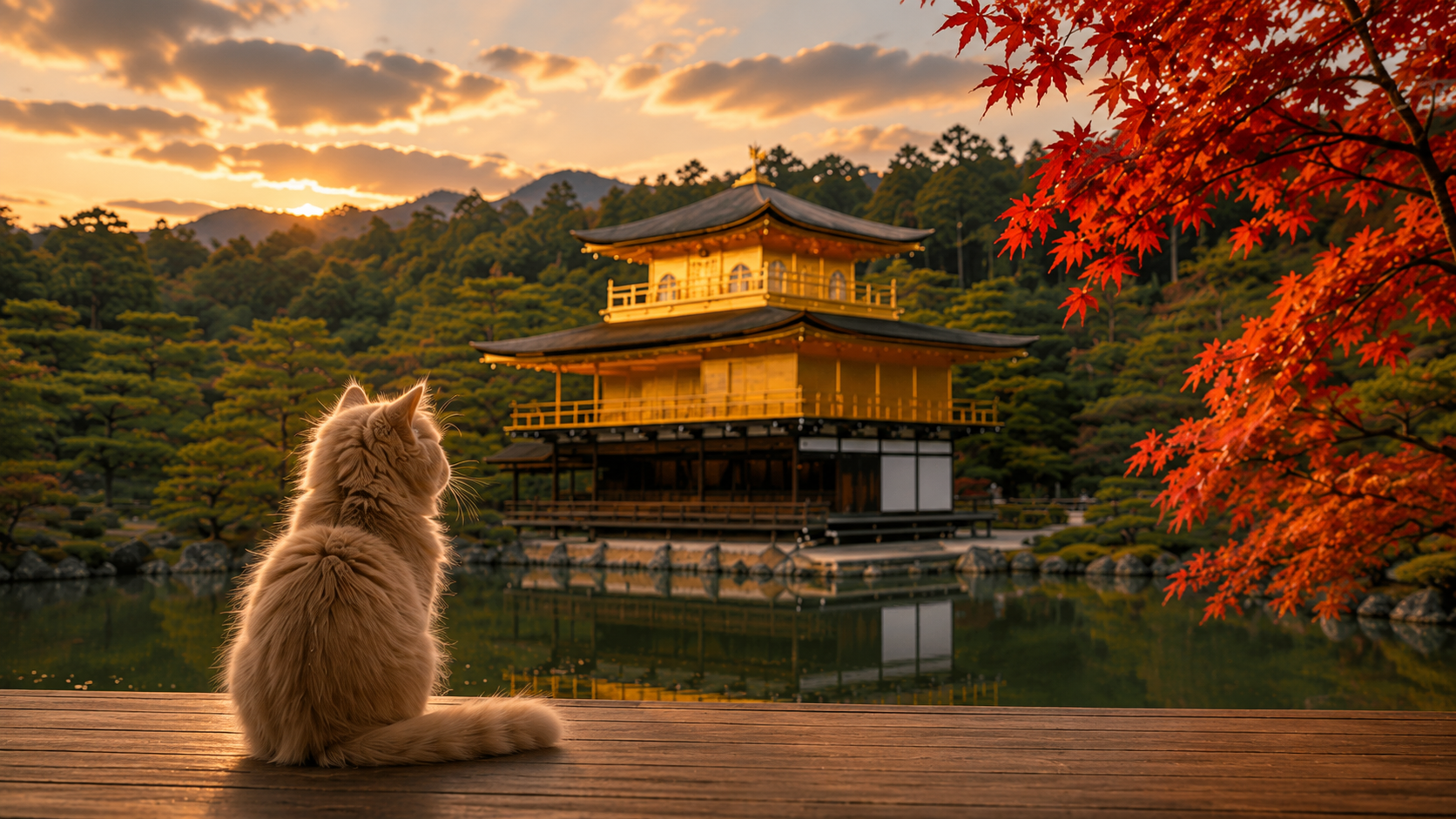
The featured image was AI-generated from a photograph,
with the cat modeled after our family cat.
PR / Ad|This post contains affiliate links.
Read the English version|英語版はこちら
Introduction|はじめに
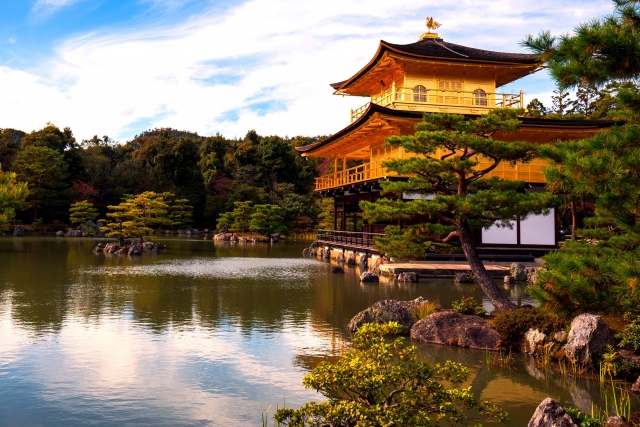
Kinkaku-ji is one of Kyoto’s most famous temples.
Its official name is Rokuon-ji,
a Zen temple belonging to the Rinzai school.
The temple is best known
for the Golden Pavilion,
which stands beside Kyōko-chi Pond.
Together with the pond,
islands,
stones,
and surrounding trees,
the pavilion creates
one of Kyoto’s most iconic views.
金閣寺は、
京都を代表する有名なお寺のひとつです。
正式名称は
鹿苑寺(ろくおんじ)といい、
臨済宗の禅寺です。
境内で特に有名なのが、
鏡湖池のほとりに建つ
舎利殿「金閣」。
池や島、
庭石、周囲の木々とともに、
京都を代表する景観をつくり出しています。
🟫 MINI MEMO
Rokuon-ji became part of the UNESCO World Heritage site
“Historic Monuments of Ancient Kyoto”
in 1994.
鹿苑寺は1994年、
「古都京都の文化財」の一部として
世界文化遺産に登録されました。
History|歴史
The history of Kinkaku-ji
is closely connected with
Ashikaga Yoshimitsu,
the third shogun of the Muromachi shogunate.
In 1397,
Yoshimitsu acquired an estate
that had belonged to the Saionji family
and began building his villa,
Kitayama-dono.
The villa became an important center
of politics,
international exchange,
and the culture now known as Kitayama Culture.
After Yoshimitsu’s death,
the villa was converted into a Zen temple
and named Rokuon-ji
after his posthumous Buddhist name.
金閣寺の歴史は、
室町幕府第3代将軍
足利義満と深く関わっています。
1397年、
義満は西園寺家の山荘を譲り受け、
北山殿の造営を始めました。
北山殿は、
政治や国際交流の舞台となり、
現在「北山文化」と呼ばれる文化が
花開いた場所でもあります。
義満の死後、
北山殿は禅寺となり、
義満の法号にちなんで
鹿苑寺と名づけられました。
🟫 MINI MEMO
The former Golden Pavilion
was destroyed by fire in 1950.
The pavilion seen today
was rebuilt in 1955.
かつての金閣は、
1950年の火災によって焼失しました。
現在の金閣は、
1955年に再建されたものです。
Golden Pavilion|舎利殿・金閣
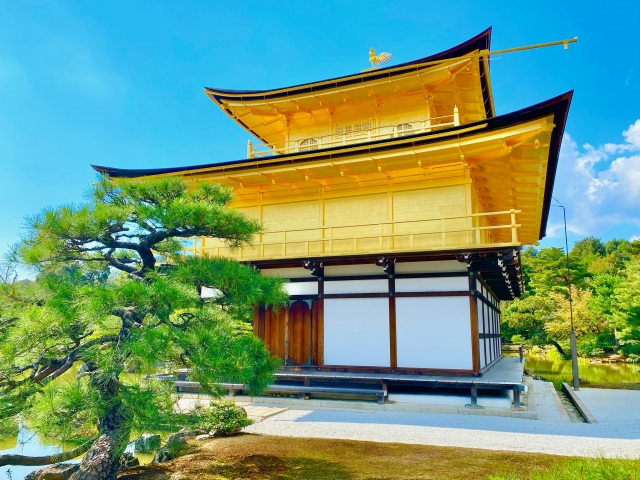
The Golden Pavilion is officially called Shariden.
Its three floors combine
different styles of Japanese architecture.
The first floor is designed
in the aristocratic residential style
of the Heian period.
The second floor reflects
the style of samurai residences,
while the third floor
is designed in the style of a Chinese Zen hall.
The second and third floors
are covered with gold leaf
applied over lacquer.
舎利殿(しゃりでん)は、
一般的に「金閣」と呼ばれています。
三層からなる建物には、
それぞれ異なる建築様式が
取り入れられています。
一層は平安時代の
貴族住宅に見られる寝殿造。
二層は武家造、
三層は中国風の
禅宗仏殿造となっています。
二層と三層には、
漆の上から金箔が貼られています。
🟫 MINI MEMO
The roof is covered
with thin layers of sawara cypress wood
in a traditional style called kokera-buki.
屋根には、
椹(さわら)の薄い板を重ねる
柿葺(こけらぶき)が使われています。
Kyōko-chi Pond|鏡湖池
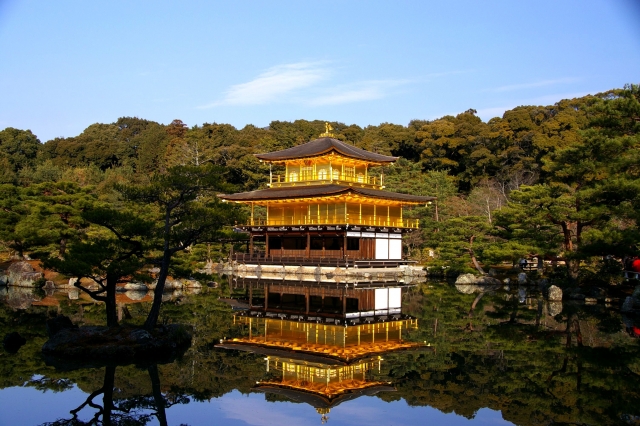
Kyōko-chi Pond lies
in front of the Golden Pavilion.
The pond is the center
of the temple garden
and contains several islands
and carefully arranged stones.
The Golden Pavilion,
its reflection,
and the surrounding garden
form one complete landscape.
鏡湖池(きょうこち)は、
金閣の前に広がる池です。
庭園の中心となる池には、
大小の島や、
さまざまな庭石が配置されています。
金閣と水面に映る姿、
そして周囲の庭園が一体となって、
金閣寺を代表する景観をつくっています。
🟫 PHOTO TIP
The main viewing area
across Kyōko-chi Pond
offers one of the best-known views
of the Golden Pavilion.
The appearance of the reflection
changes with the wind,
light,
and weather.
鏡湖池の向かい側にある拝観場所からは、
金閣寺を代表する景色を眺められます。
風や光、
天候によって、
水面に映る金閣の見え方も変わります。
Golden Phoenix|鳳凰
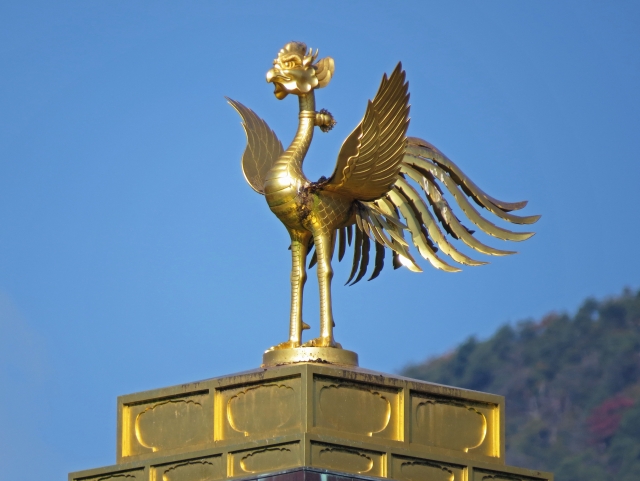
A golden phoenix
stands on the roof
of the Golden Pavilion.
In Chinese tradition,
the phoenix is considered
an auspicious bird.
It may look small
when viewed from across the pond,
so look carefully
at the top of the roof.
金閣の屋根の上には、
金色の鳳凰(ほうおう)が
飾られています。
鳳凰は、
中国で縁起の良い鳥と
されてきました。
池の向かい側から見ると
小さく見えるため、
屋根の一番上にも
注目してみてください。
🟫 MINI MEMO
The phoenix from the former pavilion
had been removed before the 1950 fire
and escaped damage.
1950年の火災当時、
かつて金閣に飾られていた鳳凰は
建物から取り外されていたため、
焼失を免れました。
Rikushū-no-Matsu Pine Tree|陸舟の松
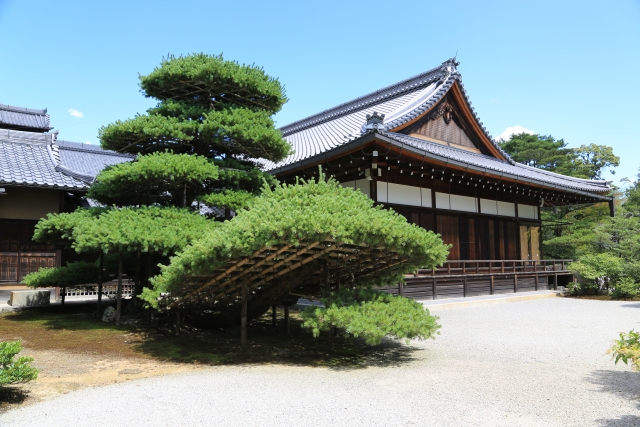
Rikushū-no-Matsu is a pine tree
carefully shaped
to resemble a sailing ship.
It is traditionally said
to have been planted
by Ashikaga Yoshimitsu.
Its bow points west,
in the direction associated
with the Buddhist Pure Land.
陸舟の松(りくしゅうのまつ)は、
帆掛け船のような形に
整えられた松です。
足利義満が植えた松と
伝えられています。
船首は、
仏教の極楽浄土があるとされる
西の方角へ向けられています。
🟫 PHOTO TIP
The long horizontal branches
create the shape of a ship.
Try viewing the pine
from a short distance away
to see its full form.
横へ長く伸びる枝によって、
船のような姿がつくられています。
少し離れた場所から見ると、
全体の形が分かりやすくなります。
Ryūmon Waterfall|龍門の滝
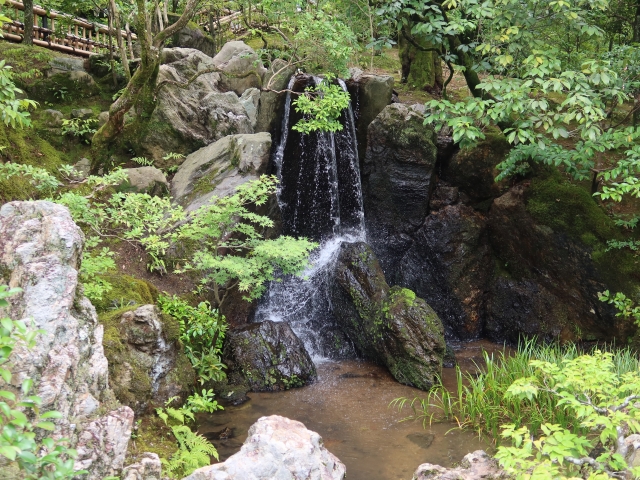
Ryūmon Waterfall is a small waterfall
about 2.3 meters high.
At the bottom of the waterfall
is a stone called Rigyo-seki,
or the Carp Stone.
It represents a carp
trying to climb the waterfall
and is connected with
the Chinese legend
of a carp becoming a dragon.
龍門の滝は、
高さ約2.3メートルの滝です。
滝つぼには、
鯉魚石(りぎょせき)と呼ばれる
斜めに傾いた石が置かれています。
この石は、
滝を登ろうとする鯉を表し、
滝を登りきった鯉が龍になるという
中国の「登竜門」の故事に
ちなんでいます。
🟫 MINI MEMO
The Japanese expression tōryūmon,
meaning a gateway to success,
comes from this legend.
成功につながる難関を意味する
日本語の「登竜門」は、
この故事に由来しています。
Anmintaku Pond & White Snake Mound|安民沢と白蛇の塚
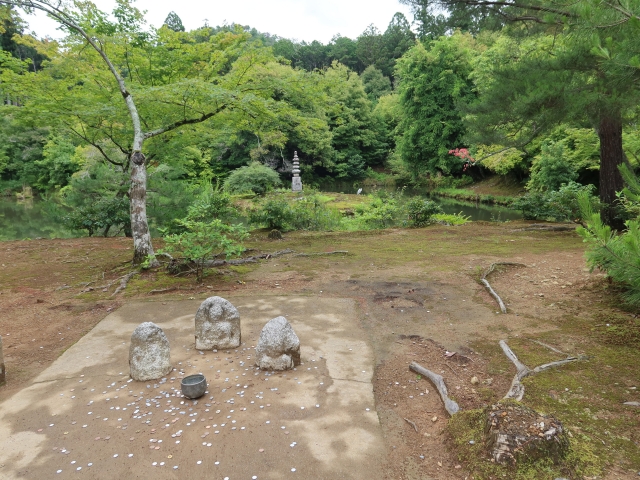
Anmintaku is a quiet pond
surrounded by trees
deeper in the temple grounds.
The pond was traditionally used
as a place to pray for rain
because it was said
not to dry up
even during long periods
without rainfall.
On the small island
stands a stone pagoda
known as the White Snake Mound.
安民沢(あんみんたく)は、
境内の奥にある
木々に囲まれた静かな池です。
日照りが続いても
涸れないと伝えられ、
かつては雨乞いの場所とも
されていました。
池の中の小島には、
白蛇の塚と呼ばれる
五輪の石塔が立っています。
🟫 MINI MEMO
The White Snake Mound
is traditionally connected
with the Saionji family,
who owned an estate here
before Ashikaga Yoshimitsu.
白蛇の塚は、
足利義満以前に
この地に山荘を構えていた
西園寺家の鎮守に関わるものとも
伝えられています。
Sekka-tei Tea House|夕佳亭
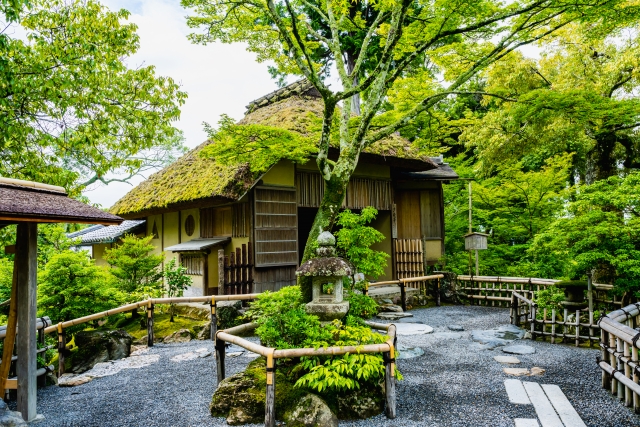
Sekka-tei is a small tea house
located on higher ground
in the garden.
It was created
in the Edo period
in a style associated
with the tea master Kanamori Sōwa.
The name Sekka-tei refers
to the beautiful view
of the Golden Pavilion
in the evening light.
夕佳亭(せっかてい)は、
庭園の高台に建つ
小さな茶室です。
江戸時代に、
茶人・金森宗和の好みによる
数寄屋造の茶室として
つくられました。
夕佳亭という名前は、
夕日に映える金閣が
特に美しく見えることに
由来しています。
🟫 MINI MEMO
The tea house is known
for its nandina-wood pillar
and its decorative shelves
made with bush clover wood.
夕佳亭は、
南天の床柱と、
萩の木を使った違い棚でも
知られています。
Fudō-dō Hall|不動堂
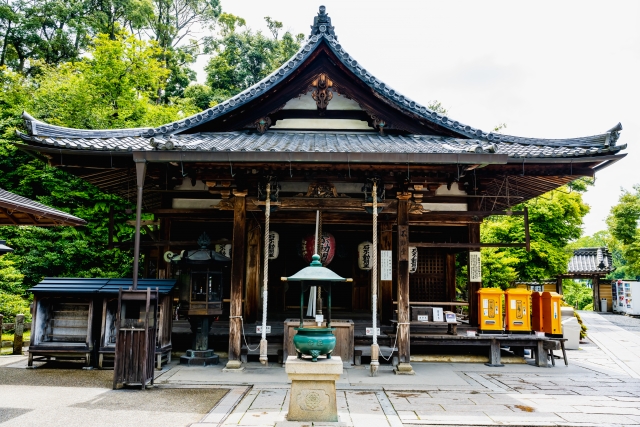
Fudō-dō is a Buddhist hall
dedicated to Fudō Myōō.
Its principal image
is a stone statue of Fudō Myōō
traditionally attributed
to Kūkai,
also known as Kōbō Daishi.
The statue is normally hidden
from public view.
不動堂は、
不動明王を祀るお堂です。
本尊は、
弘法大師・空海がつくったと伝わる
石造の不動明王像。
通常は公開されていない
秘仏です。
🟫 MINI MEMO
Special ceremonies
when the hidden statue is shown
are held on February 3
and August 16.
秘仏の開扉法要は、
2月3日と8月16日に
行われます。
🟫 REAL INFO
Kinkaku-ji is usually open
from 9:00 a.m. to 5:00 p.m.
Opening hours and admission details
may change,
so please check the official website
before visiting.
金閣寺の拝観時間は、
通常午前9時から午後5時までです。
拝観時間や料金は
変更される場合があるため、
訪問前に公式サイトを
確認してください。
Travel Resources|旅行に役立つ情報
旅行をもっと快適に楽しめるように、便利なサービスを集めました。
航空券やホテル、Wi-Fiの準備に、ぜひお役立てください。🐾
※This section contains affiliate links.|このセクションにはアフィリエイト広告が含まれています。
✈️ Domestic Flights|国内航空券
国内主要航空会社の航空券を比較・検索できます。
お得な航空券を見つけて、旅の計画に役立ててください。

🏨 Hotels|ホテル予約
京都をはじめ、日本全国のホテル・旅館を検索・予約できます。
お気に入りのお宿を見つけて、心に残る旅を楽しんでください。

📶 Pocket Wi-Fi|Wi-Fiレンタル
旅行中も快適にインターネットを利用できるWi-Fiレンタルサービスです。
旅先でも安心して過ごせるよう、ぜひ役立ててください。

🟫 CAT MEMO 🐾

“S-so bright, nya…!”
「ま、まぶしいにゃ……!」🐾
🗺 Google Map
The Golden Pavilion
may catch your eyes first.
But the pond,
garden paths,
tea house,
and quiet temple halls
are also important parts
of Kinkaku-ji.
Take your time
and enjoy the changing scenery
as you walk through the garden.
最初に目を引くのは、
金色に輝く金閣かもしれません。
けれど、
池や庭園の小径、
茶室や静かなお堂も、
金閣寺を形づくる
大切な見どころです。
庭を歩きながら、
少しずつ変わっていく景色を
ゆっくり楽しんでみてください🌿
Thank you for visiting Kinkaku-ji.
We hope this golden Kyoto walk
brings you a peaceful moment too 🐾
🗺 Explore More Kyoto Areas|京都のエリアから探す
Kyoto is divided into several unique areas, each offering different attractions and experiences.
京都にはエリアごとに異なる魅力があります。
気になるエリアから観光スポットを探してみてください。