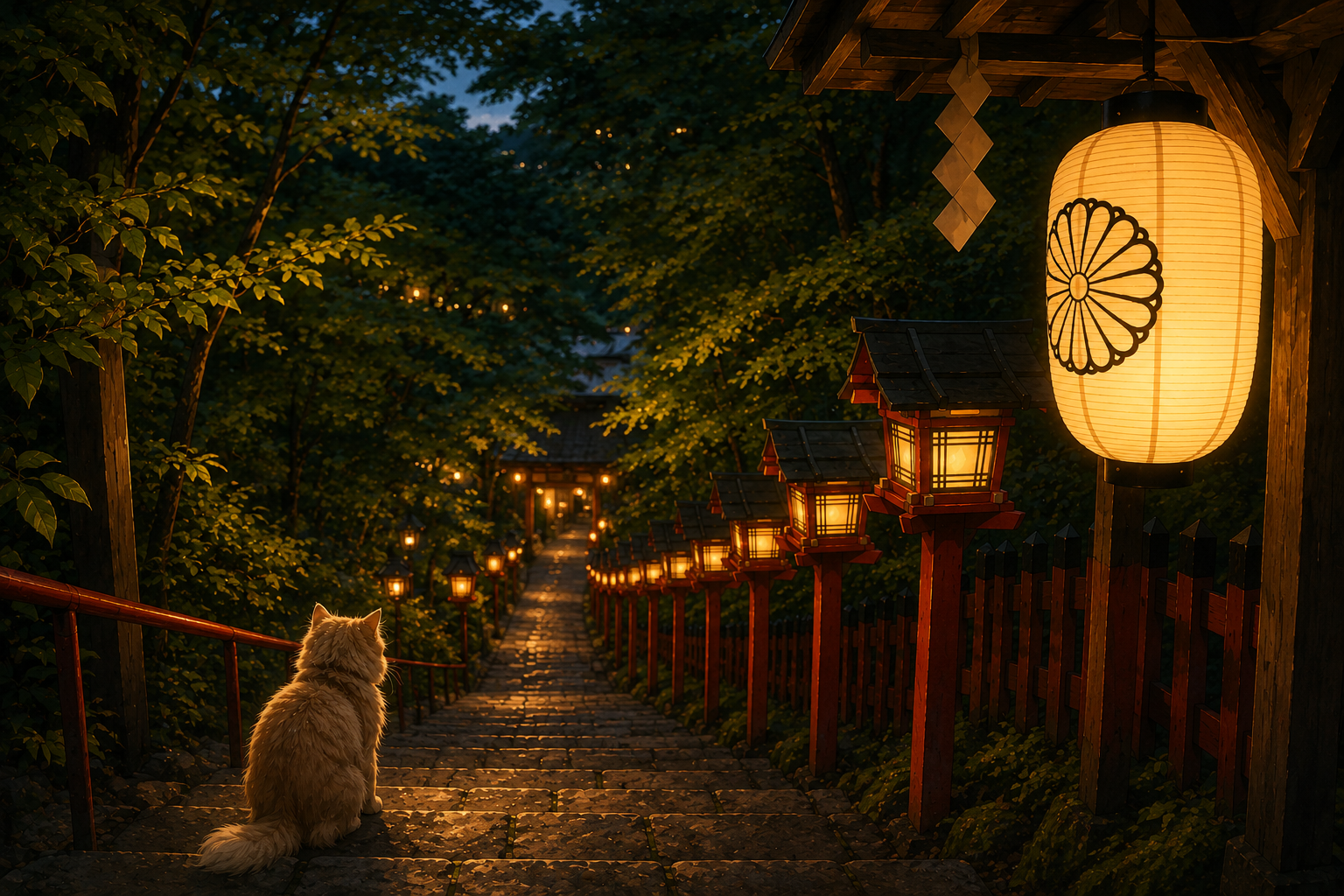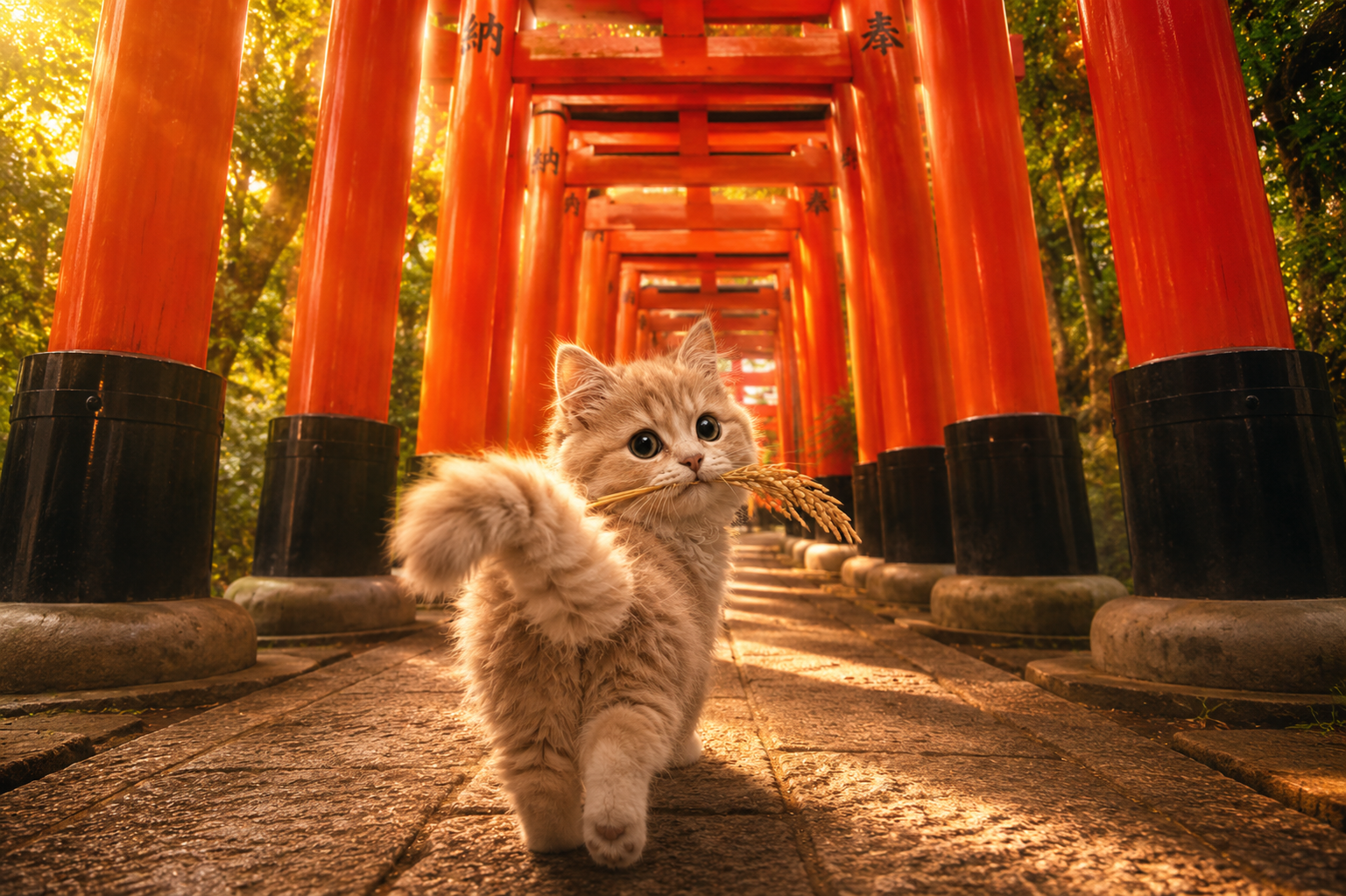
The featured image was AI-generated from a photograph,
with the cat modeled after our family cat.
PR / Ad|This post contains affiliate links.
Read the English + Japanese version|英語+日本語版はこちら
Introduction|はじめに
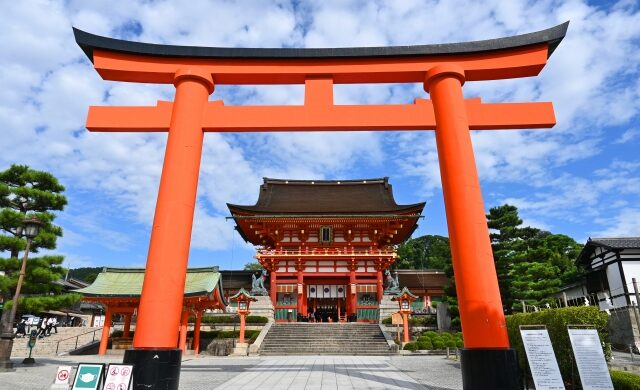
Fushimi Inari Taisha is one of Kyoto’s most famous shrines.
It is known for its long paths of vermilion torii gates,
but the shrine extends far beyond the famous Senbon Torii.
The entire sacred mountain of Inariyama is part of the shrine grounds,
with prayer sites, stone monuments,
and torii gates continuing along the mountain paths.
🟫 MINI MEMO
Fushimi Inari Taisha is the head shrine
of the approximately 30,000 Inari shrines found across Japan.
History|歴史
The history of Fushimi Inari Taisha dates back to 711,
when Inari Okami was enshrined on Inariyama.
For more than 1,300 years,
people have prayed here for bountiful harvests,
business prosperity,
and the safety of their homes and families.
The shrine buildings were destroyed during the Onin War,
and the present Main Hall was rebuilt in 1499.
Romon Gate|楼門
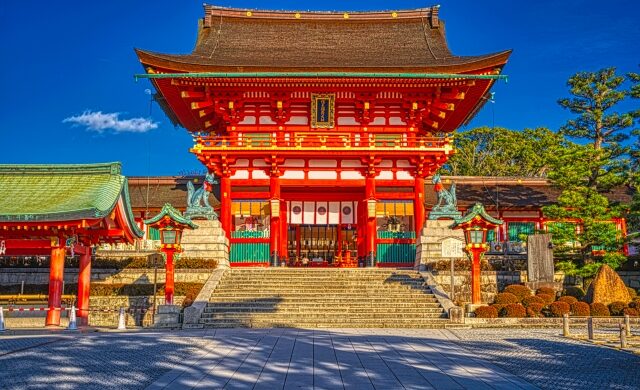
The grand Romon Gate stands near the entrance to the shrine.
The present gate was built in 1589
with a donation from Toyotomi Hideyoshi,
one of the most powerful figures in Japanese history.
Its vermilion pillars and white walls
create an impressive entrance to the sacred grounds.
Outer Worship Hall|外拝殿
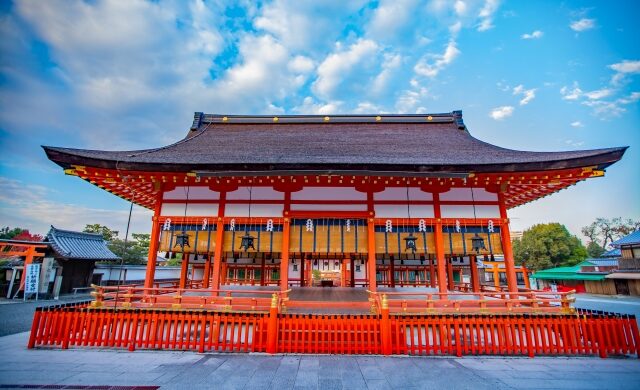
After passing through the Romon Gate,
visitors come to the Outer Worship Hall.
The present building dates from 1840
and is designated as an Important Cultural Property of Japan.
Ceremonies and other shrine events are held here,
and offerings from across Japan may also be displayed.
Main Hall|本殿
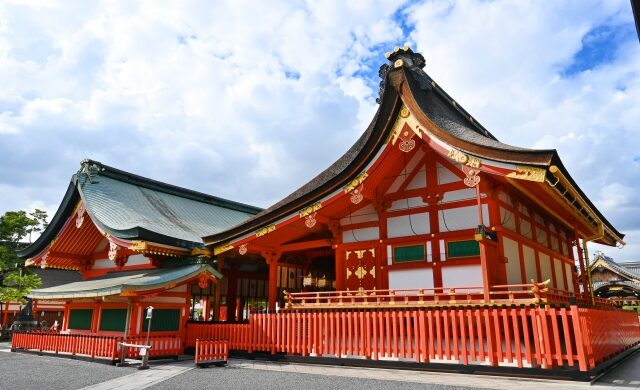
The Main Hall is the spiritual center of Fushimi Inari Taisha.
Five deities are enshrined together here
and collectively worshipped as Inari Okami.
Rebuilt in 1499,
the Main Hall is designated as an Important Cultural Property of Japan.
Before continuing to the torii paths,
take a quiet moment to pray here.
Senbon Torii|千本鳥居
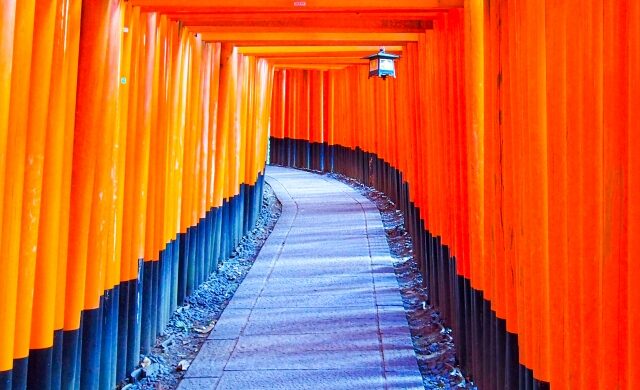
The Senbon Torii is the best-known sight at Fushimi Inari Taisha.
Closely spaced vermilion gates form two passages
leading toward the Okusha Hohaisho prayer area.
Torii gates have long been offered
as expressions of prayer or gratitude.
Today, around 10,000 gates of many sizes
stand along the paths of Inariyama.
🟫 PHOTO TIP
The paths are narrow.
Please avoid blocking other visitors
when taking photographs.
Okusha Hohaisho|奥社奉拝所
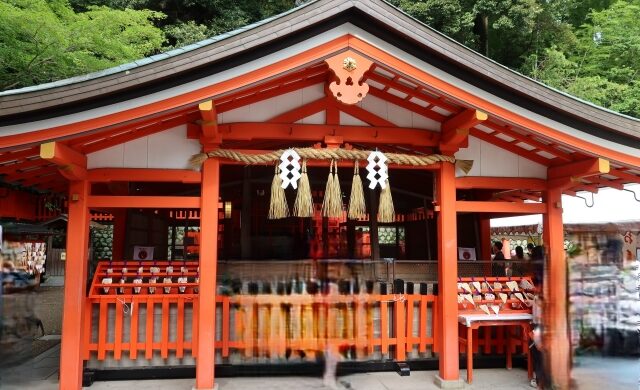
Okusha Hohaisho stands at the end of the Senbon Torii
and is also known as Okuno-in.
From here,
visitors worship the sacred peaks of Inariyama
rising behind the prayer building.
For many visitors,
this is a natural place to pause
before deciding whether to continue farther up the mountain.
Omokaru Stone|おもかる石
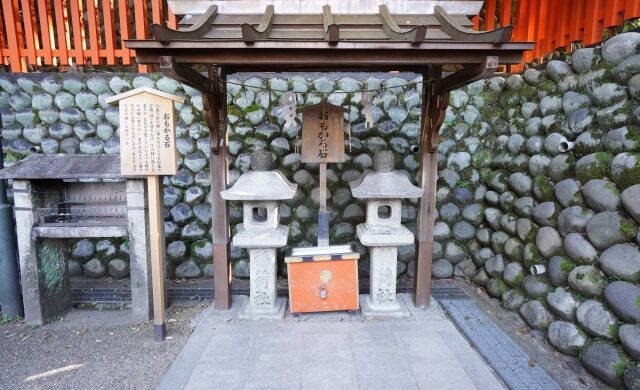
Behind Okusha Hohaisho stands a pair of stone lanterns
known as the Omokaru Stones.
First, make a wish
and imagine how heavy the top of the lantern will feel.
Then lift it carefully.
If it feels lighter than expected,
your wish is said to be likely to come true.
If it feels heavier,
it is said that more effort may be needed.
Inariyama & Oyama Meguri|稲荷山・お山巡り

Beyond Okusha Hohaisho,
the path continues into Inariyama.
The 233-meter-high mountain is considered sacred,
and the route passes many torii gates,
small prayer sites,
and stone monuments called otsuka.
Yotsutsuji is a well-known rest point
with broad views toward Kyoto.
The path continues from there to the three peaks of the mountain.
🟫 REAL INFO
The mountain route includes many steps and slopes.
Wear comfortable shoes,
carry water,
and allow enough time to return before dark.
Stops Along the Mountain Route|お山巡りで出会う場所
Kumatakasha|熊鷹社
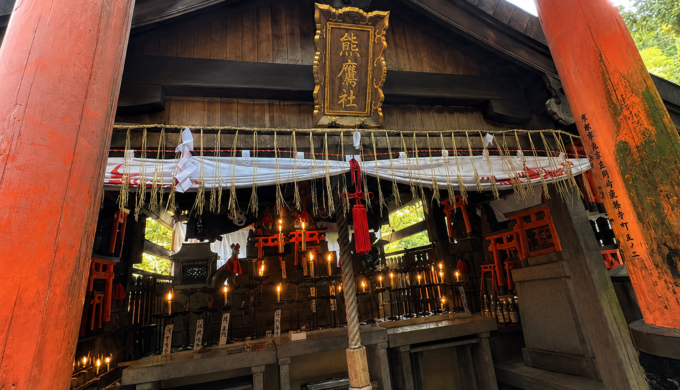
Kumatakasha stands beside Shin-ike Pond.
A stone prayer area projects toward the water,
creating a quiet and distinctive scene
along the mountain route.
Ganrikisha|眼力社
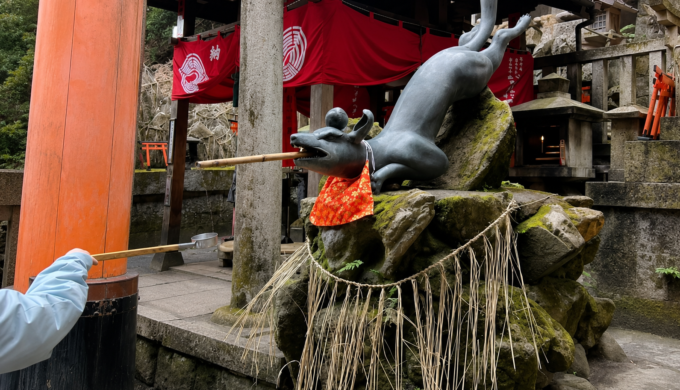
Ganrikisha is a prayer site
found along the mountain route.
It is traditionally associated with eye health
and with the ability to see clearly or make wise judgments.
Gyokuzan Inarisha|玉山稲荷社
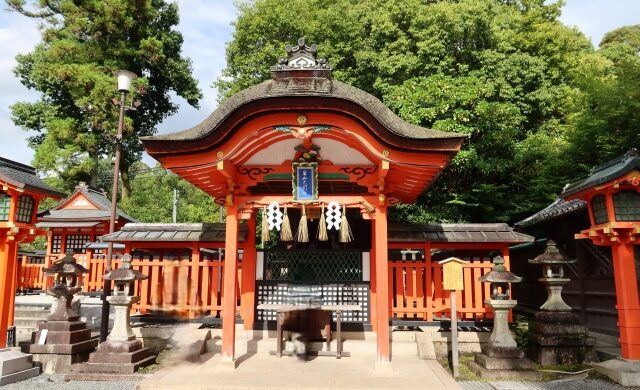
Gyokuzan Inarisha is one of the smaller shrines
within the Fushimi Inari Taisha grounds.
Its quiet setting offers a different atmosphere
from the busy paths around the Senbon Torii.
Sannomine (Shimosha Shinseki)|三ノ峰・下社神蹟
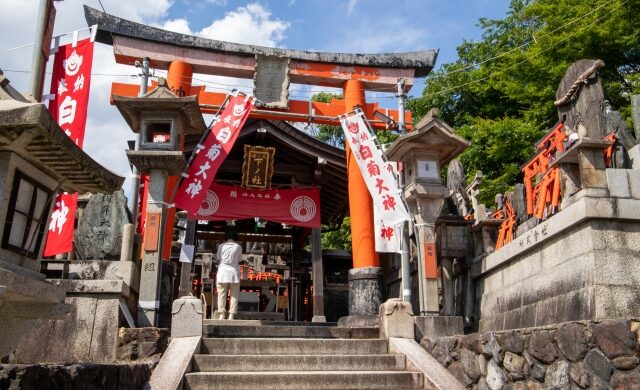
Sannomine is one of the three sacred peaks of Inariyama.
At Shimosha Shinseki,
the former site of a shrine where the deity is still worshipped,
Shiragiku Okami is enshrined.
Fox Statues|狐像
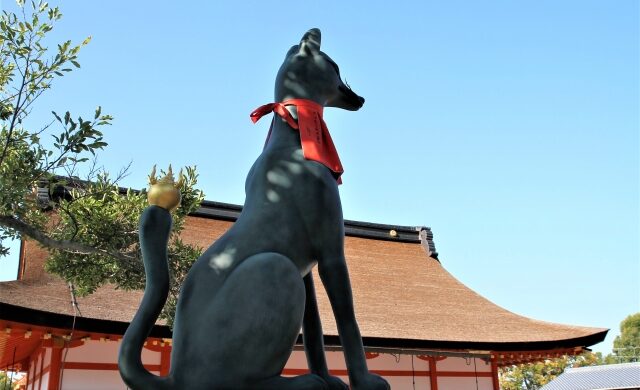
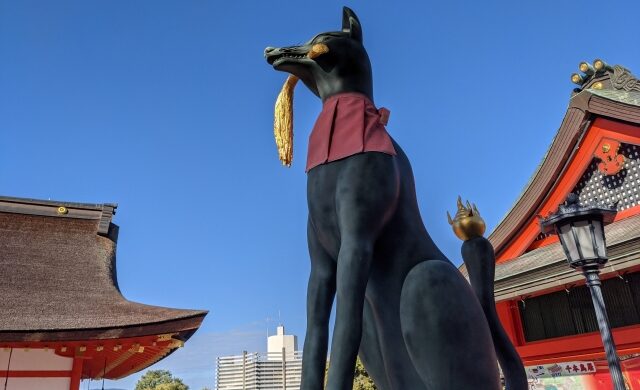
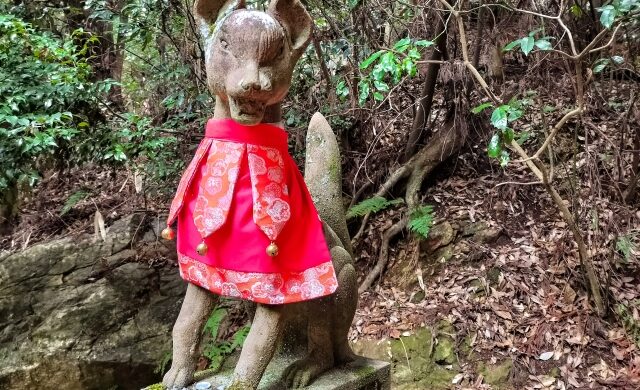
Foxes at Inari shrines are not themselves the deities.
They are regarded as messengers of Inari Okami.
Throughout the grounds,
you will find fox statues holding objects
such as keys, jewels, scrolls,
or ears of rice.
Take time to notice their different expressions
as you walk through the shrine.
Souvenirs|お土産
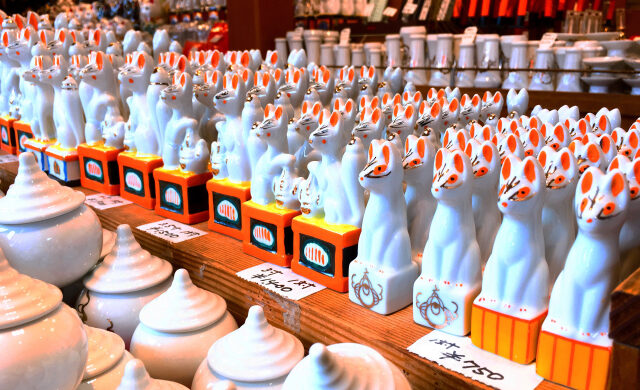
Fox-themed items are popular souvenirs
around Fushimi Inari Taisha.
Depending on the shop or season,
visitors may find small fox figurines,
traditional crafts,
sweets,
and other keepsakes inspired by the shrine.
🦊 CAT MEMO
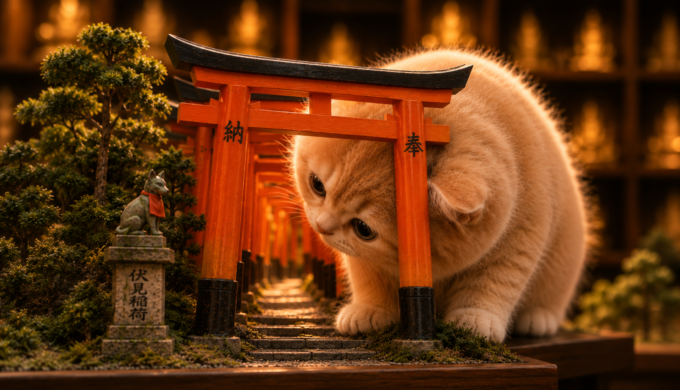
“How many gates are there…?”
“They never seem to end!” ⛩️🐾
Google Map|地図
Fushimi Inari Taisha is much more
than its famous rows of vermilion torii gates.
Its historic buildings,
sacred mountain paths,
and quiet places of prayer
reveal different sides of the shrine
as you walk farther into Inariyama.
The Senbon Torii may first catch your eye.
But the feeling of walking quietly
through the sacred mountain
may stay with you even longer. 🌿
Thank you for visiting Fushimi Inari Taisha.
We hope your walk through the shrine
brings you peaceful moments
and wonderful memories of Kyoto. 🐾
🗺 Explore More Kyoto Areas
Kyoto is divided into several unique areas, each offering different attractions and experiences.