The featured image was AI-generated from a photograph,
with the cat modeled after our family cat.
PR / Ad|This post contains affiliate links.
Read the English + Japanese version|英語+日本語版はこちら
Introduction|はじめに
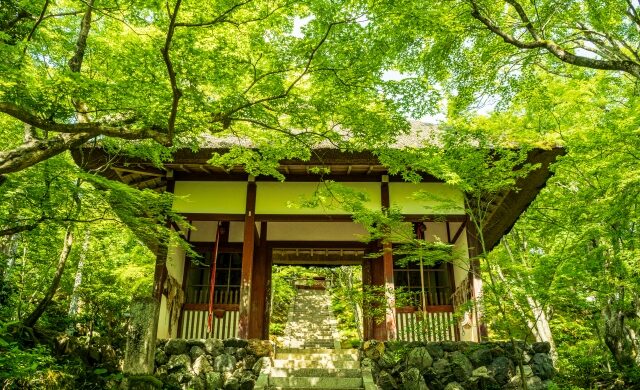
A thatched gate.
Stone steps leading uphill.
Maple branches overhead.
Jojakko-ji Temple stands
on the slopes of Mount Ogura
in Sagano, Kyoto.
Here, climbing the hillside
also means discovering
new ways to see the scenery.
What lies beyond these steps?
Let us follow the changing views,
one stop at a time.

Looking Up at the Gate|門を見上げる
Begin at the Niomon Gate.
Look up at its thatched roof
and the branches around it.
The gate gives us
our first frame of the hillside.
Jojakko-ji was founded
during the Keicho era (1596–1614).
But its Niomon Gate was originally built
at Honkoku-ji in 1345–1349,
and moved here in 1616.
The gate’s history began
long before this temple.
Along the Stone Steps|石段では、足元へ
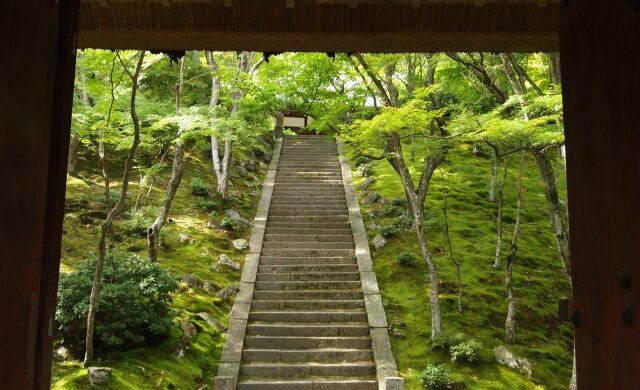
Beyond the gate,
stone steps lead uphill.
Now bring your gaze closer:
to the stones,
the moss beside the path,
and the leaves nearby.
Pause in a safe place
without blocking the path,
and look back down the steps.
Try including the stone steps
and the surrounding trees
in the same frame.

The Pagoda Among the Trees|木々の間に立つ多宝塔
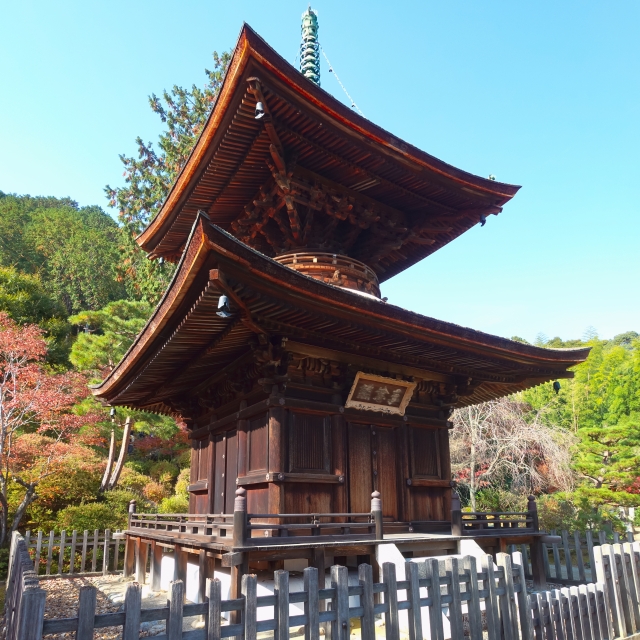
Farther up the hillside
stands the Tahoto Pagoda.
Built in 1620,
it is designated
an Important Cultural Property of Japan.
Look first at the whole tower.
Then notice its rooflines
and the branches around them.
The building and the trees
together shape the view.
A Wider View|視線が、街へと広がる
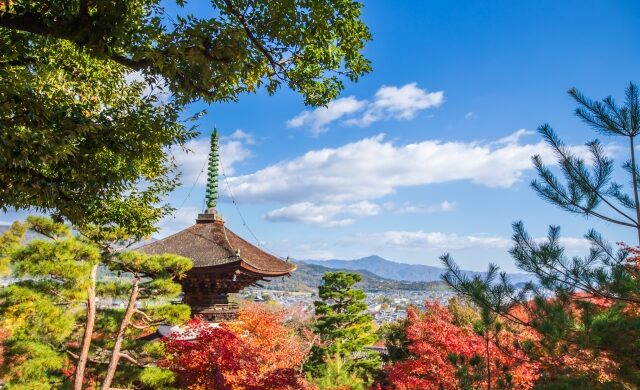
From the higher grounds,
a view opens out over Kyoto.
After the nearby moss,
branches, and rooflines,
our eyes can travel farther.
Looking up.
Looking close.
Looking back.
Then looking into the distance.
Each view adds something
to the walk.
Which view would make you pause?
Main Hall|本堂に残る、城の記憶
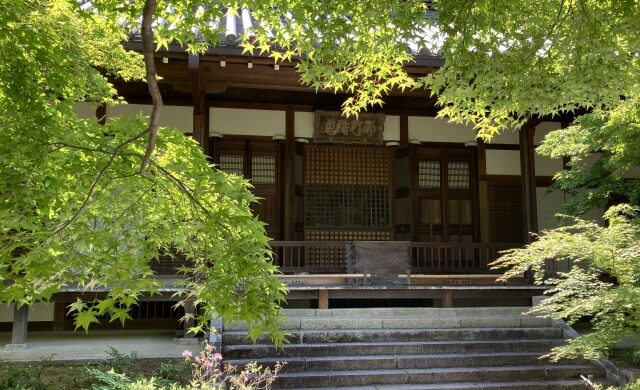
The Main Hall is said to have been made
from a guest hall moved
from Fushimi Castle.
Knowing that story
may give its quiet exterior
another layer of meaning.
The Poets’ Shrine|歌仙祠と、小倉山の歌人たち
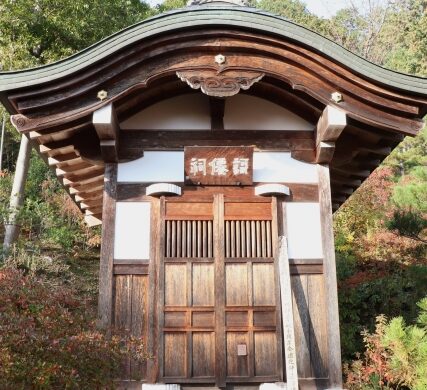
The poets’ shrine, Kasen-shi,
houses wooden images
of Fujiwara no Teika
and Fujiwara no Ietaka.
Mount Ogura has long been
associated with waka poetry.
The Shigure-tei Monument|時雨亭跡に、昔の景色を思う
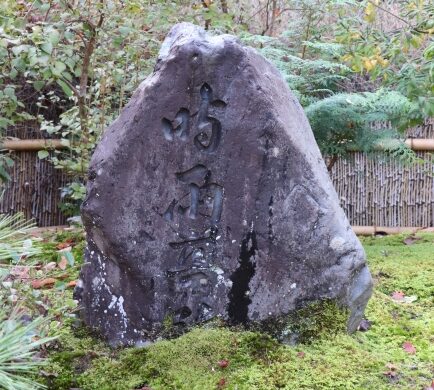
The grounds include a place
traditionally associated
with Teika’s Ogura mountain villa.
The Shigure-tei monument pictured here
stands at the site of a later reconstruction.
It does not establish
the original villa’s exact location.
We cannot see exactly
what the poets once saw.
Still, these traces invite us
to imagine how people
looked at this mountain long ago.
A Spring View|春には、桜の景色も
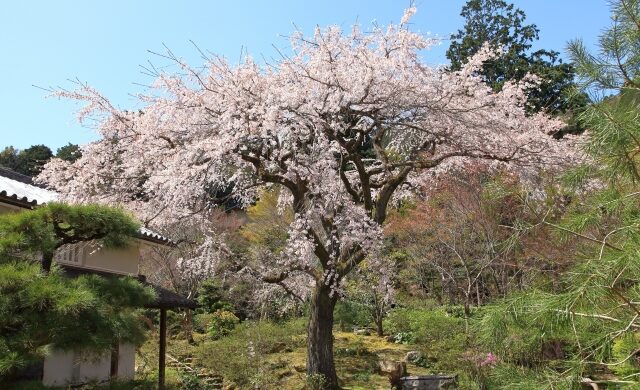
Autumn leaves may first
bring Jojakko-ji to mind.
In spring, cherry blossoms
offer another view,
including the weeping cherry tree
shown in this photograph.
A different season.
A different direction of light.
Even a familiar place
may reveal something new.
Google Map
🟫 CAT MEMO 🐾
“That’s a Long Way Down… ” 🍁🐾
At first, we looked up
at a gate surrounded by trees.
By the end,
we were looking out over Kyoto.
At Jojakko-ji,
each change in our gaze
became part of the journey.
Thank you
for visiting
Jojakko-ji Temple.
We hope
your time
in Sagano
brings you
peace,
beautiful memories,
and a wonderful journey
through Kyoto. 🐾🍁
🗺 Explore More Kyoto Areas
Kyoto is divided into several unique areas, each offering different attractions and experiences.