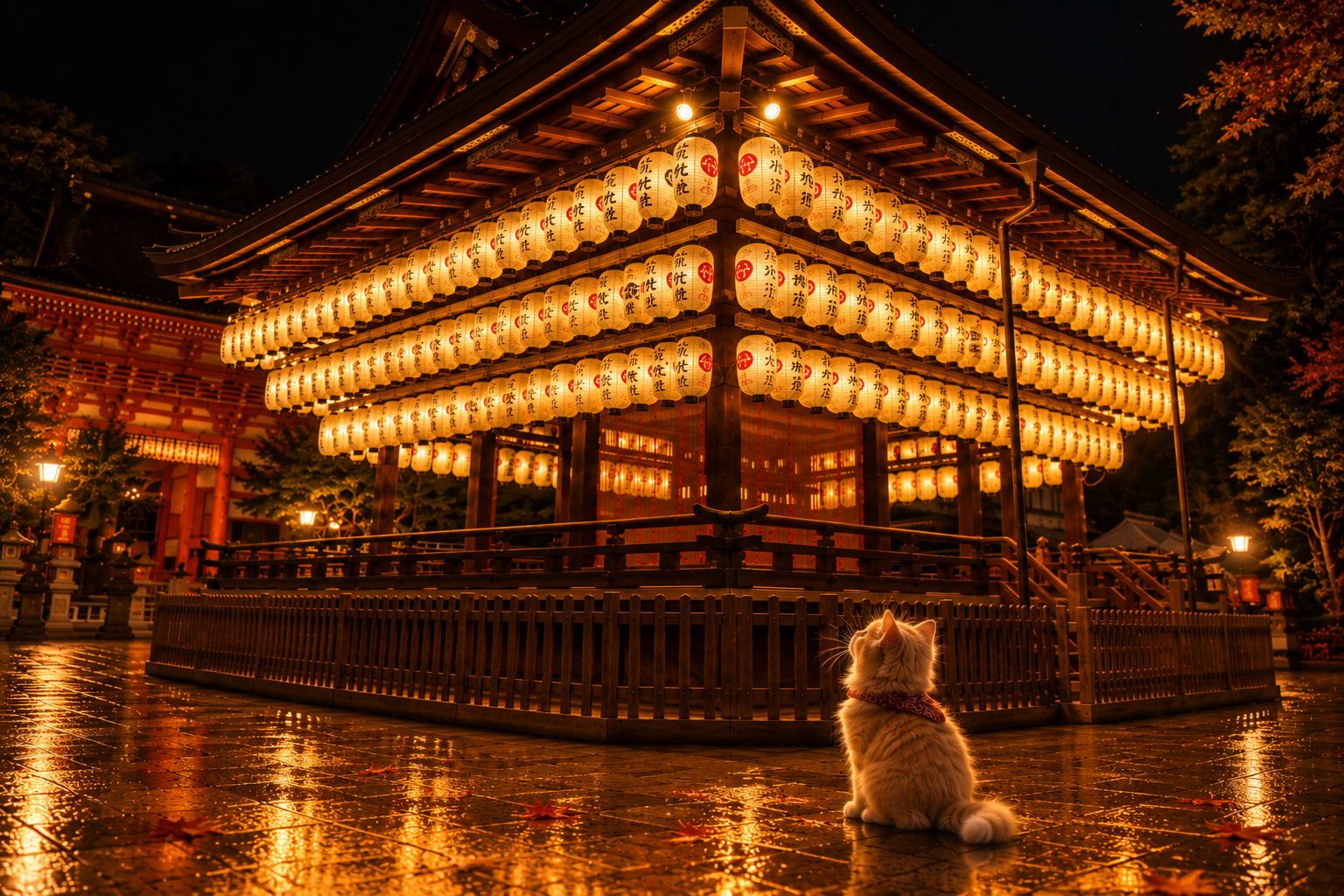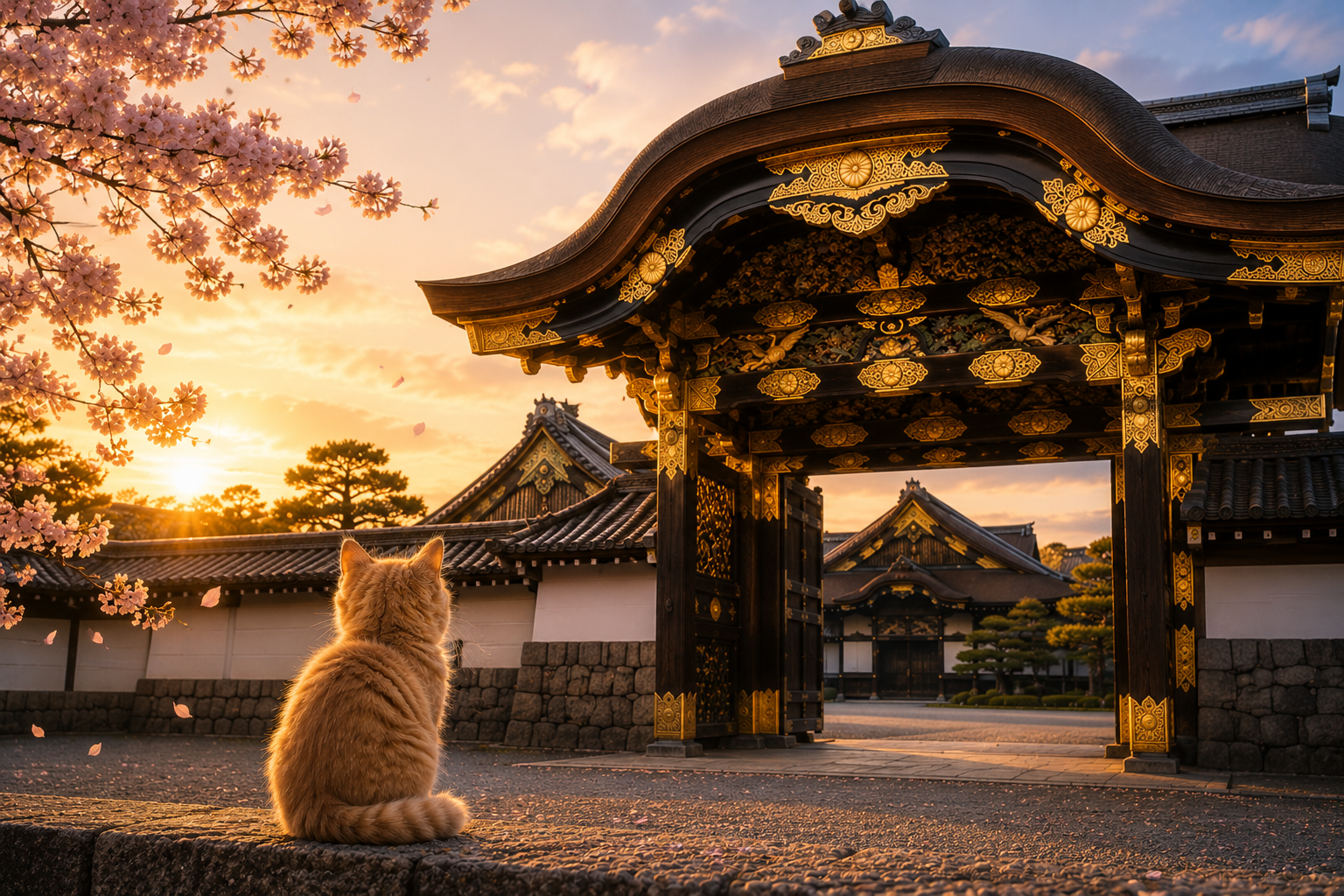
The featured image was AI-generated from a photograph,
with the cat modeled after our family cat.
PR / Ad|This post contains affiliate links.
Read the English + Japanese version|英語+日本語版はこちら
- Introduction|はじめに
- History & Cultural Heritage|歴史・文化財
- Higashi Ōtemon Gate|東大手門
- Karamon Gate|唐門
- Luxurious Decorations|豪華な装飾
- Ninomaru Palace|国宝・二の丸御殿
- Ninomaru Garden|二の丸庭園
- Honmaru Palace & Castle Grounds|本丸御殿・城郭エリア
- Moat & Corner Watchtower|隅櫓とお堀
- Seiryū-en Garden|清流園
- Kamo Seven Stones|加茂七石
- Seasonal Scenery & Events|季節の風景・イベント
- 🗺 Google Map
- 🗺 Explore More Kyoto Areas
Introduction|はじめに
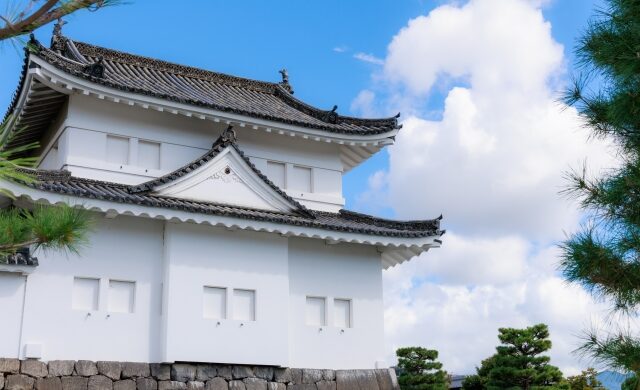
Nijō Castle is one of Kyoto’s most important historical landmarks.
Built by Tokugawa Ieyasu in 1603,
the castle served as the Kyoto residence of the Tokugawa shoguns.
Its magnificent palace,
beautiful gardens,
and UNESCO World Heritage status
make it one of Kyoto’s must-visit landmarks.
🟫 MINI MEMO
In 1994,
Nijō Castle became part of the UNESCO World Heritage Site
“Historic Monuments of Ancient Kyoto.”
History & Cultural Heritage|歴史・文化財
Nijō Castle was built at the beginning of the Edo Period
after Tokugawa Ieyasu became shogun.
It was an important place
where the shogun met the Emperor,
court nobles,
and powerful feudal lords.
In 1867,
Tokugawa Yoshinobu announced his intention
to return political authority to the Imperial Court
at Ninomaru Palace.
This historic event became an important turning point
between the age of the samurai and modern Japan.
Today,
Nijō Castle preserves many valuable buildings,
paintings,
carvings,
and gardens.
Ninomaru Palace is designated as a National Treasure,
while several gates and other buildings are protected as Important Cultural Properties.
Higashi Ōtemon Gate|東大手門
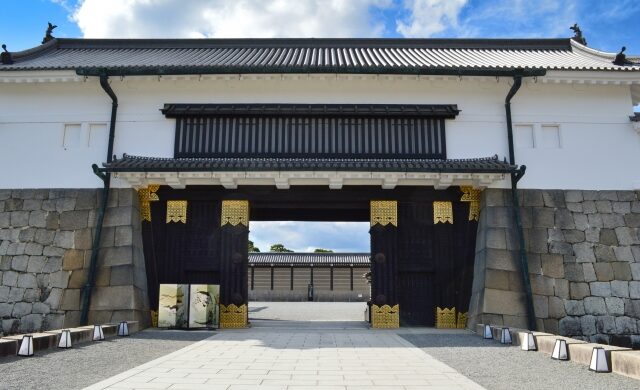
Higashi Ōtemon Gate is the main entrance to Nijō Castle.
The large wooden doors,
white walls,
stone foundations,
and golden metal fittings create an impressive first view.
Passing through the gate,
visitors enter the spacious grounds of the former shogun’s residence.
🟫 PHOTO TIP
Try taking a photograph from the center of the path.
The symmetrical gate,
stone walls,
and blue sky fit beautifully into one frame.
Karamon Gate|唐門
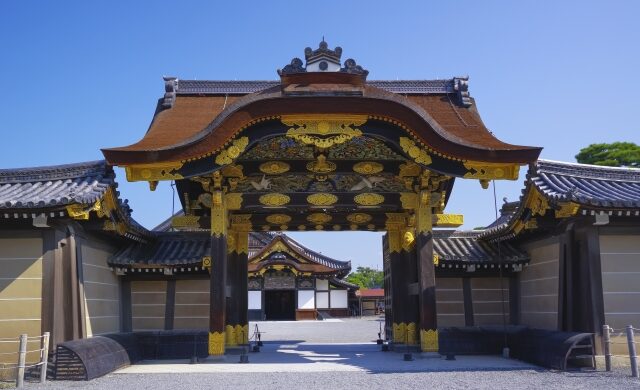
The Karamon Gate stands in front of Ninomaru Palace.
Its curved roof,
gold leaf,
colorful carvings,
and detailed metal fittings make it one of the most beautiful places in the castle.
The gate presents a very different atmosphere
from the strong and simple appearance of the outer castle walls.
Luxurious Decorations|豪華な装飾
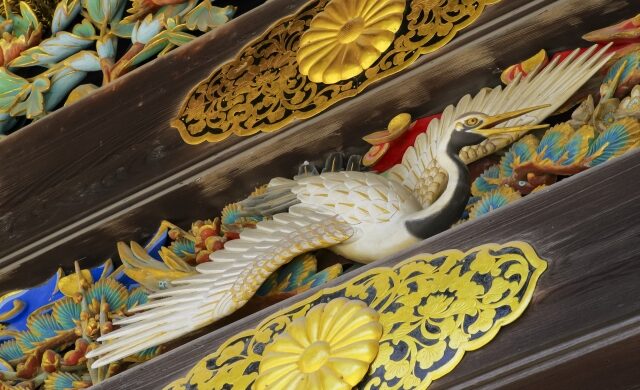
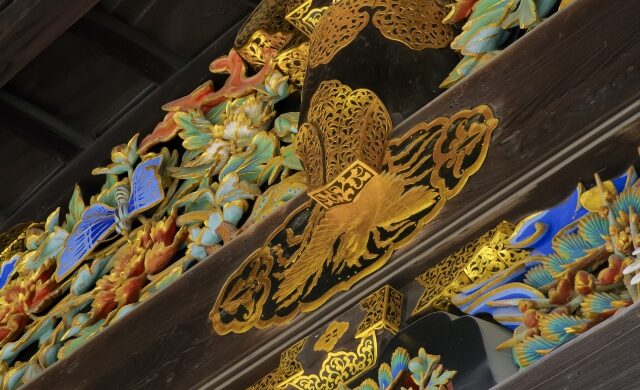
The Karamon Gate is decorated with cranes,
phoenixes,
flowers,
pine trees,
and other traditional motifs.
The carvings are painted in vivid colors
and surrounded by shining golden decorations.
When viewed from a distance,
the gate looks grand and elegant.
Looking closely,
visitors can discover many small details
created by highly skilled craftsmen.
🟫 MINI MEMO
Cranes are traditionally associated with long life,
while phoenixes are often seen as symbols of peace and prosperity.
Ninomaru Palace|国宝・二の丸御殿
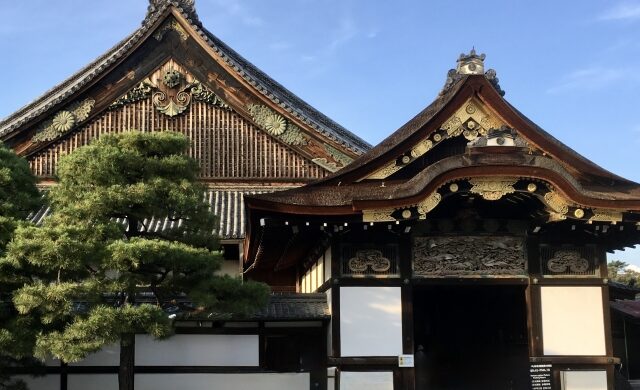
Ninomaru Palace is the main highlight of Nijō Castle.
The palace consists of six connected buildings
and is an outstanding example of traditional shoin-zukuri architecture.
Its rooms were carefully arranged
according to the visitor’s position and status.
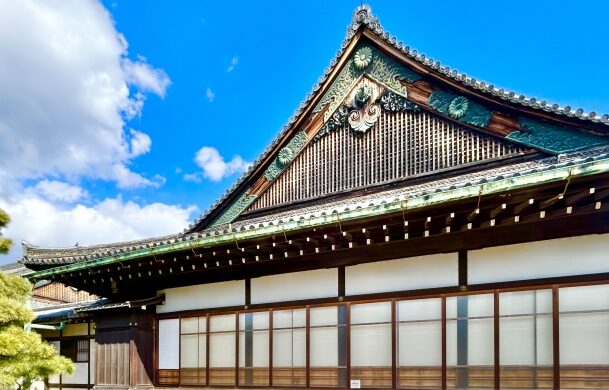
The roof of the Tōzamurai building features
an elegant irimoya-style gable.
The decorative metalwork and chrysanthemum crests
show the dignity of the palace.
Inside the palace,
visitors can see large rooms decorated with wall paintings.
The palace is also famous for its so-called “nightingale floors,”
which make a bird-like sound when people walk across them.
🟫 REAL INFO
Photography is not permitted inside Ninomaru Palace.
Please follow the signs
and enjoy the rooms quietly.
Ninomaru Garden|二の丸庭園
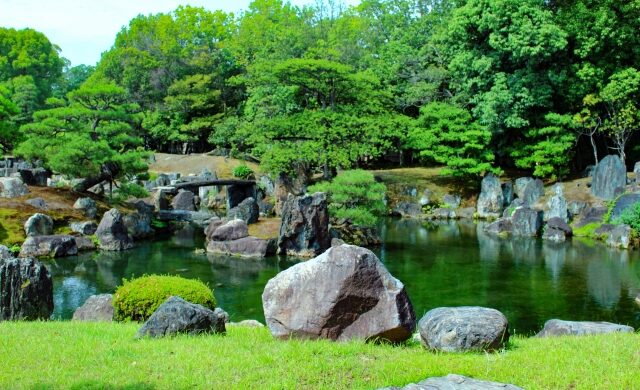
Ninomaru Garden is a traditional Japanese strolling pond garden,
located beside Ninomaru Palace.
The garden is traditionally attributed to the famous landscape gardener Kobori Enshū.
It has been designated as a Special Place of Scenic Beauty in Japan.
A large central pond is surrounded by carefully arranged rocks,
pine trees,
and small islands,
creating beautiful views from every angle.
The garden is especially admired for its powerful stone arrangements.
Rather than using many colorful flowers,
the beauty of water,
natural stones,
and carefully maintained trees creates a peaceful atmosphere throughout the seasons.
🟫 PHOTO TIP
Walk slowly around the pond
to enjoy the changing scenery from different viewpoints.
The reflections of the rocks and pine trees
on calm water create some of the garden’s most beautiful photographs.
Honmaru Palace & Castle Grounds|本丸御殿・城郭エリア
The Honmaru is located inside the inner moat
at the center of the castle grounds.
It was developed for the Imperial Visit of 1626
during the rule of the Tokugawa shoguns.
The original Honmaru Palace was later lost in a large fire.
The present Honmaru Palace was relocated from the former Katsura-no-miya Imperial Residence to Nijō Castle during the Meiji Period.
Stone walls,
gates,
bridges,
and wide moats still show
how carefully the castle was protected.
Walking through this area offers a different experience
from the elegance of Ninomaru Palace.
Moat & Corner Watchtower|隅櫓とお堀
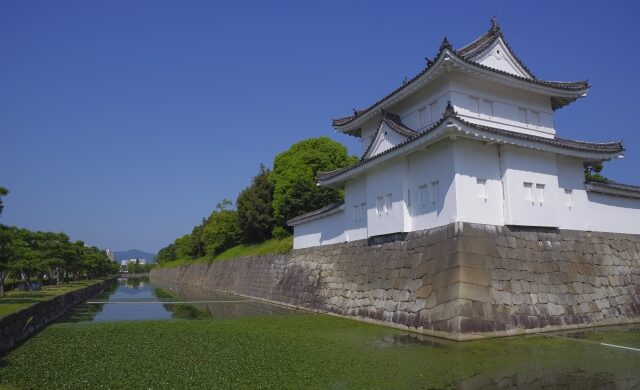
Nijō Castle is surrounded by wide moats
and massive stone walls.
The white corner watchtower rising above the moat
is one of the castle’s most recognizable views.
The corner watchtowers were built
to watch the surrounding area
and defend the castle.
Today,
the combination of blue sky,
white walls,
stonework,
and water creates a beautiful landscape.
🟫 PHOTO TIP
On a calm day,
the watchtower and stone walls may be reflected in the moat.
Try including the long line of the moat
to show the scale of the castle.
Seiryū-en Garden|清流園
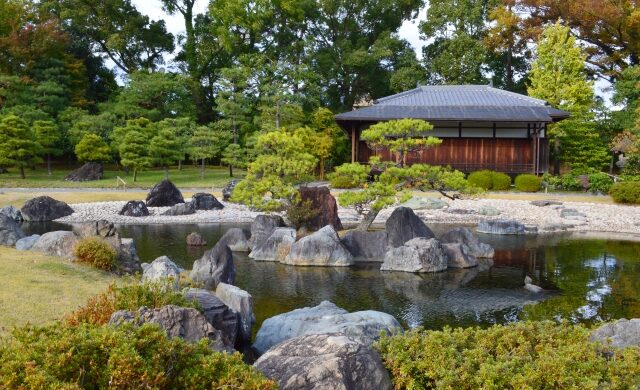
Seiryū-en Garden was completed in 1965.
It combines elements of a traditional Japanese garden
with a spacious Western-style lawn.
Ponds,
stepping stones,
carefully pruned trees,
and quiet walking paths
create a relaxing atmosphere.
Compared with the historic Ninomaru Garden,
Seiryū-en feels more open and gentle.
Kamo Seven Stones|加茂七石
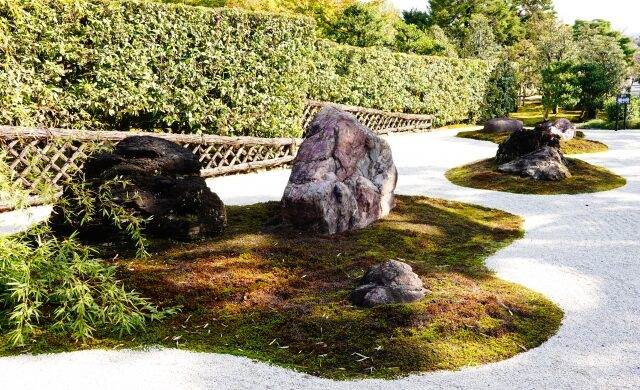
The Kamo Seven Stones are seven types of natural stone
traditionally associated with the Kamo River area of Kyoto.
Each type has a different color,
pattern,
shape,
and texture.
These stones have long been valued
as important materials in traditional Japanese gardens.
Rather than looking only at the entire garden,
try observing the individual colors and surfaces of the stones.
🟫 MINI MEMO
Natural stones are not shaped to look perfectly even.
Their irregular forms are part of the beauty
of traditional Japanese garden design.
Seasonal Scenery & Events|季節の風景・イベント
Nijō Castle offers different scenery in every season.
Cherry blossoms brighten the grounds in spring,
while fresh green leaves surround the gardens in early summer.
Autumn brings warm colors to the trees,
and winter reveals the shapes of the stone walls,
pine trees,
and historic buildings more clearly.
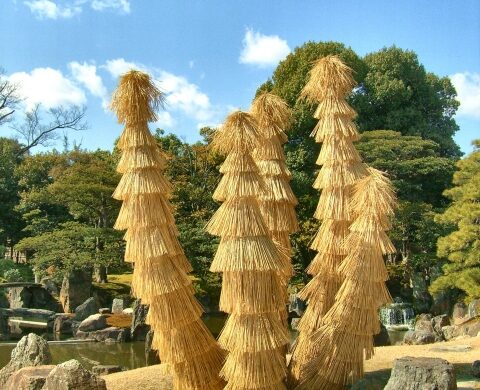
During winter,
visitors may see pine trees wrapped with layers of straw.
This traditional practice is called “Komo-maki.”
Seasonal illuminations,
special exhibitions,
and cultural events may also be held.
Event dates and details change each year,
so please check the official information before visiting.
🟫CAT MEMO🐾
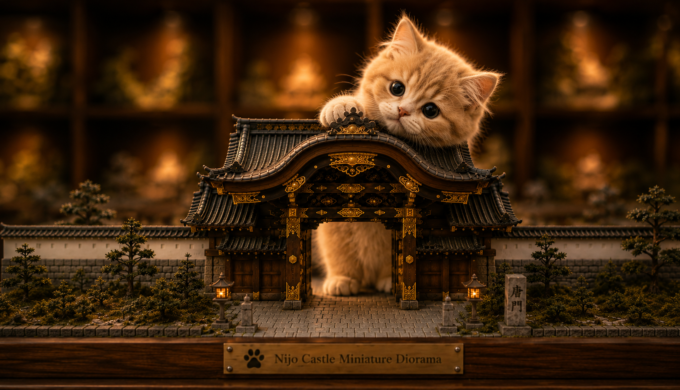
“So much gold…
I couldn’t stop looking!”
“I almost forgot to blink…
Everything was sparkling!”
🗺 Google Map
Nijō Castle is more than a beautiful samurai castle.
Its palace,
gates,
gardens,
stone walls,
and quiet corridors have witnessed
some of the most important changes in Japanese history.
The golden decorations may catch your eye first.
But the peaceful gardens
and the gentle sound of footsteps
may remain in your memory even longer.🌿
Thank you for visiting Nijō Castle.
We hope this walk through Kyoto’s history
brings you a peaceful and memorable moment too. 🐾
🗺 Explore More Kyoto Areas
Kyoto is divided into several unique areas, each offering different attractions and experiences.