— Notes prepared as part of my visit planning —
- Introduction
- The Beginning of Tenryu-ji
- From the Main Gate to the Hojo
- Sōgenchi Garden
- Ryūmon-baku (Dragon Gate Waterfall)
- Hatto Hall and the Cloud Dragon Painting
- Details Within the Temple Grounds
- The North Gate
- Closing
- Helpful Japanese Words (Tenryu-ji & Gardens)
- Helpful Japanese Words for Kyoto Temples
- Basic Information📌
- Closing Thoughts
Introduction
This page is a pre-visit notebook I put together as preparation before visiting Tenryu-ji Temple.
It is not a record of an actual visit.
Rather, as I researched the temple, I chose to write about the places that made me feel,
“This is somewhere I want to walk with understanding.”
The Beginning of Tenryu-ji
— A Temple Born from Prayer —
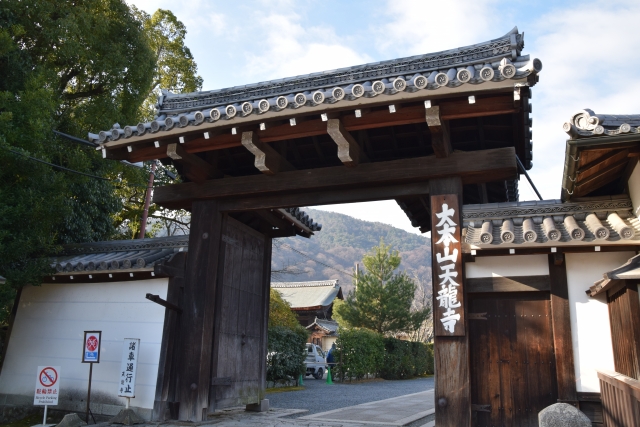
Tenryu-ji was founded in 1339
by Ashikaga Takauji, the first shogun of the Muromachi shogunate.
The temple was built to pray for the soul of Emperor Go-Daigo.
That Tenryu-ji emerged after the intense conflicts of the Nanboku-chō period
is an essential background for understanding the temple.
Arashiyama was chosen as a place where politics and prayer quietly intersect.
From the Main Gate to the Hojo
— A Path Without Hesitation —
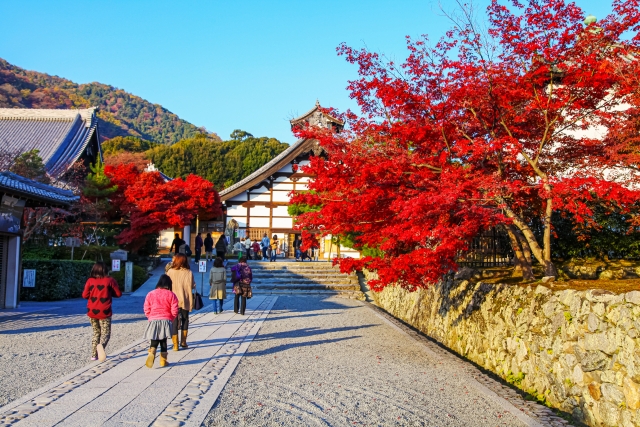
After passing through the main gate,
the path toward the Hojo continues almost straight, with very few turns.
This linear layout reflects a Zen way of thinking—
the idea of walking forward without hesitation.
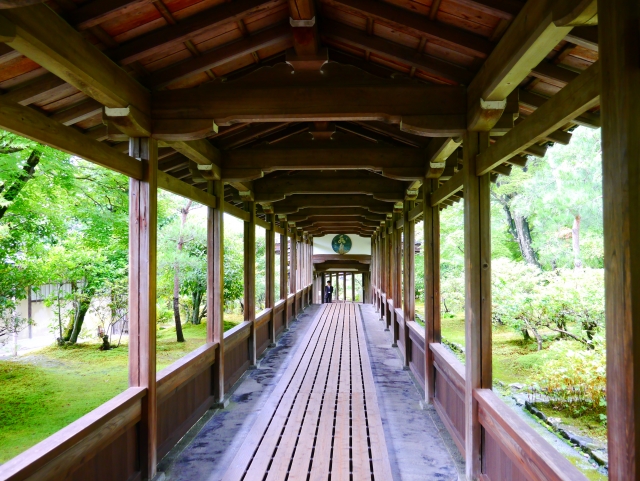
The placement of the buildings themselves helps gently align one’s state of mind.
Sōgenchi Garden
— The Heart of the Temple —
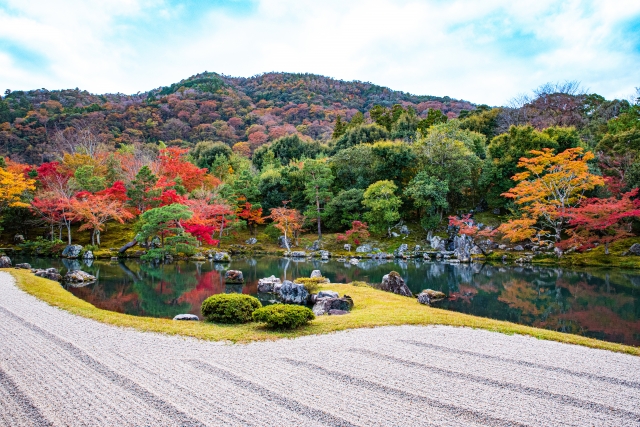
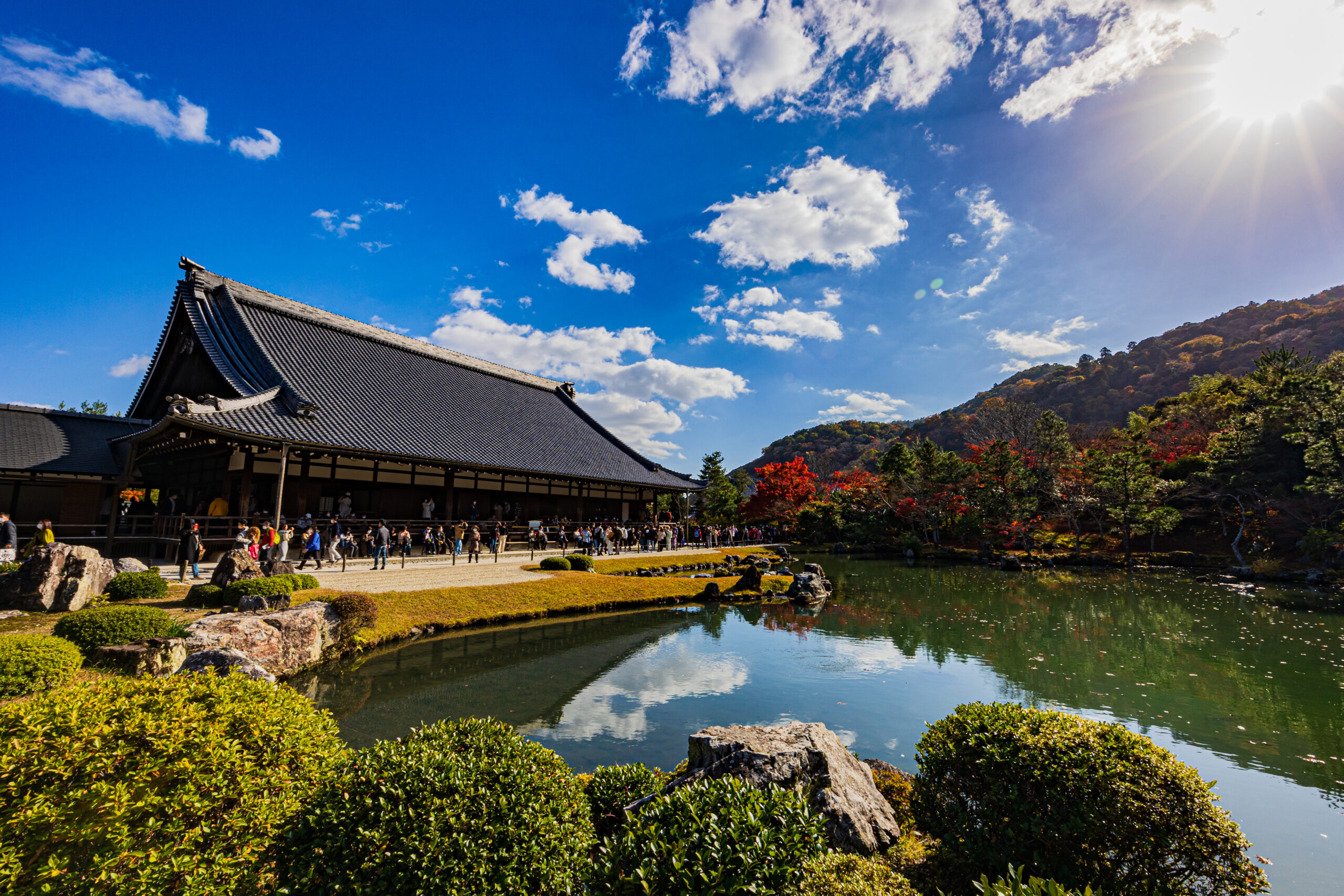
Sōgenchi Garden is a strolling pond garden
that preserves the original layout from the time Tenryu-ji was founded.
The surrounding mountains of Arashiyama are incorporated into the garden
through the technique known as borrowed scenery.
Here, nature is not treated as a background,
but as an essential element of the garden itself.
This reflects the temple’s underlying philosophy.
Ryūmon-baku (Dragon Gate Waterfall)
— A Place to Pause, Knowing Its Meaning —
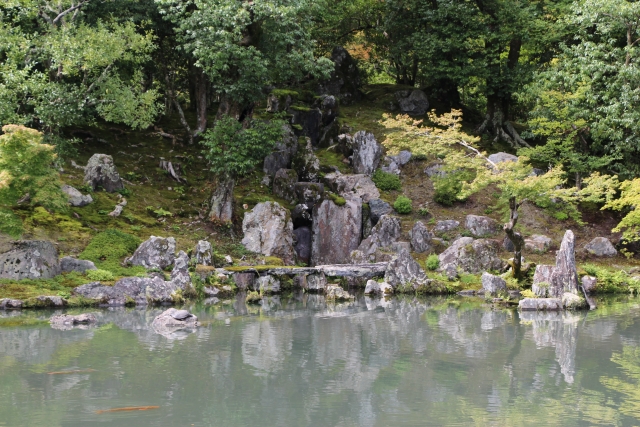
The stone arrangement at the back of the garden
is known as Ryūmon-baku.
It is based on the Chinese legend “The Dragon Gate,”
which symbolizes growth through overcoming hardship.
Knowing this background adds another layer of meaning to the quiet stone arrangement.
Hatto Hall and the Cloud Dragon Painting
— Lifting the Gaze Upward —
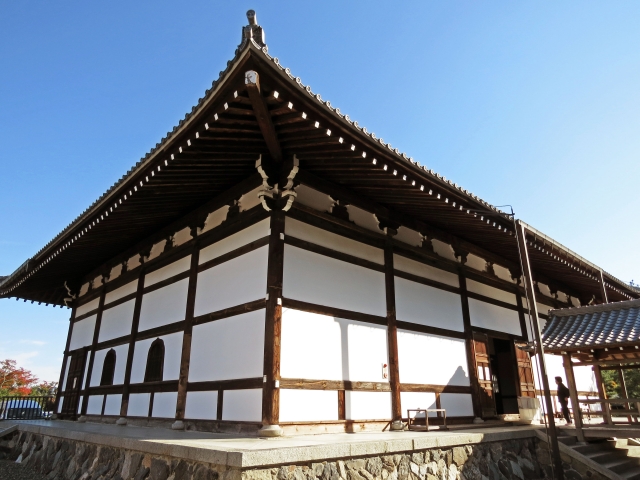
The Hatto Hall is the building where monks give sermons.
Covering the entire ceiling is the Cloud Dragon painting,
drawn in the “Eight-Directional Gaze” style,
so that the dragon’s eyes seem to meet yours
no matter where you stand.
In Buddhism, the ceiling represents the upper realm.
By placing a dragon there,
it is imbued with the meaning of a guardian presence
watching over this space.
The Cloud Dragon painting remains on the ceiling of the Hatto Hall.
Photography inside the hall is restricted,
so its actual appearance is introduced
on the official website.
▶ Tenryu-ji Official Website | Cloud Dragon Painting
View the official page
※ The Cloud Dragon painting is open to the public
only on special viewing days.
📝 Did You Know?
In Zen temples, Cloud Dragon paintings are not created merely as decorative artworks.
They function as visual elements intended to focus and steady the mind of those listening to teachings in the Hatto Hall.
The upward gaze toward the ceiling naturally draws the body into a more upright posture.
Details Within the Temple Grounds
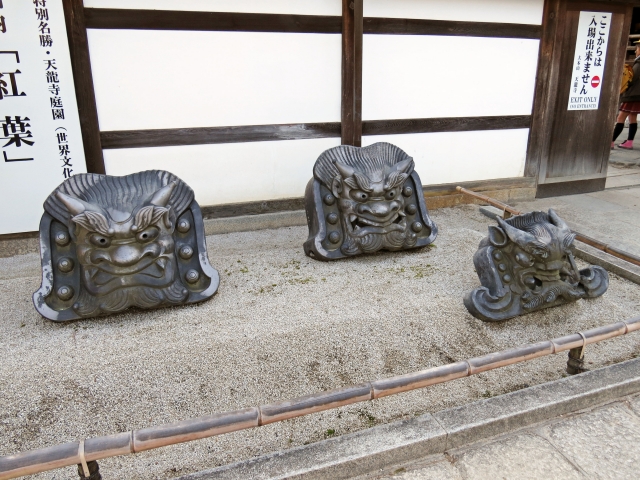
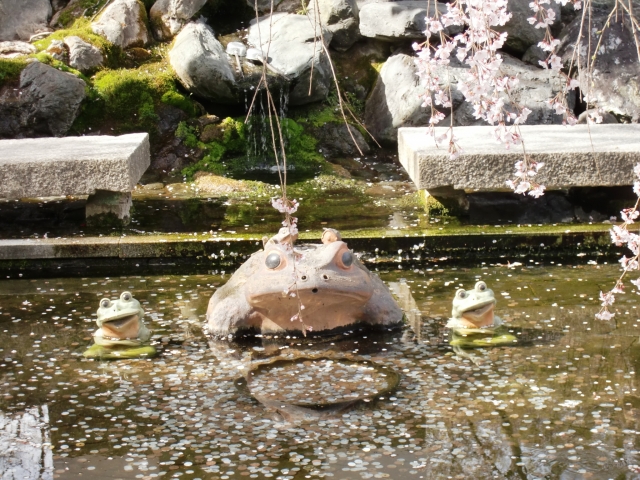
At Tenryu-ji,
the finer details do not assert themselves.
The onigawara roof tiles,
and the gentle stone frog resting quietly
in the garden pond,
do not speak of their meaning.
They are simply placed there,
as things that exist.
The North Gate
— Toward the Next Scene —
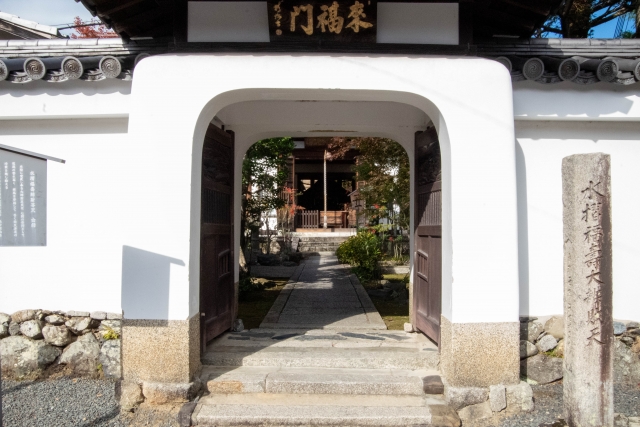
Passing through the North Gate at the back of the grounds,
the path continues directly into the bamboo grove of Arashiyama.
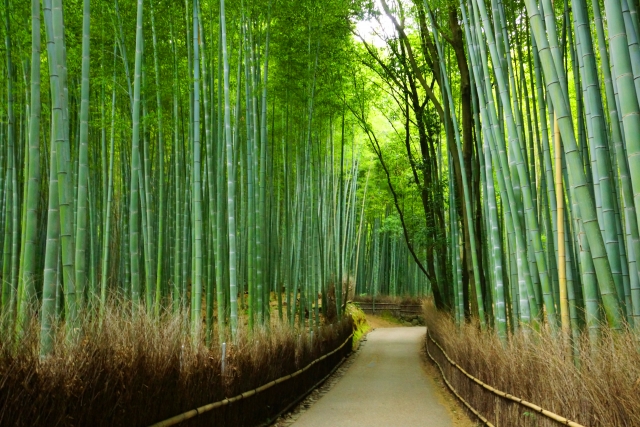
The quiet atmosphere of the temple
flows naturally into the next landscape.
Closing
This notebook is meant to prepare the mind before going.
When I eventually walk through Tenryu-ji,
I hope what I’ve written here will serve
as a small point of reference.
Helpful Japanese Words (Tenryu-ji & Gardens)
- 借景(しゃっけい)— Shakkei (Borrowed Scenery)
A garden design technique that incorporates distant mountains,
forests, or sky into the scenery, making the garden feel more open
and connected to nature. - 回遊式庭園(かいゆうしきていえん)— Strolling Garden
(A Garden Designed to Be Experienced While Walking)
A garden designed to be appreciated while walking,
where each step offers a slightly different view. - 曹源池(そうげんち)— Sōgenchi Pond
(The Heart of Tenryu-ji’s Garden)
The central pond of Tenryu-ji,
changing subtly with light, weather, and the seasons. - 庭石(にわいし)— Garden Stones
Stones placed with intention and meaning,
representing mountains, waterfalls, or islands within the garden. - 龍門瀑(りゅうもんばく)— Ryūmon-baku
(Dragon Gate Stonework)
A stone arrangement based on a Chinese legend in which
a carp transforms into a dragon, symbolizing effort and growth. - 雲龍図(うんりゅうず)— Unryū-zu
(Cloud Dragon Painting)
A dragon painted on the ceiling of the Hatto Hall,
known for its gaze that seems to follow you wherever you stand. - 方丈(ほうじょう)— Hōjō (Abbot’s Quarters)
The central building of a Zen temple,
used for daily life, rituals, and receiving guests.
Helpful Japanese Words for Kyoto Temples
- 参道(さんどう)— Sandō
The approach path leading to a temple.
Walking this path is considered part of the spiritual transition. - 山門(さんもん)— Sanmon
The main gate of a Zen temple.
Passing through it symbolizes entering a different state of mind. - 回廊(かいろう)— Kairō
A covered corridor connecting temple buildings,
creating a quiet space for walking and reflection. - 境内(けいだい)— Keidai
The grounds of a temple,
including buildings, gardens, and open spaces. - 御朱印(ごしゅいん)— Goshuin
A calligraphic seal stamp received at temples,
kept as a mark of worship and remembrance.
Basic Information📌
◎ Address
〒616-8385
京都府京都市右京区嵯峨天龍寺芒ノ馬場町68
68 Sagatenryuji Susukinobabacho,
Ukyo-ku, Kyoto City, Kyoto, Japan
◎ Opening Hours
Temple Grounds & Sōgenchi Garden
8:30 a.m. – 5:00 p.m.
(Last entry: 4:50 p.m.)
Temple buildings (Hojo, Shoin, etc.)
8:30 a.m. – 4:45 p.m.
(Last entry: 4:30 p.m.)
Hattō Hall – Cloud Dragon Painting
9:00 a.m. – 4:30 p.m.
(Last entry: 4:20 p.m.)
Usually open on weekends and public holidays
(Daily opening periods in spring and autumn)
Hours may vary by season.
※ Information such as opening hours and admission fees may change.
Please check the official website before visiting.
◎ Official Website
https://www.tenryuji.com/
Closing Thoughts
This is a pre-visit notebook
I put together while researching Tenryu-ji.
If this page helps you find
your own way of walking the space,
I would be very glad.
Thank you for visiting.

コメント