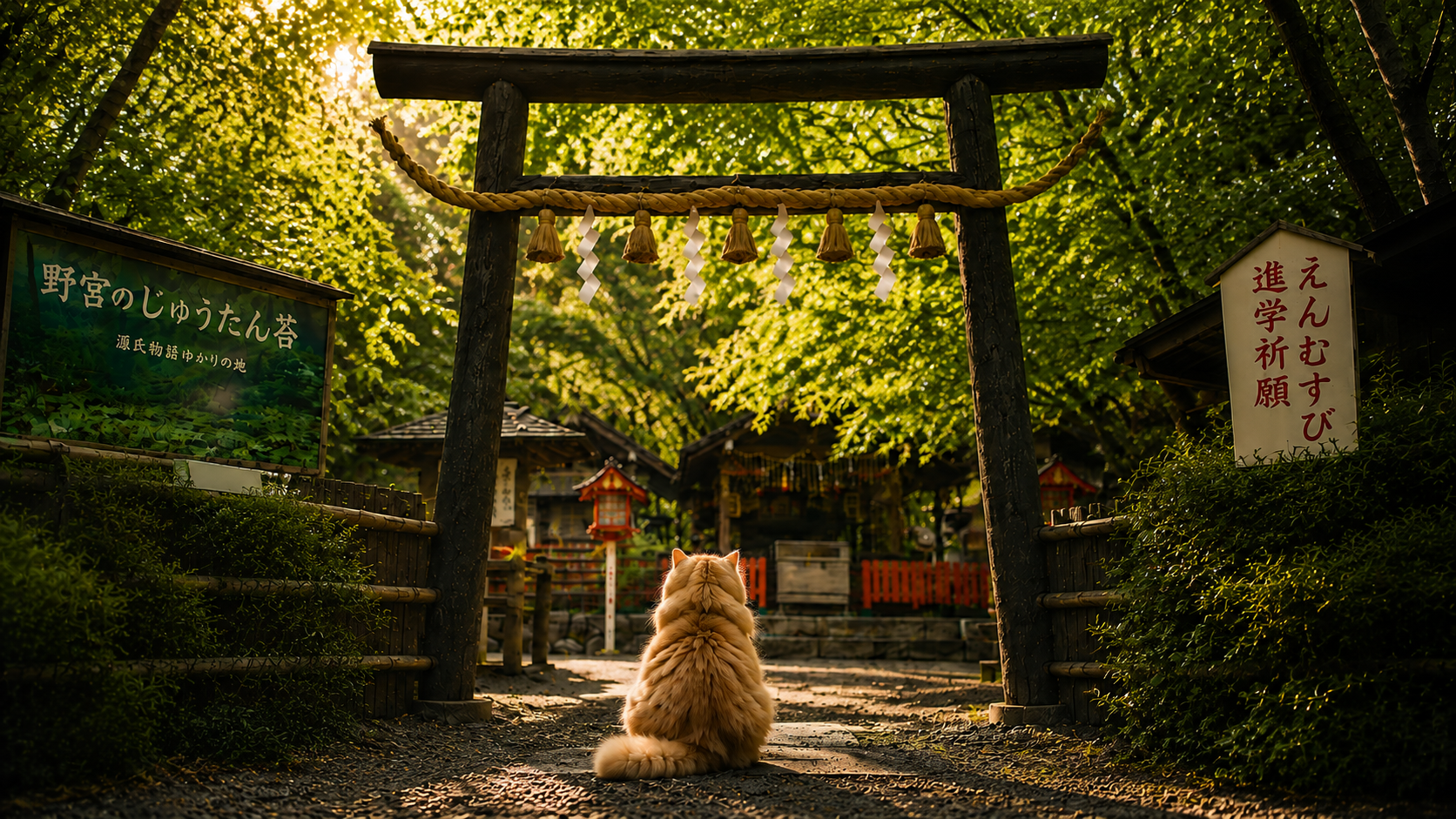
The featured image was AI-generated from a photograph,
with the cat modeled after our family cat.
PR / Ad|This post contains affiliate links.
Read the English + Japanese version|英語+日本語版はこちら
Introduction|はじめに
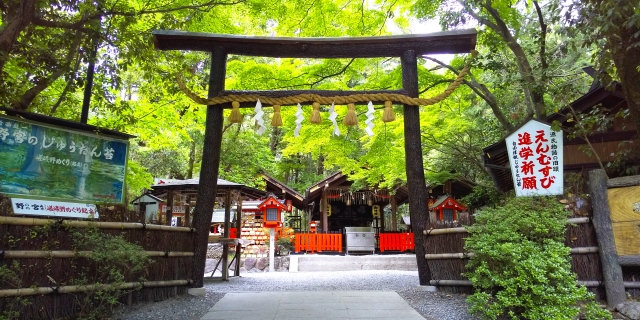
Nonomiya Shrine
is a small historic shrine
hidden within
Arashiyama’s famous Bamboo Grove.
Although modest in size,
its history reaches back
more than a thousand years.
The shrine is known
for its peaceful atmosphere,
its connection to
The Tale of Genji,
and blessings
for good relationships
and good fortune.
🟫 MINI MEMO
Long ago,
women chosen
from the Imperial Family
purified themselves here
before departing
to serve at Ise Grand Shrine.
History|歴史
For centuries,
Nonomiya Shrine
has been connected
with purification
and sacred traditions.
During the Heian period,
women chosen
from the Imperial Family
purified themselves here
before departing
to serve at Ise Grand Shrine.
Today,
the shrine continues
to welcome visitors
seeking peaceful moments,
good relationships,
and good fortune.
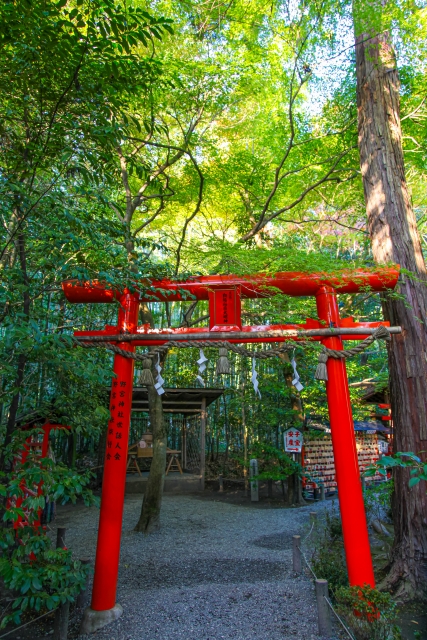
Kuroki Torii|黒木鳥居
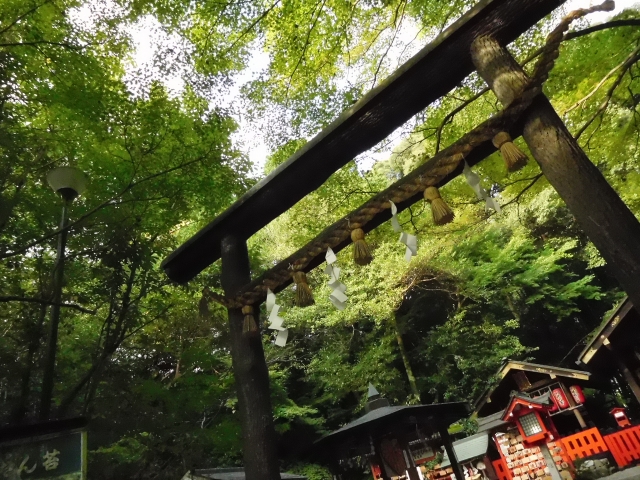
Standing at the entrance
is the shrine’s
distinctive Kuroki Torii.
Unlike the bright vermilion gates
seen at many shrines,
this torii is made
from unbarked kunugi oak.
The natural bark
is left on the wood,
giving the gate
its distinctive dark appearance.
Its quiet appearance
blends beautifully
with the surrounding bamboo,
creating one of
Nonomiya Shrine’s
most memorable views.
🟫 MINI MEMO
The Kuroki Torii
is considered
one of the oldest styles
of torii gates
and is rarely seen
in Japan today.
Traditional Koshibagaki Fence|小柴垣
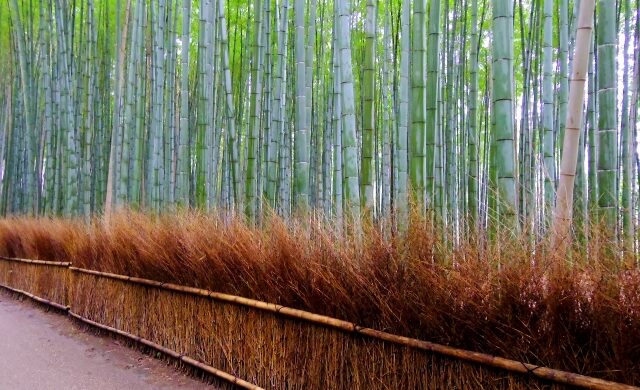
Surrounding the shrine
is a traditional brushwood fence
known as Koshibagaki.
The fence is made
from kuromoji branches
and preserves
an ancient style.
Its simple appearance
has remained
a familiar part
of the shrine
for generations.
Together with
the bamboo grove,
it creates
a calm and timeless atmosphere.
🟫 PHOTO TIP
The contrast
between the bamboo,
the Kuroki Torii,
and the traditional
Koshibagaki fence
creates one of
the shrine’s
most beautiful scenes.
Connected to the Bamboo Grove|竹林とつながる景色
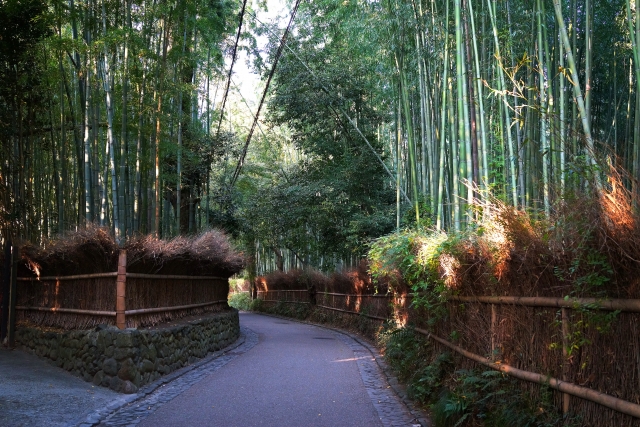
One of the most special features
of Nonomiya Shrine
is its close connection
to the Bamboo Grove.
Rather than standing apart,
the shrine feels
as though it naturally belongs
within the forest.
When the wind blows,
the gentle sound of bamboo
fills the quiet grounds.
🟫 PHOTO TIP
Morning light
filtering through the bamboo
creates beautiful photographs
with soft green colors.
Carpet Moss Garden|じゅうたん苔
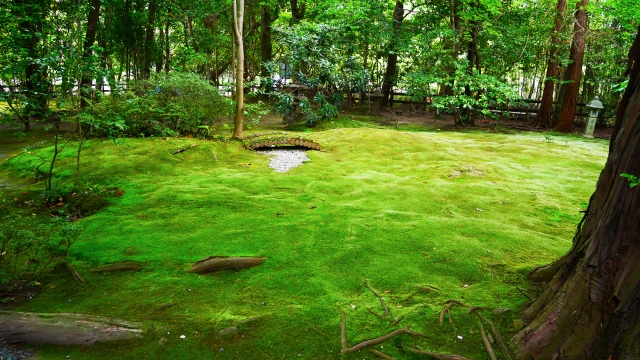
On the north side
of the shrine grounds
is a small garden
covered with soft green moss.
It is known
as the Carpet Moss Garden
and is one of
Nonomiya Shrine’s
quietest scenic features.
Its gentle colors
change with the seasons
and become especially vivid
after rain.
The quiet beauty
of the moss
matches the peaceful atmosphere
of the shrine.
🟫 MINI MEMO
Kyoto is famous
for its beautiful moss gardens,
and small patches of moss
can often be found
at historic temples and shrines.
Kameishi|亀石
Beside
Nonomiya Daikokuten Hall
is a sacred stone
called Kameishi,
or the Turtle Stone.
According to tradition,
a wish may come true
within one year
if you gently stroke the stone
while making your wish.
🟫 MINI MEMO
In Japan,
turtles have long been
associated with longevity
and good fortune.
Connection to the Tale of Genji|源氏物語とのつながり
Nonomiya Shrine
appears in
The Tale of Genji,
Japan’s classic work
of literature.
The shrine is remembered
as the setting
for the emotional farewell
between Hikaru Genji
and Lady Rokujo.
Today,
many visitors come here
to pray
for good relationships.
🟫 MINI MEMO
The “Sakaki” chapter
of The Tale of Genji
includes scenes
set at Nonomiya Shrine.
A Quiet Walk in Arashiyama|静かな嵐山散策
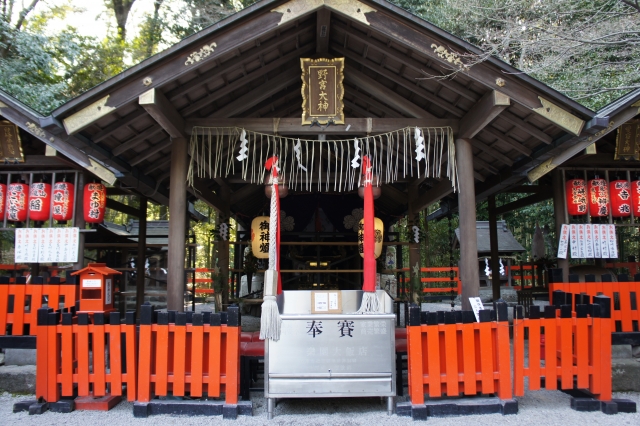
Nonomiya Shrine
is not a place
filled with grand buildings
or dramatic scenery.
Instead,
it offers
a peaceful moment
in the heart
of Arashiyama.
The quiet bamboo,
historic shrine,
and gentle atmosphere
often become
some of the most memorable parts
of a visit.
🟫 PHOTO TIP
Early morning
is often a quieter time
to enjoy both
the Bamboo Grove
and Nonomiya Shrine.
🟫 CAT MEMO 🐾

“I wonder if my love will come true too…” 🐾
🗺 Google Map
Nonomiya Shrine
is more than
a small shrine
hidden in
the Bamboo Grove.
Its rare Kuroki Torii,
ancient history,
and peaceful surroundings
preserve the atmosphere
of old Sagano.
As you leave,
you may find
that the quiet moments
spent here
become one of
your favorite memories
of Kyoto. 🌿
Thank you for visiting
Nonomiya Shrine.
We hope
your visit
to Nonomiya Shrine
and your walk
through Arashiyama
brings you
peace,
beautiful memories,
and a quiet moment
to remember. 🐾
🗺 Explore More Kyoto Areas
Kyoto is divided into several unique areas, each offering different attractions and experiences.